


Understanding Your Business Needs
And the first thing to be done is to define what the target goal of your business is; otherwise, how do you know what is the correct kind of call center? Will it be higher customer satisfaction, or will it be higher sales volumes, or around-the-clock support? With clearly defined objectives to be achieved, a clear indication of what exactly to look for will be given.

Most B2B teams lose 40–60% of qualified prospects to broken handoffs and weak qualification. Take our 2-minute diagnostic to find out where your pipeline is bleeding — and how to fix it.
Start the Quiz → Takes 2 minutes. No email required to start.Identify the Type and Volume of Customer Interaction
What type of customer call volume does your business typically experience? If you are receiving many inward calls, you will need a call center with superior customer service support. However, if the focus for your call center is going to be outward sales or outward market research, then you are going to want a B2B calling center that specializes in outward services.
Determine Key Performance Indicators (KPIs)
You have to choose the KPIs that you would measure in order to measure the performance of the call center. Average handle time, customer satisfaction scores, first-call resolution rates, and sales conversions can be the KPI used for this purpose.
Consider the Channels of Communication
Are your customers such that they like to communicate with you mainly over the phone, by email, or via live chat? You have to find a call center that can provide you with the communication channels along with which the majority of your audience prefers to communicate.
Why B2B Teams Outsource Cold Calling
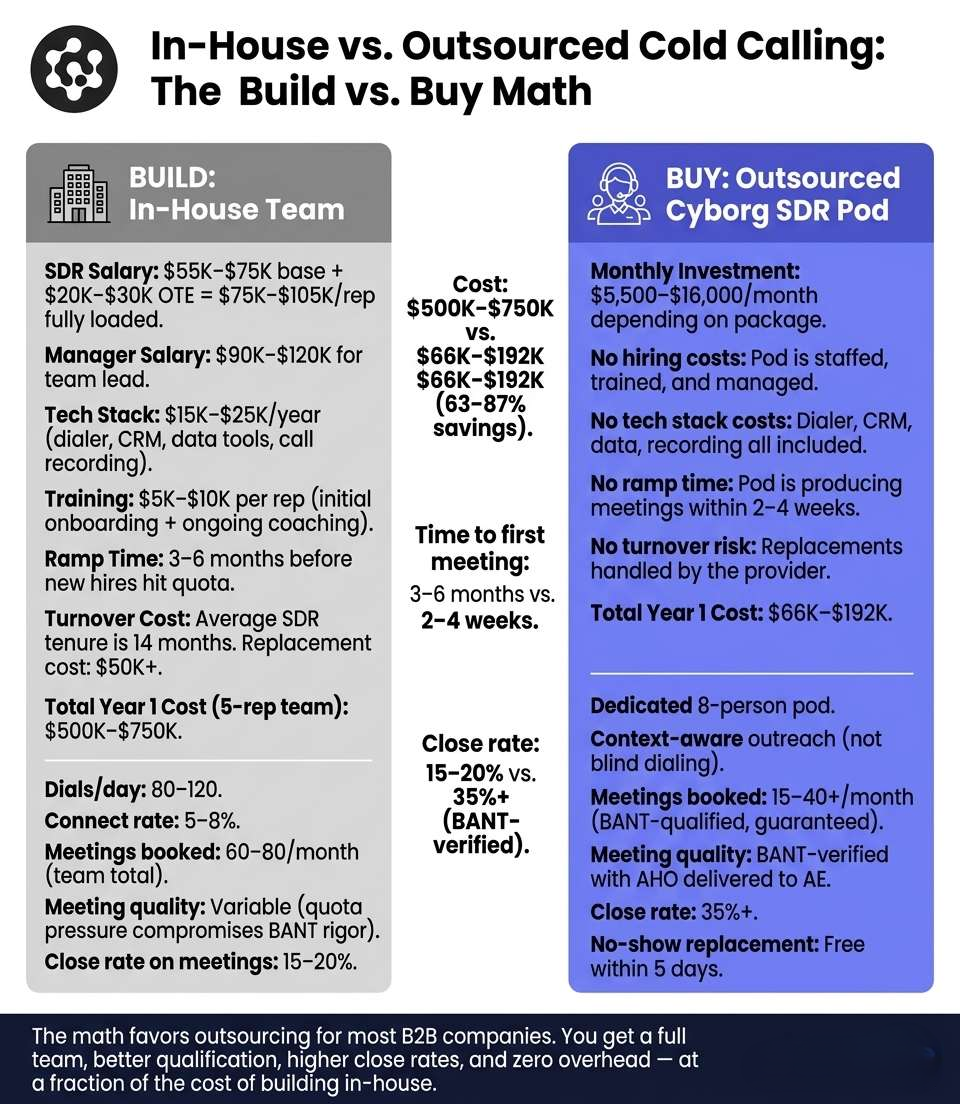
Three forces are pushing B2B teams toward outsourced cold calling. First, the fully loaded cost per SDR in major US markets now exceeds $150,000 when salary, benefits, tools, management overhead, ramp time, and turnover costs are included. Second, average SDR tenure continues to decline, producing repeated ramp periods and inconsistent output. Third, most in-house teams lack the first-party intent data infrastructure to run an intent-driven cold calling program. A specialized agency that operates on a pay-for-performance model can often deliver equivalent meeting quality at 40-60% lower cost per meeting, with none of the hiring or ramp risk. For a comprehensive look at outsourcing options, see demandnexus.io/cold-calling-outsourcing/.

Ten Questions to Ask Every B2B Cold Calling Agency
Question one: What is your average show rate on booked meetings? Demand a specific number. Anything below 70% should raise concerns. Top-tier agencies deliver above 90%. Question two: What qualification framework do you use? If the answer is not a specific framework (BANT, MEDDIC, or equivalent), the qualification is probably ad hoc. Question three: Do you deliver a briefing document with each meeting? An agency that does not document qualification context is not transferring intelligence to your sales team. Question four: What is your pricing model? Understand whether you are paying for hours, dials, booked meetings, or qualified and attended meetings. Question five: Can you share close rate data on meetings you have sourced for other clients? Agencies with strong performance will share this.
Question six: Where does your contact data come from, and how do you verify it? Question seven: Do you use intent data, and if so, is it first-party or third-party? Question eight: How long does onboarding take, and when should we expect the first meeting? Question nine: What is your contract structure, and is there a performance exit clause? Question ten: Can we listen to recordings of qualification calls? Transparency on call quality is a green flag. Resistance is a red flag. For more on evaluating cold calling service providers, see demandnexus.io/b2b-cold-calling-services/.
Types of Call Center Services
Call centers offer all services, and distinguishing is quite important; you need to know the kind of call center to choose, considering your specific requirements.
Inbound and Outbound Call Center Services
- Inbound Services: It provides the call center to receive incoming customer calls. Their services include customer care support, technical troubleshooting as well as processing of orders. An inbound service is best for your business if you care for customers.
- Outbound Services: This type of service is actually meant for making calls out for lead generation, sales, and market surveys purposes. Hence, if the goal is to generate more sales or gather market-related information, then an outbound call center might be more suitable.
- Consider the Call Center’s Flexibility: Seek a call center that can easily adapt its service to meet the needs of your business as it grows. Whether you experience seasonal fluctuations or rapid growth, make sure the call center can adapt to these changing needs.Look for a call center that can easily scale its services according to your business’s growth. Whether you experience seasonal fluctuations or rapid growth, the call center should be able to accommodate your evolving needs.
Evaluating Call Center Options
You know what your business needs, and it is now time to analyze your options. This is a point where you can begin to filter through which call center will best support your business objectives .
Call Center Service Models
There are a number of service models that call centers provide, and you have to choose the one based on your business nature.
- Dedicated Agents: Agents allocated to your account in this model. They get into your skin, learning about your brand and business processes, and thus become a more personalized experience option for your customers. This model is appropriate if the high level of brand alignment is required or complicated customer interaction is involved.
- Shared Agents: With shared agents, one agent speaks to multiple clients at the same time. This is a more cost-efficient model as one agent can address multiple clients at once, but shared agents are not necessarily abreast of your brand as full-time agents would be. It’s best for businesses that wouldn’t need to send to individuals with every call.
International vs. U.S.-based Call Centers
Location is another factor that plays a big role in choosing the right call center.
- Offshore Call Centers: These are usually cheaper, but service quality is not the same as in domestic options, hence time zones, language, and cultural issues can be a challenge sometimes.
- Domestic Call Centers: It is often more expensive than an offshore counterpart; on the other hand, U.S.-based or local call centers could have better service quality, less communication barriers, and a better understanding of the local market conditions.
Key Features to Look for in a Call Center
Compare several call centers – The characteristics of a few call centers will be your key focal areas. Those will differ for quality services rendered for you.
Technology and Infrastructure
This is a determining factor of the success of a call center. Consider the advanced tools by the provider to streamline, facilitate, and enhance the experience for the customer.
- Computer Telephony Integration (CTI): The integration of the phone system and the computer system lets the agents process the call correctly with easier management.
- Predictive Dialers: These solutions are very effective in an outbound call center because they automatically dial numbers to help maximize agent productivity.
- Customer Relationship Management (CRM) Software: The call center must be using CRM software to track and manage customer interactions seamlessly.
- Cloud-based Solutions: Cloud technology offers flexibility, reliability, and scalability. It ensures the call center can handle fluctuations in call volumes without service interruptions.
Security and Compliance Measures
Security must be at the top of the list, especially if you handle sensitive information coming from your clients.
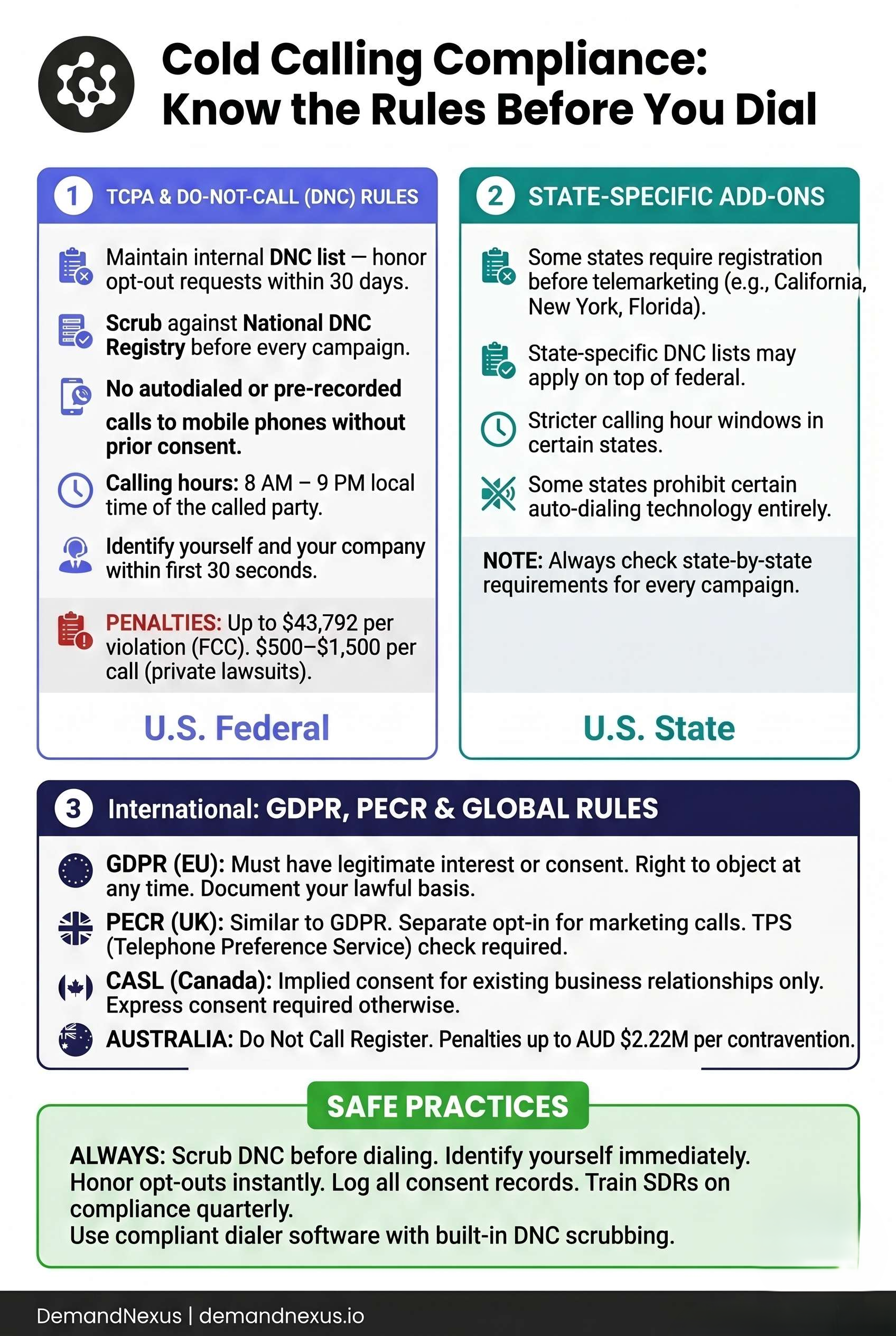
- Regulatory Compliance: Check that the call center is in conformance with the most relevant rules, such as GDPR (General Data Protection Regulation), HIPAA (Health Insurance Portability and Accountability Act), or PCI DSS (Payment Card Industry Data Security Standard).
- Data Encryption: The call center should encrypt data both in motion and in place to minimize possible breaches of data.
- Disaster Recovery Plans: A sound disaster recovery plan ensures that the call center operates without disruptions during any unexpected situation.
Finding and Hiring a Call Center
Once possible call centers are identified, it is now time to go to recruitment.
Research and Short-list Potential Call Centers
Online sources are where to find and review possible call center options. Industry-specific directories, business network referrals, and review sources such as Clutch or G2 may provide insights.
Request Proposals and Compare Services
Shortlist any number of potential call centers. Request them to provide detailed proposals based on your defined business requirements. Compare these proposals against your defined business requirements. Look for transparency in pricing, services offered, and key performance metrics.
Outsourcing Call Center Operations
Many businesses opt to outsource their call center operations to third party service providers. This can offer several benefits, but one needs to understand the implications fully.
Benefits of Outsourcing to a Call Center
Outsourcing will allow a business to continue its core activities while leaving the operations of a call center to a professional specialist. It can also provide you with 24/7 support to customers, which makes it easier for you to reach global customers.
Call Center Pricing and Contracts
Take time to consider well what pricing models and what contract terms the call center will offer.
- Pricing Structure: Consider a call center that has a pay-per-minute pricing structure or offers flat-rate packages. Also, be sure that the pricing plan fits your budget and expected volume of calls.
- Contract Terms: Read it very carefully and look for details about service level agreements; pricing; and data, security protocols, etc.
Red Flags to Watch For
Seven red flags should disqualify a B2B cold calling agency from consideration. The agency will not share historical show rate or close rate data. The agency charges per meeting booked rather than per meeting attended or qualified. The agency uses generic scripts not customized to your ICP. The agency has no specific qualification framework. The agency relies on purchased contact lists without verification. The agency does not deliver a written briefing document with each meeting. The agency requires a long-term contract with no performance exit clause.
What a Good B2B Cold Calling Agency Looks Like
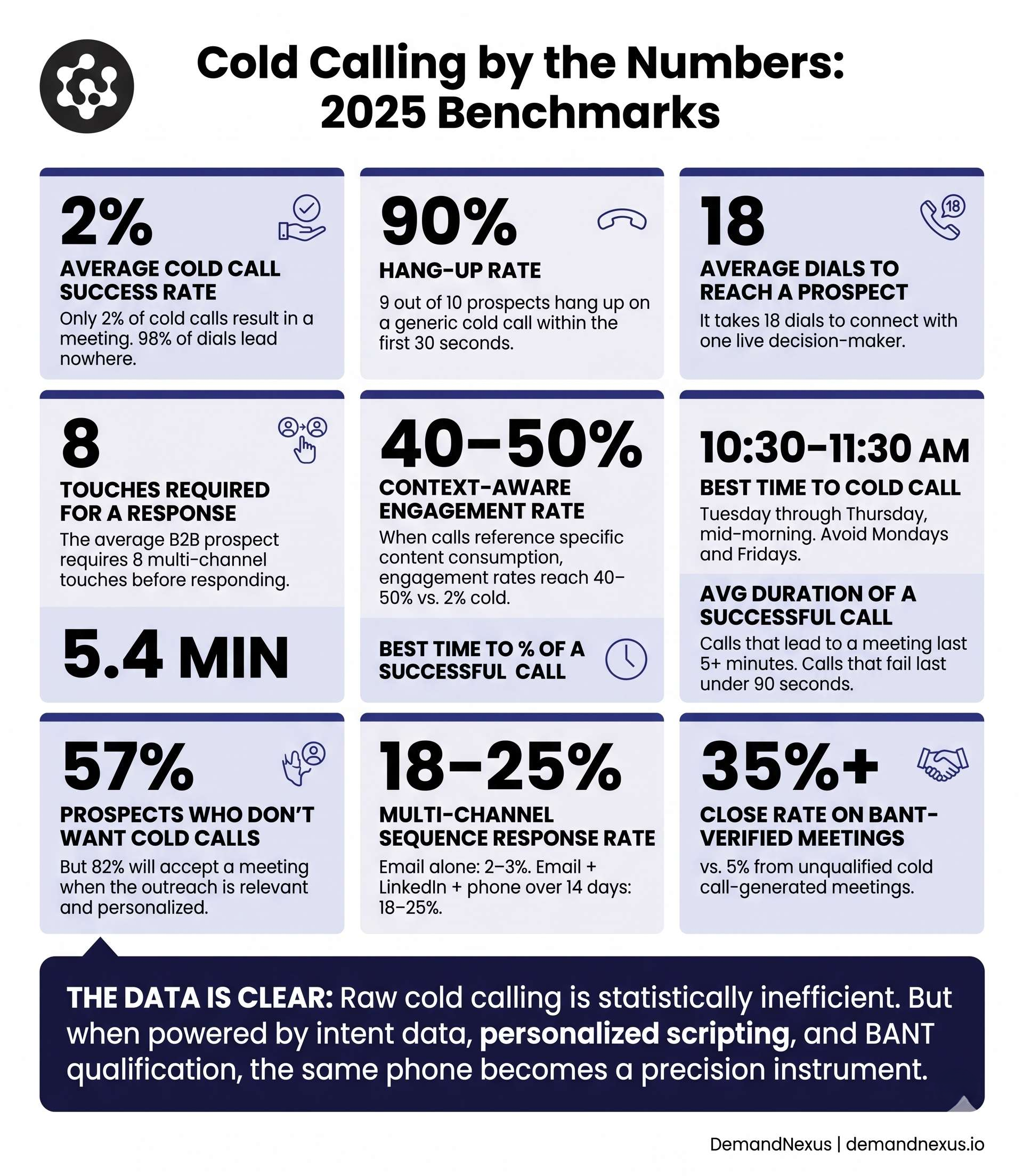
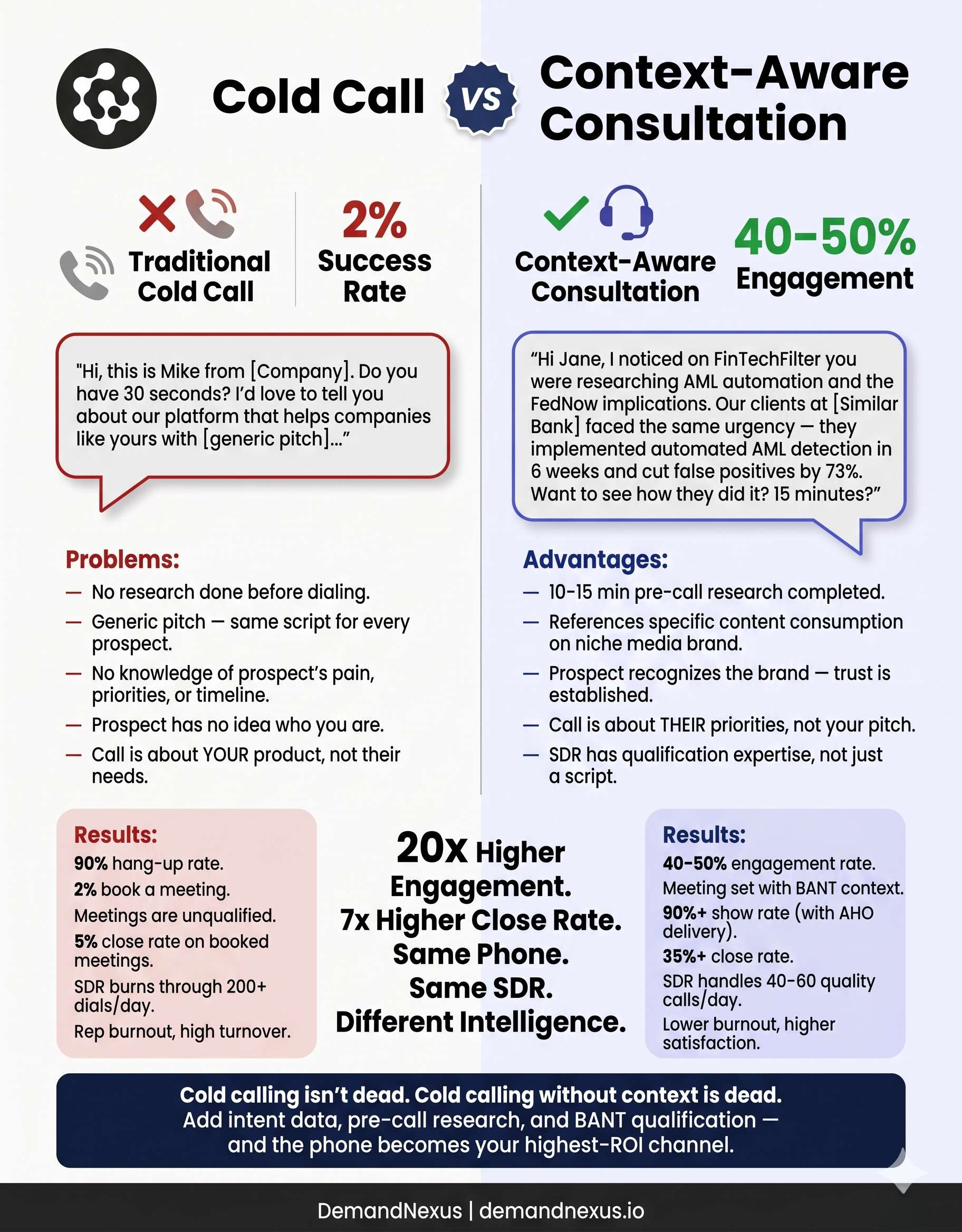
A good agency operates with full transparency, specific qualification standards, and outcome-based pricing. DemandNexus checks every box: BANT verification on every live call, Appointment Handover Sheet documentation delivered with every meeting, pay-for-performance pricing per qualified and attended meeting, first-party intent data from six owned B2B media brands reaching 15 million decision-makers, Cyborg SDR pods that combine AI research with human qualification, show rates above 90%, and close rates more than 200% higher than non-qualified alternatives. No long-term contracts; engagements scale or pause on 30 days notice.
FAQs
How much does a B2B cold calling agency cost?
Pricing models vary. Hourly retainers run $3,000-$8,000/month per SDR equivalent. Per-meeting pricing runs $200-$500 per booked meeting. Pay-for-performance pricing (per BANT-verified, attended meeting) is typically 40-60% lower than the fully loaded cost of an in-house SDR per meeting. The key is to compare on cost per qualified meeting rather than cost per dial or per booked meeting.
How long does it take to see results from a cold calling agency?
A well-structured agency delivers first meetings within 4-6 weeks of engagement start, with steady-state delivery by weeks 8-12. Agencies that require longer than 90 days to produce results may have structural onboarding or targeting issues.
Find the Right Cold Calling Partner
If you are evaluating B2B cold calling agencies, use the ten-question framework above and the red flag checklist. For a diagnostic comparison of your current outbound approach versus a BANT-verified model, book a call at demandnexus.io/book-a-call.