


Introduction
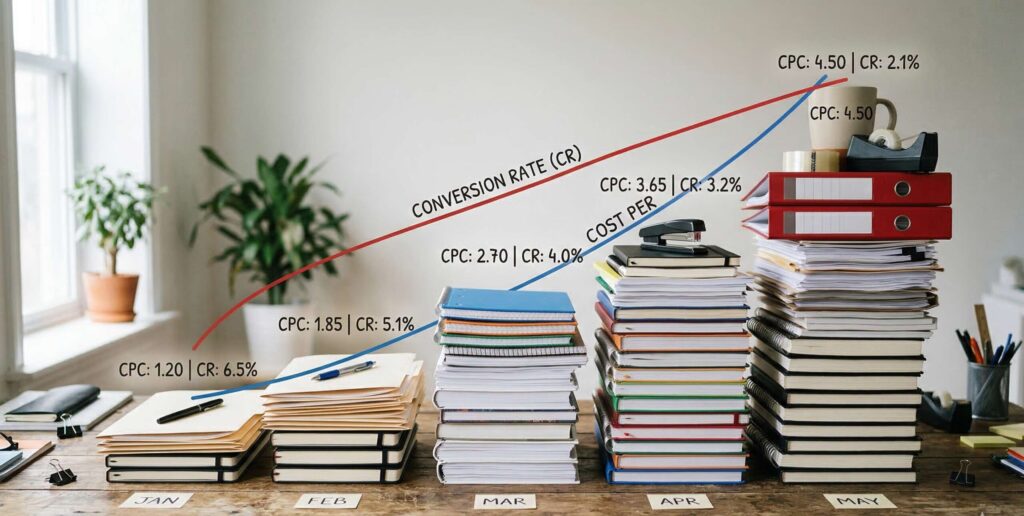
B2B SaaS lead generation is one of the most competitive acquisition challenges in modern software sales. With average CPCs rising 40% year-over-year and MQL-to-SQL conversion rates stuck below 13%, SaaS companies are spending more to get less. The problem isn’t volume — it’s quality.
This guide breaks down what genuine B2B SaaS lead generation looks like, what to demand from any provider, and why the shift from MQL volume to BANT-qualified appointments is the single biggest lever SaaS sales leaders have.

Most B2B teams lose 40–60% of qualified prospects to broken handoffs and weak qualification. Take our 2-minute diagnostic to find out where your pipeline is bleeding — and how to fix it.
Start the Quiz → Takes 2 minutes. No email required to start.What Is B2B SaaS Lead Generation?
B2B SaaS lead generation is the process of identifying, engaging, and qualifying potential buyers for your software product — specifically other businesses (not consumers). Unlike e-commerce or B2C, SaaS lead generation involves longer sales cycles, multiple stakeholders, and purchase decisions tied to budget cycles, technical requirements, and organizational need.
True B2B SaaS lead generation doesn’t stop at a contact form submission. It runs through the full qualification process — confirming the prospect has budget allocated, has decision-making authority, faces the problem your product solves, and has an actionable timeline to evaluate solutions.
The SaaS Lead Generation Problem: Why MQLs Are Failing
Most B2B SaaS companies still measure lead generation success by MQL volume. Marketing qualifies a lead based on engagement signals — a whitepaper download, a webinar registration, a pricing page visit — and passes it to sales as ‘ready.’ But here’s what the data shows:
- 87% of MQLs never convert to closed revenue
- The average MQL-to-SQL conversion rate is 13% — meaning 87 out of every 100 ‘qualified’ leads are wasted
- Sales reps spend 30–50% of their time re-qualifying leads marketing has already deemed qualified
- Google Ads CPL for SaaS has risen 70% since 2021; LinkedIn CPL averages $408
The root cause isn’t your SDRs or your product. It’s a measurement problem: MQLs measure marketing activity, not buyer readiness. A contact who downloaded an ebook is not a pipeline opportunity.
What a High-Quality SaaS Lead Generation Service Actually Delivers
The benchmark for a high-quality B2B SaaS lead generation service isn’t lead volume — it’s confirmed appointments with verified buyers. Here’s what to require from any provider:

BANT Qualification Before the Meeting
Every appointment should arrive with Budget, Authority, Need, and Timeline confirmed. Not guessed. Not inferred from a LinkedIn profile. Verified in a human conversation with the prospect before the meeting is booked.
- Budget: Is there an allocated or accessible budget for this solution?
- Authority: Is this person the decision-maker, or do they have direct influence on the decision?
- Need: Is there a specific, acknowledged pain point your product addresses?
- Timeline: Is there a defined window for evaluation and purchase?
First-Party Intent Data
The best SaaS demand generation services don’t cold-call contact lists. They monitor real behavioral signals from prospects who are actively researching solutions in your category — reading industry content, comparing vendors, attending webinars — and use that intent data to personalize outreach. This is the difference between a 40–50% engagement rate and a 90% hang-up rate.
Appointment Handover Documentation
Before the first AE call, your team should receive a full briefing on the prospect: their BANT answers, specific pain points, decision-making process, urgency drivers, and recommended conversation openers. This document — known as an Appointment Handover Sheet (AHO) — eliminates discovery wasted in the first 10 minutes and immediately positions your AE as a trusted advisor, not a cold vendor.
DemandNexus B2B SaaS Lead Generation: How It Works
DemandNexus operates the Waterfall Model — a multi-stage qualification system that converts first-party intent signals into BANT-verified appointments delivered directly to your sales calendar.
Step 1: First-Party Intent Identification
DemandNexus owns and operates six B2B media brands reaching 15M+ decision-makers: AITechTrend, MarTechTrend, HRTechTrend, FinTechFilter, LegalTechTrend, and DevTechTrend. When a VP at a target account reads three articles about a problem your product solves, our system flags that behavior as a high-intent signal — before any outreach begins.
Step 2: Context-Aware Outreach
Rather than generic cold sequences, our Pod Copywriter crafts outreach referencing the specific content the prospect engaged with. This isn’t a trick — it’s relevance. The prospect recognizes the context, and the conversation starts from a shared point of reference rather than a cold pitch.
Step 3: Human BANT Consultation
A dedicated SDR conducts a structured qualification conversation to verify all four BANT criteria. No appointment is booked until Budget, Authority, Need, and Timeline are confirmed. No-shows get replaced at no cost within five business days.
Step 4: AHO Delivery
Your AE receives the Appointment Handover Sheet before every call — containing intent data, BANT details, specific pain points, and recommended conversation strategy. Close rates for DemandNexus clients run 202% higher than non-qualified lead programs.
B2B SaaS Lead Generation Pricing: What You Should Expect to Pay
DemandNexus offers pay-for-performance pricing — you only pay for meetings that are held and meet your defined criteria:
- Essentials Pod: $7,500/month — 15+ BANT-qualified appointments, 8-person dedicated team, access to 2 media brands. Estimated $3.15M pipeline in Year 1 (assuming $50K ACV, 35% close rate).
- Growth Pod: $12,500/month — 25+ appointments, 12-person team, full access to all 6 media brands, thought leadership placement.
- Enterprise Pod: $16,000/month — 40+ appointments, full media brand integration, PR and co-branded content.
At $500 per qualified meeting and a 35% close rate, cost-per-closed-deal runs $1,220–$1,500 — compared to $5,208+ for an in-house SDR program or $10,000+ for traditional pay-per-lead vendors.
How to Choose a B2B SaaS Lead Generation Service
When evaluating providers, demand clarity on five things:
- What is the qualification process? How is ‘qualified’ defined — activity-based or BANT-verified?
- What data do you receive? Do you get full prospect records and BANT conversation notes, or just meeting invites?
- What happens with no-shows? Zero-risk billing providers replace no-shows; others don’t.
- What intent signals power outreach? First-party behavioral data beats purchased contact lists.
- What is the AE briefing process? A handover document before every call signals a mature, revenue-focused operation.
Internal Links
- See also: BANT-Qualified Appointments (/bant-qualified-appointments/)
- See also: B2B Appointment Setting (/b2b-appointment-setting/)
- See also: Outsource SDR (/outsource-sdr/)
FAQs
What is B2B SaaS lead generation?
B2B SaaS lead generation is the process of identifying and qualifying potential business buyers for a software product. High-quality SaaS lead generation goes beyond contact collection — it involves verifying that prospects have budget, authority, a defined need, and a timeline before passing them to sales.
How much does B2B SaaS lead generation cost?
Costs vary widely by model. Pay-per-lead vendors typically charge $200–$500 per lead with low conversion rates. Pay-for-performance appointment models like DemandNexus charge $500 per BANT-qualified meeting, which translates to $1,220–$1,500 per closed deal at a 35% close rate.
What is BANT qualification in SaaS lead generation?
BANT stands for Budget, Authority, Need, and Timeline. BANT qualification means a human SDR has confirmed with the prospect that they have allocated or accessible budget, decision-making authority, a specific need your product addresses, and a defined timeline for evaluation and purchase.
Why do most SaaS leads fail to convert?
Most SaaS leads are qualified based on engagement activity — downloads, webinar registrations, page views — rather than buyer readiness. This produces a high volume of contacts with no verified purchase intent, wasting sales team time on re-qualification that marketing should have completed.
What is a good MQL-to-SQL conversion rate for SaaS?
The industry average MQL-to-SQL conversion rate is approximately 13%. Organizations using BANT-qualified appointment programs see SQL conversion rates of 90%+ — because qualification happens before the meeting is booked, not after.
What should an appointment handover document include?
An Appointment Handover Sheet (AHO) should include the prospect's BANT answers, specific pain points, intent signals that triggered outreach, decision-making process and stakeholders, urgency drivers, and recommended conversation openers for the AE.
How does first-party intent data improve SaaS lead generation?
First-party intent data tracks real behavioral signals from prospects engaging with your content or related category content — giving your SDRs context to open conversations around the specific problem the prospect is actively researching. This raises engagement rates from under 10% (cold outreach) to 40–50%.
What is the difference between a lead and a qualified appointment in SaaS?
A lead is a contact record. A qualified appointment is a confirmed meeting with a decision-maker who has verified budget, authority, need, and timeline. The gap between the two is where most SaaS sales organizations lose pipeline.