



Introduction
Content marketing for SaaS is the practice of creating, publishing, and distributing content designed to attract and engage your target buyers and ultimately convert them into qualified pipeline. For B2B SaaS companies, content marketing serves as the foundation of every demand generation channel: it powers SEO, fuels paid social, provides SDR context for outbound, and builds the category authority that makes every other marketing investment more effective.
But most SaaS content programs are optimized for the wrong metric: traffic. High-volume informational content that ranks well and drives visitors who never convert to pipeline creates the illusion of marketing success while the sales team chases re-qualification calls.

Most B2B teams lose 40–60% of qualified prospects to broken handoffs and weak qualification. Take our 2-minute diagnostic to find out where your pipeline is bleeding — and how to fix it.
Start the Quiz → Takes 2 minutes. No email required to start.This guide covers the full architecture of high-performing SaaS content marketing: strategy, content types, distribution, measurement, and the owned media approach that turns content into a demand generation engine.
Why Content Marketing Is the Foundation of SaaS Demand Generation
Content marketing occupies a unique position in the SaaS demand generation ecosystem: it is the only channel that simultaneously creates demand, captures demand, supports sales, and builds brand authority all from a single investment.
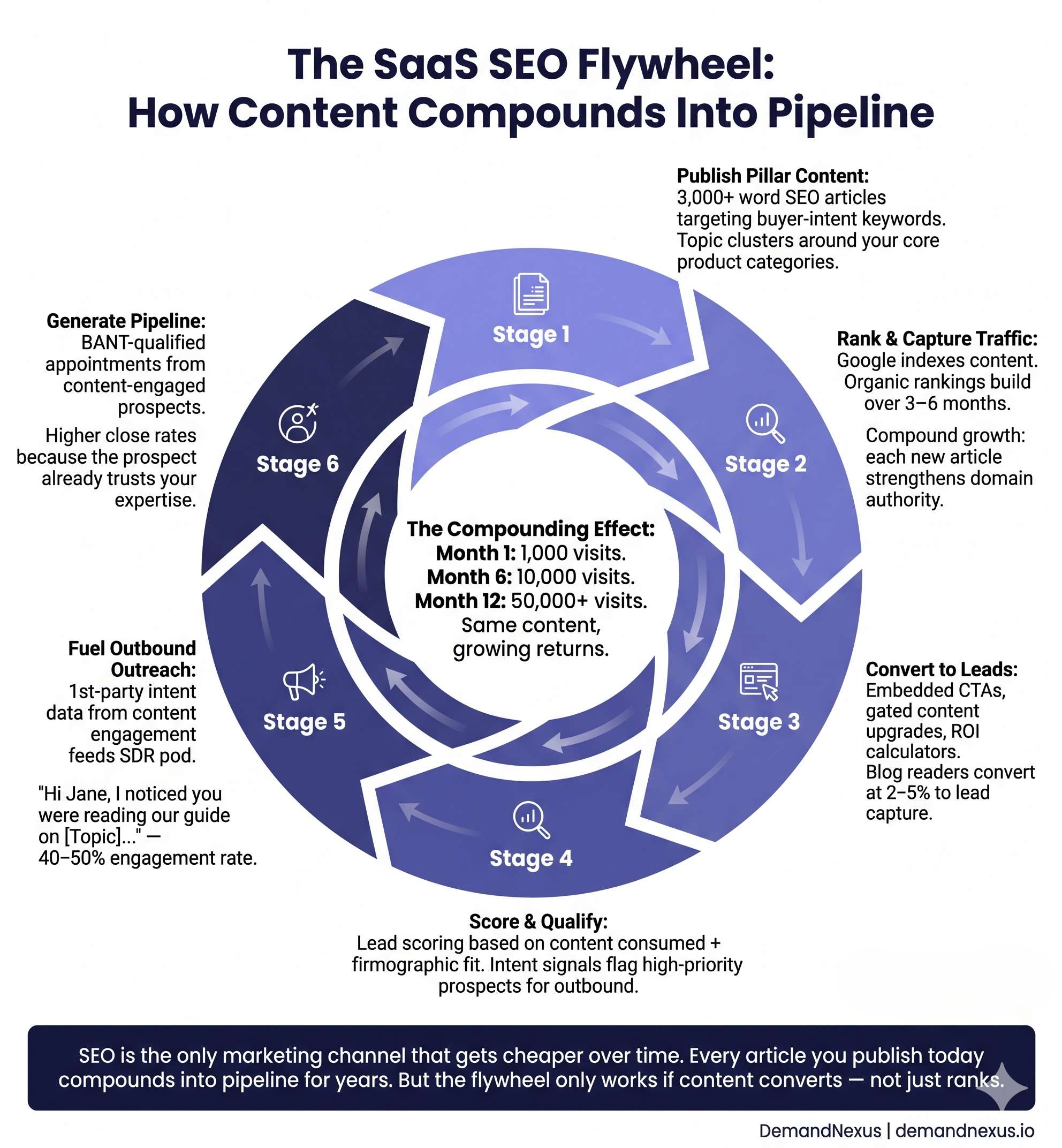

- SEO: Content ranks organically, driving compounding traffic without per-click costs
- Paid amplification: Your best content becomes your most efficient paid media creative
- Outbound enablement: SDRs reference category-relevant content the prospect has consumed turning cold outreach into contextual conversations
- Sales support: Case studies, ROI calculators, and comparison content support late-stage evaluation
- Brand authority: Consistent, high-quality content establishes your company as a category thought leader
The compounding nature of content marketing is its defining economic characteristic. A well-ranking article drives qualified visitors for years without incremental cost. Paid channels stop the moment you stop spending.
The SaaS Content Marketing Funnel
Top-of-Funnel: Awareness and Education
Top-of-funnel SaaS content targets buyers who are problem-aware but solution-unaware. This content answers the questions buyers ask when they first recognize a problem: ‘Why is our pipeline conversion declining?’ ‘What is demand generation?’ ‘How do enterprise B2B sales teams build pipeline?’

The goal of top-of-funnel content is not to sell it’s to become the trusted resource your target buyers turn to when they first encounter the problems your product solves. The trust built here carries forward into every subsequent content touchpoint.
Mid-Funnel: Consideration and Evaluation
Mid-funnel content targets solution-aware buyers who are actively evaluating approaches and vendors. This is the highest-leverage content stage for SaaS: buyers at this stage have confirmed they have a problem and are looking for the best solution. Mid-funnel content types include: solution category guides, feature comparison pages, vendor evaluation frameworks, ROI calculators, and case studies.
Bottom-of-Funnel: Conversion and Decision Support
Bottom-of-funnel content supports the final purchase decision: implementation guides, security and compliance documentation, customer success stories, pricing transparency content, and trial or demo conversion optimization. This content rarely drives high organic traffic but converts at the highest rates every visitor is a late-stage buyer.
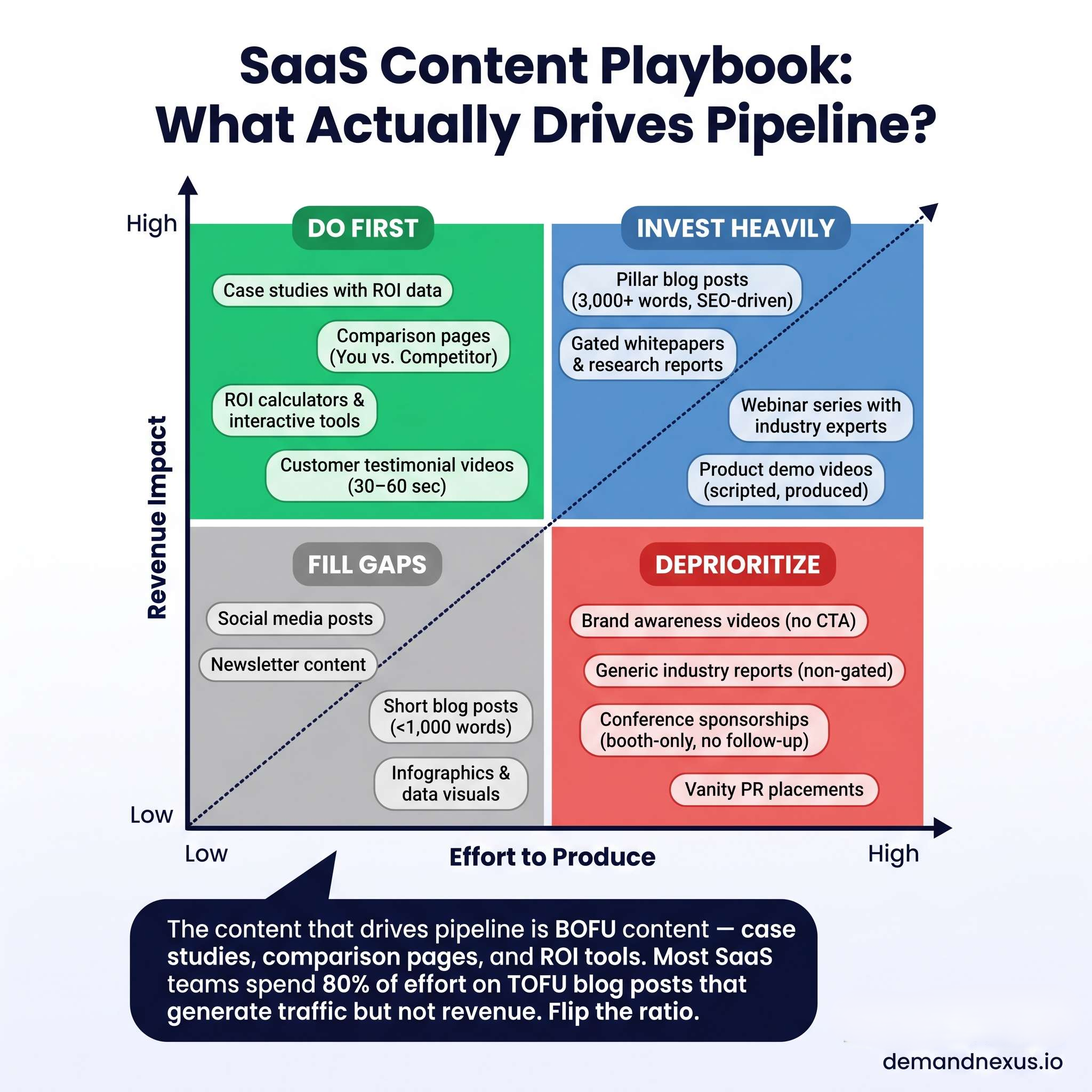
SaaS Content Types: What to Create and When
Pillar Pages and Cluster Articles
The pillar-and-cluster model is the most effective SaaS content architecture for SEO authority. A pillar page covers a broad topic exhaustively (2,500–5,000 words). Cluster articles cover specific subtopics in depth (1,000–2,000 words each), linking back to the pillar. The result: Google recognizes topical authority, and rankings improve across the entire cluster.
Comparison and Alternative Pages
Comparison pages (‘Your Product vs. Competitor’) and alternative pages (‘Best [Competitor] Alternatives’) are among the highest-converting SaaS content types. Buyers using these queries are in late-stage evaluation with a defined budget and timeline. These pages should be direct, use specific criteria, and prioritize your differentiators against each competitor.
Case Studies and Customer Stories
Case studies are the most trusted form of SaaS content in purchase decisions. A case study that shows a specific ROI outcome (‘$3.15M pipeline in Year 1 from 200 BANT-qualified appointments’) outconverts generic capability descriptions by 3–5x. Structure case studies around: the problem, the solution, the measurable outcome.
ROI Calculators and Interactive Tools
Interactive tools – ROI calculators, maturity assessments, readiness quizzes and generate 2–3x higher engagement rates than static content and are highly shareable. They also serve as intent signals: a visitor who completes a ‘demand generation ROI calculator’ is demonstrating solution-aware buyer behavior.
SEO Blog Content
High-volume informational blog content drives top-of-funnel awareness and organic authority, but its pipeline contribution is indirect. Structure your blog content investment around content that either directly supports conversion (comparison, evaluation, case study) or builds the topical authority that helps high-intent content rank higher.
SaaS Content Distribution: Where and How
Organic Search (SEO)
Organic search is the primary distribution channel for SaaS content. Well-structured pillar-and-cluster architectures, proper technical SEO, and consistent content publishing compound over 12–18 months into a meaningful organic pipeline channel.
Owned Media Brands
DemandNexus operates six B2B media brands (AITechTrend, MarTechTrend, HRTechTrend, FinTechFilter, LegalTechTrend, DevTechTrend) reaching 15M+ decision-makers across technology, marketing, HR, finance, legal, and development verticals. Owned media brands amplify content reach to relevant decision-maker audiences and generate first-party behavioral signals is a direct, ready-built distribution engine for SaaS content at scale.
LinkedIn and Social Amplification
LinkedIn is the most effective social amplification channel for B2B SaaS content. High-performing content formats: thought leadership posts from founders and executive team members, research-backed insights with data, and short-form takes on industry problems your product addresses.
Email Nurture
Email remains one of the highest-ROI content distribution channels for SaaS specifically for re-engaging prospects who have consumed top-of-funnel content but haven’t yet entered a buying process. Content-focused email sequences that deliver value (not just promotional messages) see 3–5x higher open rates than sales sequences.
Measuring SaaS Content Marketing ROI
Primary Metrics
- Pipeline generated from organic content (not traffic – pipeline)
- Demo requests and trial signups attributed to content
- SQL conversion rate from content-sourced leads
- Content-influenced revenue (deals where content was a touchpoint in the buying journey)
Secondary Metrics
- Organic search traffic by funnel stage
- Content conversion rates (visits to demo requests by page type)
- Time-on-page and scroll depth for pillar content
- Backlinks acquired (a proxy for content authority)
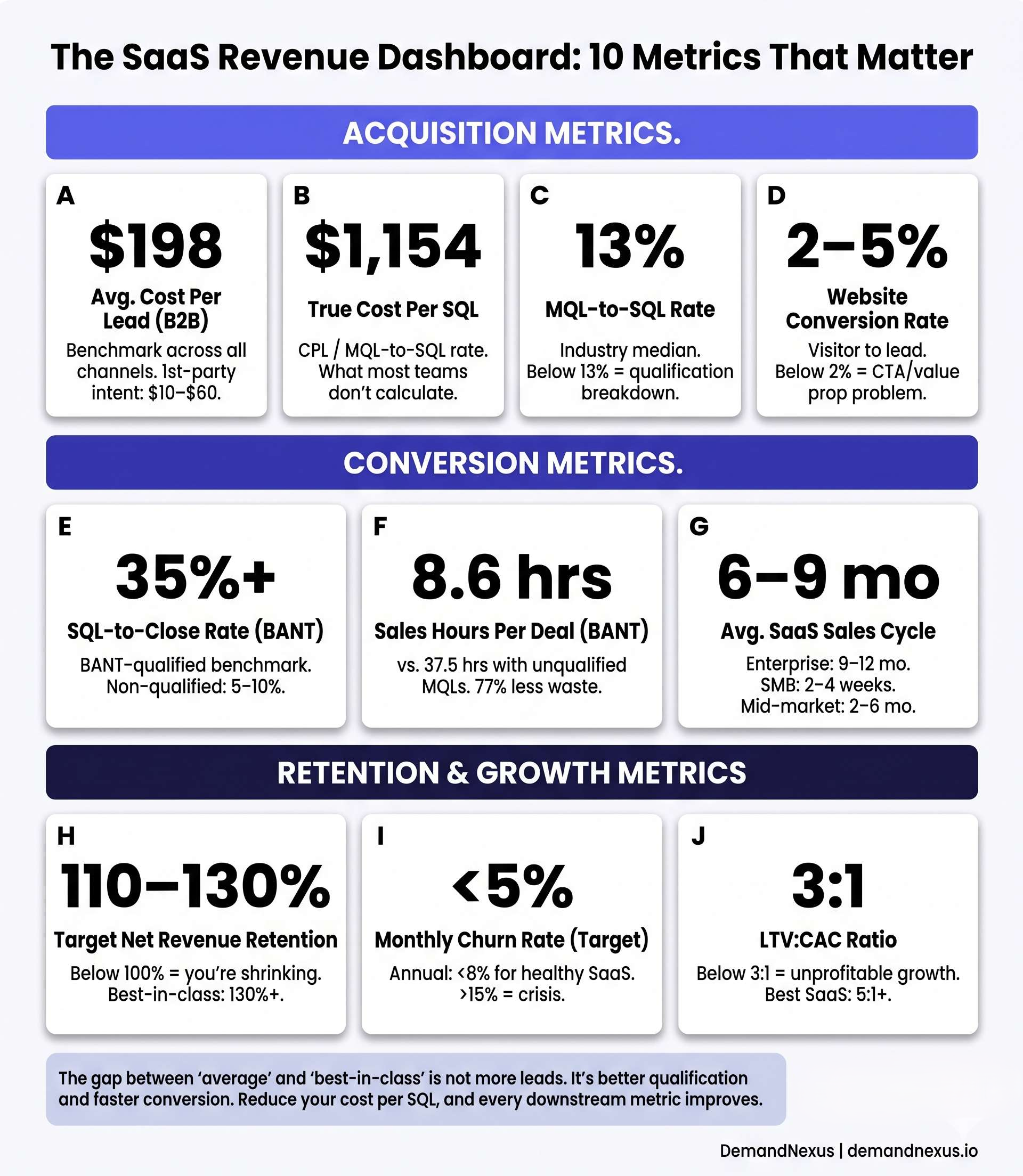
FAQs
What is SaaS content marketing?
SaaS content marketing is the practice of creating and distributing valuable content to attract, engage, and convert target buyers for a software product. It encompasses SEO-optimized blog content, pillar pages, case studies, comparison pages, ROI calculators, and thought leadership — all designed to drive awareness and qualified pipeline.
How do I build a SaaS content marketing strategy?
Start with ICP-aligned keyword research to identify the specific search terms your target buyers use at each stage of the buying journey. Build a pillar-and-cluster content architecture, create content for every funnel stage, and measure success on pipeline generated rather than traffic volume.
What content types work best for SaaS?
The highest-converting SaaS content types are: comparison and alternative pages (late-stage evaluation), case studies with specific ROI outcomes, pillar pages for topical authority, and ROI calculators and interactive tools. Top-of-funnel informational content drives awareness and organic authority.
How does content marketing generate pipeline for SaaS?
Content marketing generates pipeline by attracting buyers who are actively researching your solution category, building trust through educational content, and converting high-intent visitors through demo requests and BANT qualification programs.
What is owned media in SaaS content marketing?
Owned media refers to content properties your company controls — websites, blogs, email lists, and purpose-built industry media brands. DemandNexus operates six owned B2B media brands (AITechTrend, MarTechTrend, HRTechTrend, FinTechFilter, LegalTechTrend, DevTechTrend) that reach 15M+ decision-makers and generate first-party intent signals for demand generation.
How long does SaaS content marketing take to produce ROI?
Meaningful pipeline attribution from content marketing typically emerges in months 6–12, with compounding ROI visible by month 18–24. SEO content that ranks produces returns for years without incremental cost — the long-term ROI advantage over paid channels is significant.