

Why You Need a Demand Generation Framework
Without a structured framework, demand generation devolves into a collection of disconnected activities—webinars that do not feed pipeline, content that does not generate signals, and outreach that does not produce meetings. A framework provides the architecture that connects every activity to a measurable pipeline outcome.
The best demand generation frameworks share three characteristics: they define clear stage gates that filter prospects progressively, they specify what data is captured at each stage, and they assign accountability for each transition between stages.
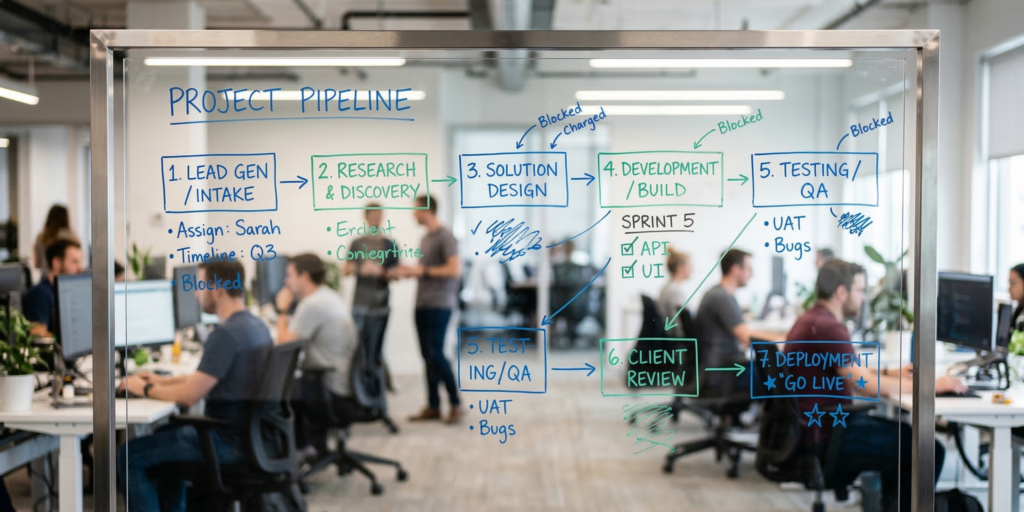
The Waterfall Model: A Proven Demand Generation Framework
The waterfall model is a multi-stage qualification engine where prospects flow through progressively more rigorous filters. Unlike traditional marketing funnels that measure progression by activity (visited website, downloaded content, requested demo), the waterfall measures progression by verified buyer readiness.
Stage 1: Niche Media Engagement. Prospects engage with content within your owned or partnered media ecosystem. Behavioral signals—articles read, topics consumed, frequency of engagement—are captured as first-party intent data.
Stage 2: ICP Verification. Engaged prospects are matched against your Ideal Customer Profile. Firmographic data (industry, company size, revenue), technographic data (current tech stack), and role data (title, department, seniority) are verified.
Stage 3: Multi-Channel Outreach. Qualified, high-intent prospects receive context-aware outreach across email, LinkedIn, and phone. Messaging references their specific research behavior and industry context.
Stage 4: BANT Qualification. A trained specialist conducts a human-led qualification conversation verifying Budget (is there allocated spend?), Authority (is this the decision-maker?), Need (is there a specific, articulated pain?), and Timeline (is there an active buying window?).
Stage 5: Appointment Scheduling and AHO Delivery. Verified prospects are scheduled on your AE’s calendar. A structured Appointment Handover Sheet documenting all BANT data, pain points, competitive intelligence, and recommended approach is delivered 48 hours before the meeting.
The waterfall advantage: each stage eliminates unqualified prospects before they consume downstream resources. By the time an appointment reaches your AE, 35%+ convert to closed deals because every prior stage has done its job.
Demand Generation Team Structure: The 8-Person Pod Model
Effective demand generation requires specialized roles working in coordination. The “Instant Pod” model assigns 8 dedicated team members to your campaign:
List Builder: Uses AI-powered research tools to identify high-intent companies and contacts matching your ICP. Verifies data quality and maintains list hygiene.
Copywriter: Crafts brand-safe, context-aware messaging for each outreach channel. A/B tests subject lines, email bodies, and LinkedIn messages at scale using AI testing frameworks.
Team Lead: Manages pod operations, monitors KPIs in real-time, coaches SDRs based on call analysis, and ensures quality standards are maintained.
5 SDRs: Trained qualification specialists who conduct human-led BANT verification calls, handle objections, and schedule appointments. These are not generic call center agents—they are specialists trained in consultative discovery methodology.
This structure ensures that no single role is overloaded and that every prospect interaction benefits from specialization.
Demand Generation Content Strategy Within the Framework
Content serves a specific function at each framework stage:
Stage 1 Content (Awareness): Ungated educational articles, industry research, and thought leadership published through niche media brands. Purpose: attract your ICP and generate first-party intent signals.
Stage 2 Content (Consideration): Solution-comparison guides, ROI calculators, and case studies. Purpose: help prospects evaluate whether your category (and your solution specifically) addresses their needs.
Stage 3 Content (Decision): Personalized outreach referencing specific content consumption, tailored case studies from the prospect’s industry, and AE preparation materials. Purpose: demonstrate that you understand their specific situation.
Every piece of content should be optimized for AEO (structured FAQ schema, clear topic sentences, specific metrics) and GEO (entity-rich content that AI engines can cite as authoritative sources).
Demand Generation Channels: Where to Invest
Channel selection should be driven by where your ICP consumes content, not where your team is most comfortable executing.
Highest-ROI channels in 2026: content syndication through niche media brands (lowest CPQM), LinkedIn outreach with intent data triggers (highest engagement rates), and email sequences personalized by research behavior (best for scale).
Supporting channels: Webinars and virtual events (strong for mid-funnel engagement), paid search (effective for demand capture but expensive for demand creation), and display advertising (best when targeted at accounts showing first-party intent signals).
FAQs
What is a demand generation framework?
A demand generation framework is a structured, multi-stage model that connects awareness activities to qualified pipeline outcomes. It defines clear stage gates, specifies data captured at each stage, and assigns accountability for transitions between stages.
What are the stages of a demand generation funnel?
A typical framework includes: intent signal capture, ICP verification, multi-channel outreach, BANT qualification, and appointment delivery with structured documentation. Each stage progressively filters prospects to ensure only verified buyers reach your sales team.
What is a demand generation waterfall model?
The waterfall model is a qualification framework where prospects flow through progressively more rigorous filters—from media engagement to ICP match to outreach to BANT verification to scheduled appointment. Each stage eliminates unqualified prospects before they consume downstream resources.
What is the best demand generation team structure?
An 8-person dedicated pod model with specialized roles: 1 List Builder, 1 Copywriter, 1 Team Lead, and 5 trained SDRs. Specialization ensures quality at every stage. Dedicated (not shared) teams produce consistently higher appointment quality.
How does content fit into a demand generation framework?
Content serves specific functions at each stage: ungated educational content generates awareness and intent signals, solution-comparison content supports consideration, and personalized outreach content drives decision. Every piece should be AEO and GEO optimized.
Author