


The real challenge isn’t attracting interest it’s converting that interest into actual sales conversations with qualified buyers. This article explores how SaaS demand generation is evolving, why traditional approaches often fail, and how a pay-for-performance appointment model delivers predictable, scalable pipeline growth.

Most B2B teams lose 40–60% of qualified prospects to broken handoffs and weak qualification. Take our 2-minute diagnostic to find out where your pipeline is bleeding — and how to fix it.
Start the Quiz → Takes 2 minutes. No email required to start.What is Demand Generation for SaaS?
Demand generation for SaaS encompasses every strategy used to create interest in a software product and guide prospects through the buyer’s journey. This traditionally includes content marketing, SEO, paid advertising, social media engagement, and webinars.
However, there’s a critical distinction between demand generation and demand conversion. Most SaaS companies excel at the former while struggling with the latter. According to industry research, up to 87% of marketing-generated leads are rejected by sales teams as unqualified. This creates what many sales leaders call “the MQL Black Hole” where marketing celebrates lead volume while sales teams waste countless hours chasing prospects who aren’t ready, able, or willing to buy.
The most effective SaaS demand generation strategies now focus on delivering not just leads, but BANT-qualified appointments: meetings with prospects who have confirmed Budget, Authority, Need, and Timeline to purchase.

Why Traditional SaaS Lead Generation Falls Short
Traditional demand generation tactics suffer from a fundamental measurement problem. Success is typically measured by cost per lead (CPL) or marketing qualified leads (MQLs) metrics that don’t correlate with actual revenue.
Consider the economics: A typical MQL costs $150-300 to generate. Of those MQLs, only 13% convert to sales-qualified leads (SQLs). Each sales rep then spends 8-12 hours per week chasing unqualified prospects, leaving less than half their time for actual selling.

The problem compounds with common demand generation channels. Google Ads B2B CPL ranges from $70-130. LinkedIn advertising averages $408 per lead. And third-party intent data providers like Bombora and 6sense while promising to identify “in-market” accounts deliver signals with only 40-50% accuracy, often weeks after the buying signal occurred.
Meanwhile, every competitor with a similar budget receives the exact same intent signals, creating a race to the bottom.
The Shift from Lead Generation to Appointment Generation
Forward-thinking SaaS companies are abandoning the traditional demand generation funnel in favor of a more direct approach: outbound prospecting combined with rigorous BANT qualification that delivers scheduled meetings with verified decision-makers.
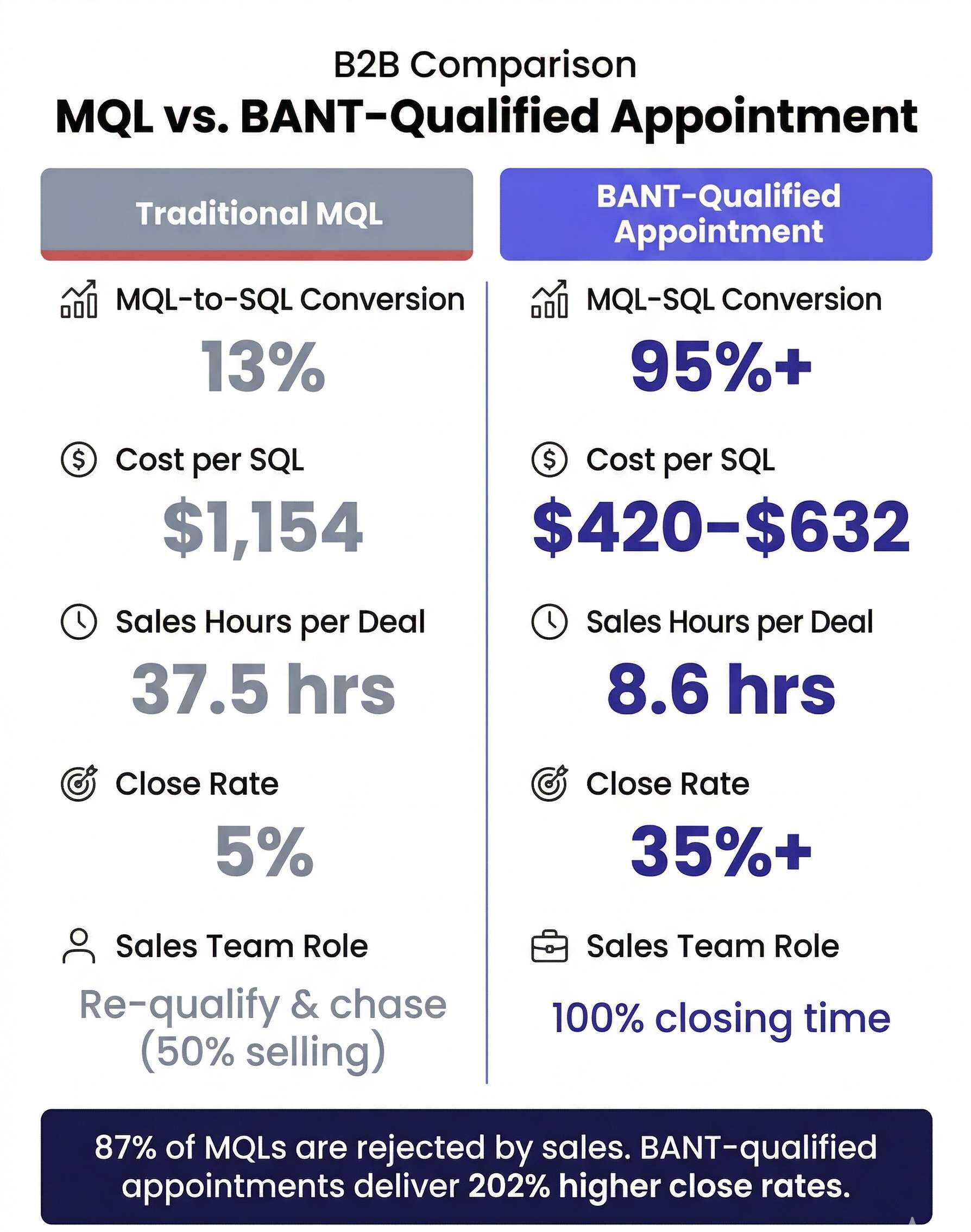
This appointment generation model inverts the traditional funnel by eliminating waste at every stage. Instead of generating thousands of leads and hoping some convert, qualified appointment generation starts with ideal customer profile (ICP) targeting and ends with confirmed meetings on your sales team’s calendar.
The economics are dramatically different. Organizations prioritizing BANT-qualified leads achieve 20% higher win rates compared to non-BANT qualified leads. Lead-to-opportunity conversion improves by 72%. And close rates increase by over 200% compared to traditional marketing leads.
How First-Party Intent Data Changes the Game
The most effective SaaS demand generation strategies leverage first-party intent data rather than third-party signals. First-party intent data comes from direct engagement: content downloads, webinar attendance, newsletter engagement, and community participation.
Unlike third-party intent data, first-party signals are accurate (95%+ vs. 40-50%), timely (real-time vs. weeks old), and proprietary (competitors cannot access the same data).
For SaaS companies targeting specific verticals cybersecurity, martech, fintech, HR tech, or legal tech partnering with niche industry publications provides access to engaged audiences of decision-makers actively researching solutions. When a VP of Security downloads a whitepaper on AI governance, that’s a direct buying signal that can be immediately qualified and converted to a sales conversation.
Effective SaaS Demand Generation Strategies
The most successful SaaS demand generation combines traditional brand-building with conversion-focused appointment generation.
Content Marketing remains essential, but the focus shifts from gated content to value-first education. Publishing ungated guides, research reports, and case studies establishes authority while allowing prospects to self-qualify based on engagement depth.
SEO drives organic visibility for high-intent keywords. A SaaS company offering project management tools might optimize for “enterprise project management software comparison” rather than just “project management tips.”
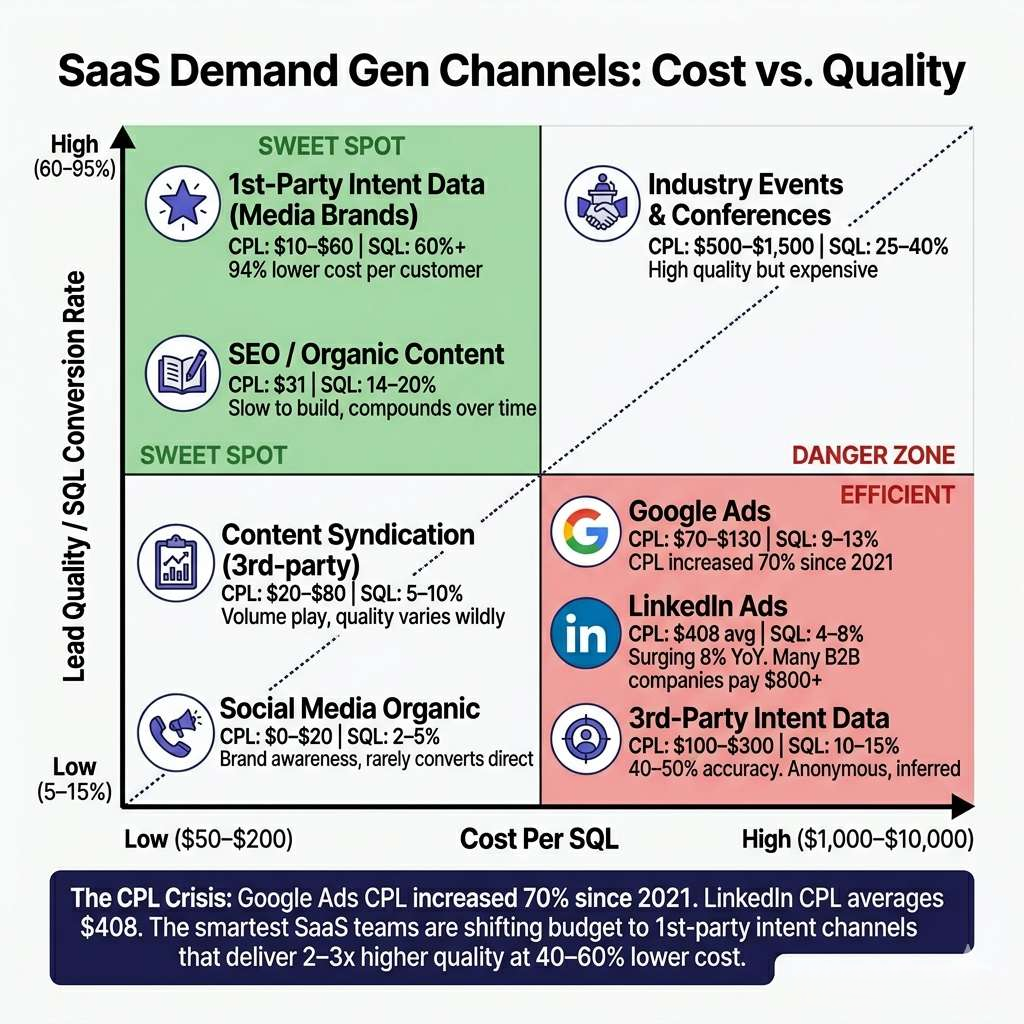
Paid Advertising works best when targeted precisely. LinkedIn Ads reaching specific job titles at target accounts, combined with retargeting campaigns, maintain brand awareness while driving prospects toward qualification.
Webinars and Educational Events serve dual purposes: establishing thought leadership while capturing first-party intent signals from engaged attendees.
Social Media Engagement on LinkedIn builds relationships with potential buyers over time. Employee advocacy amplifies reach while maintaining authenticity.
However, these strategies only generate pipeline when paired with systematic qualification and appointment setting. Without converting interest into qualified conversations, even the best content marketing becomes an expensive awareness campaign with no measurable revenue impact.
The Pay-for-Performance Appointment Model
The most significant innovation in SaaS demand generation is the shift from paying for leads to paying for qualified appointments. This pay-for-performance model aligns vendor incentives with actual business outcomes.
Under this model, SaaS companies receive scheduled meetings with prospects who have been verified across all four BANT criteria. Budget has been confirmed. Decision-making authority has been mapped. Business need has been articulated. Purchase timeline has been established.
Every appointment includes comprehensive documentation an Appointment Handover Sheet that gives sales teams complete context before each conversation. This includes the prospect’s specific pain points in their own words, their current solutions and why they’re evaluating alternatives, key stakeholders in the buying process, and recommended conversation openers.
The result: sales reps walk into meetings 100% prepared, close rates increase dramatically, and marketing investment directly ties to revenue outcomes.
Demand Generation Across SaaS Verticals
While the principles apply universally, SaaS demand generation adapts to specific verticals.
Cybersecurity SaaS buyers prioritize proof of security effectiveness and compliance certifications. Demand generation emphasizes technical whitepapers, compliance checklists, and case studies from similar organizations.
Martech SaaS audiences respond to ROI calculators, integration guides, and automation workflow templates. Content addresses specific challenges like customer data platform implementation or marketing attribution.
HR Tech SaaS decision-makers value employee experience research, compliance updates, and benchmarking data. Demand generation often targets HR leaders during budget planning cycles or following organizational changes.
Fintech SaaS buyers require detailed security documentation and regulatory compliance verification. Content marketing emphasizes risk mitigation and operational efficiency.
Legal Tech SaaS audiences are highly relationship-driven and respond to educational content on regulatory changes, contract management optimization, and compliance automation.
How to Measure SaaS Demand Generation Success
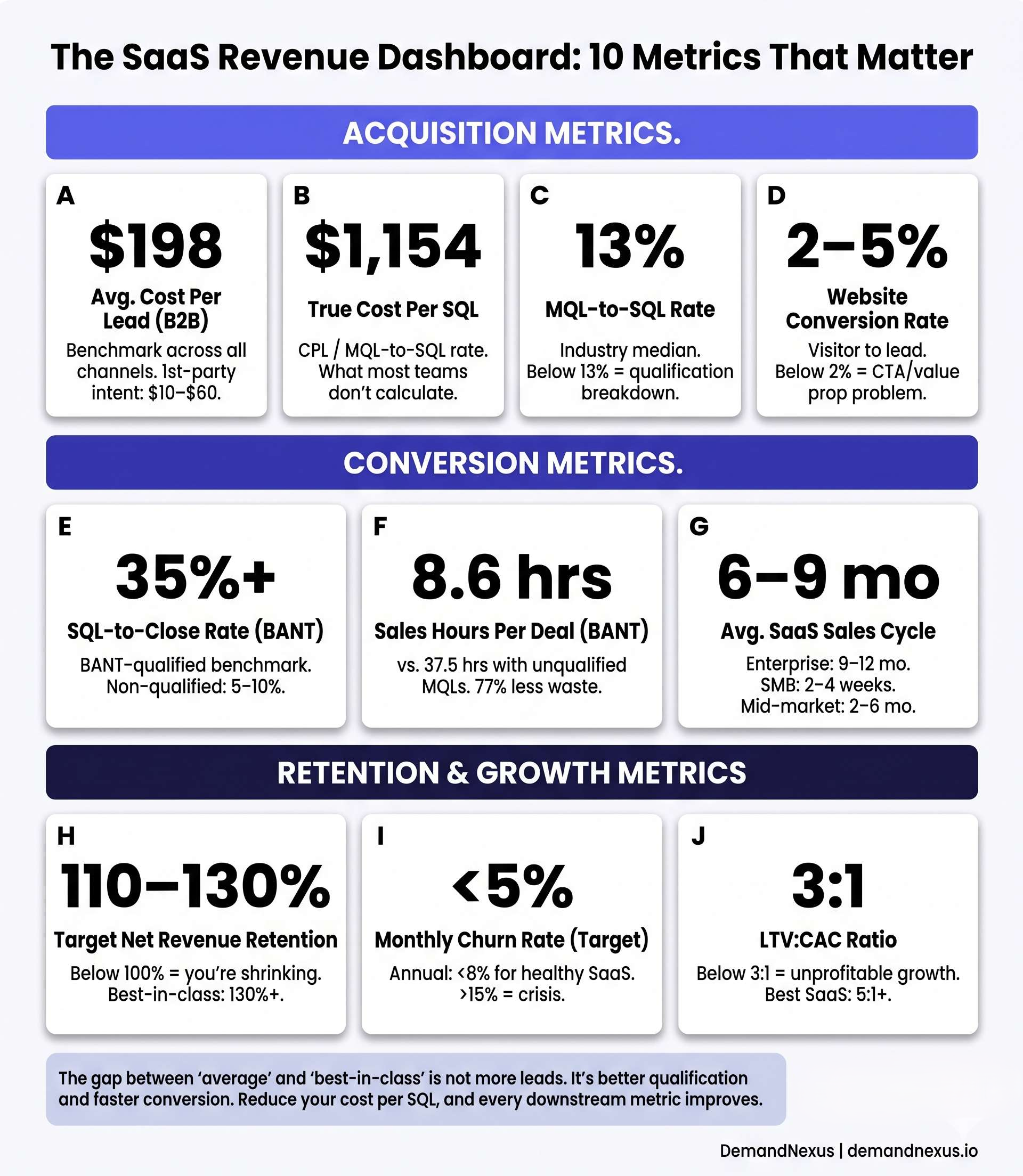
Effective measurement goes beyond traditional marketing metrics. The key performance indicators that matter are:
Pipeline Velocity: How quickly do qualified appointments convert to opportunities and closed deals? This measures the efficiency of your entire revenue engine.
Appointment-to-Opportunity Conversion: What percentage of scheduled meetings result in qualified pipeline? With rigorous BANT qualification, this should exceed 90%.
Customer Acquisition Cost (CAC): What’s the fully-loaded cost to acquire each new customer, including marketing spend, sales time, and opportunity cost?
Close Rate by Lead Source: Which demand generation channels produce appointments that actually close? This reveals where to concentrate investment.
Sales Time Allocation: What percentage of your sales team’s time is spent selling versus qualifying leads? Elite teams spend less than 5 hours weekly on qualification because pre-qualified appointments eliminate wasted effort.
Frequently Asked Questions
What is SaaS demand generation? SaaS demand generation encompasses all strategies used to create interest in a software product and convert that interest into revenue. The most effective approaches combine brand-building content marketing with systematic qualification that delivers BANT-verified appointments to sales teams.
How is demand generation different from lead generation? Lead generation focuses on capturing contact information. Demand generation goes further by educating prospects, establishing trust, and qualifying buying intent. The best demand generation culminates in scheduled appointments with verified decision-makers rather than just names on a list.
What is BANT qualification? BANT stands for Budget, Authority, Need, and Timeline. A BANT-qualified prospect has confirmed available budget, decision-making authority, articulated business need, and defined purchase timeline. Leads verified across all four criteria convert at 3-7x higher rates than unqualified leads.
What is first-party intent data? First-party intent data comes from direct engagement with your brand or partnered media properties: content downloads, webinar attendance, newsletter clicks, and community participation. Unlike third-party intent data purchased from aggregators, first-party signals are accurate, timely, and proprietary.
How does pay-for-performance appointment generation work? Under a pay-for-performance model, you only pay for qualified appointments that meet your BANT criteria and actually occur. No-shows are replaced at no cost. This aligns vendor incentives with your business outcomes rather than activity metrics.
What should SaaS demand generation cost? Traditional cost per MQL ranges from $150-400, with only 13% converting to SQLs. Pay-for-performance appointment generation typically costs $400-600 per qualified meeting, but with 90%+ appointment-to-opportunity conversion, the effective cost per qualified opportunity is often 50% lower than traditional approaches.
Transform Your SaaS Demand Generation Strategy
The SaaS companies winning in competitive markets have moved beyond activity-based metrics and lead volume goals. They’ve recognized that demand generation success is measured by one thing: qualified pipeline that closes.
Stop paying for leads that your sales team rejects. Stop wasting rep time on prospects who can’t or won’t buy. Start with qualified appointments where every meeting has verified budget, authority, need, and timeline.
Ready to transform your SaaS demand generation from a cost center into a predictable revenue engine? The Demand Nexus Waterfall model delivers 15+ BANT-qualified appointments monthly, backed by a pay-for-performance guarantee. You only pay for meetings that happen and every appointment includes comprehensive documentation so your team walks in prepared to close.
Learn how guaranteed appointment generation can accelerate your SaaS pipeline at demandnexus.io.