



An email funnel is often presented as the backbone of modern B2B lead generation a structured sequence of targeted emails designed to guide prospects through every stage of their journey. But here’s the uncomfortable truth most marketers won’t tell you: if you’re feeding unqualified leads into your funnel, you’re essentially nurturing prospects who will never buy.
The real question isn’t how to build a better email funnel. It’s whether your leads deserve to be in that funnel at all.

Most B2B teams lose 40–60% of qualified prospects to broken handoffs and weak qualification. Take our 2-minute diagnostic to find out where your pipeline is bleeding — and how to fix it.
Start the Quiz → Takes 2 minutes. No email required to start.The Traditional Email Funnel: Where 80% of Leads Go to Die
The classic B2B email funnel looks elegant on paper. Awareness, interest, consideration, conversion, retention, advocacy each stage with its own carefully crafted email sequence. Marketing automation platforms make it easy to set up triggers, segment lists, and schedule drip campaigns.
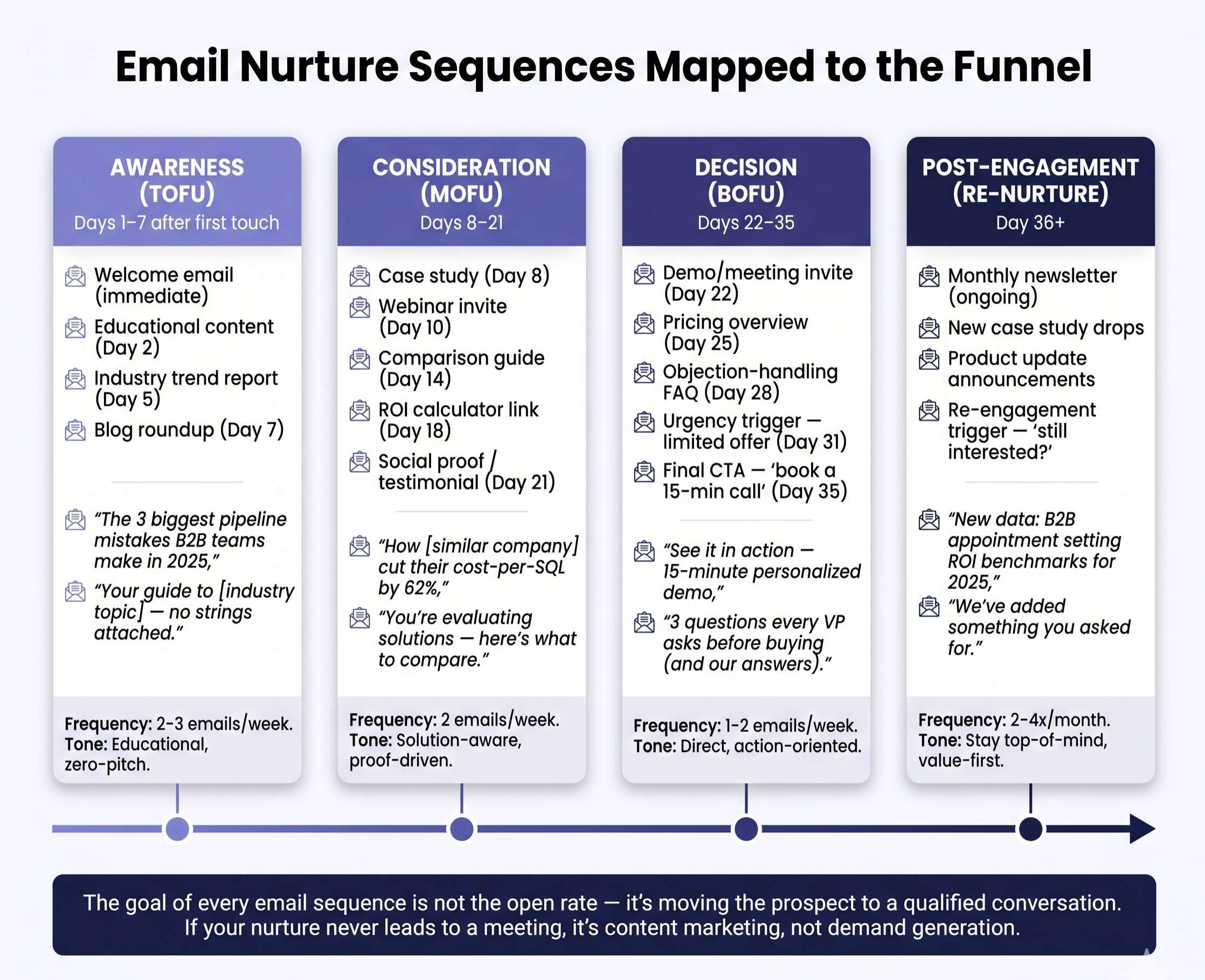
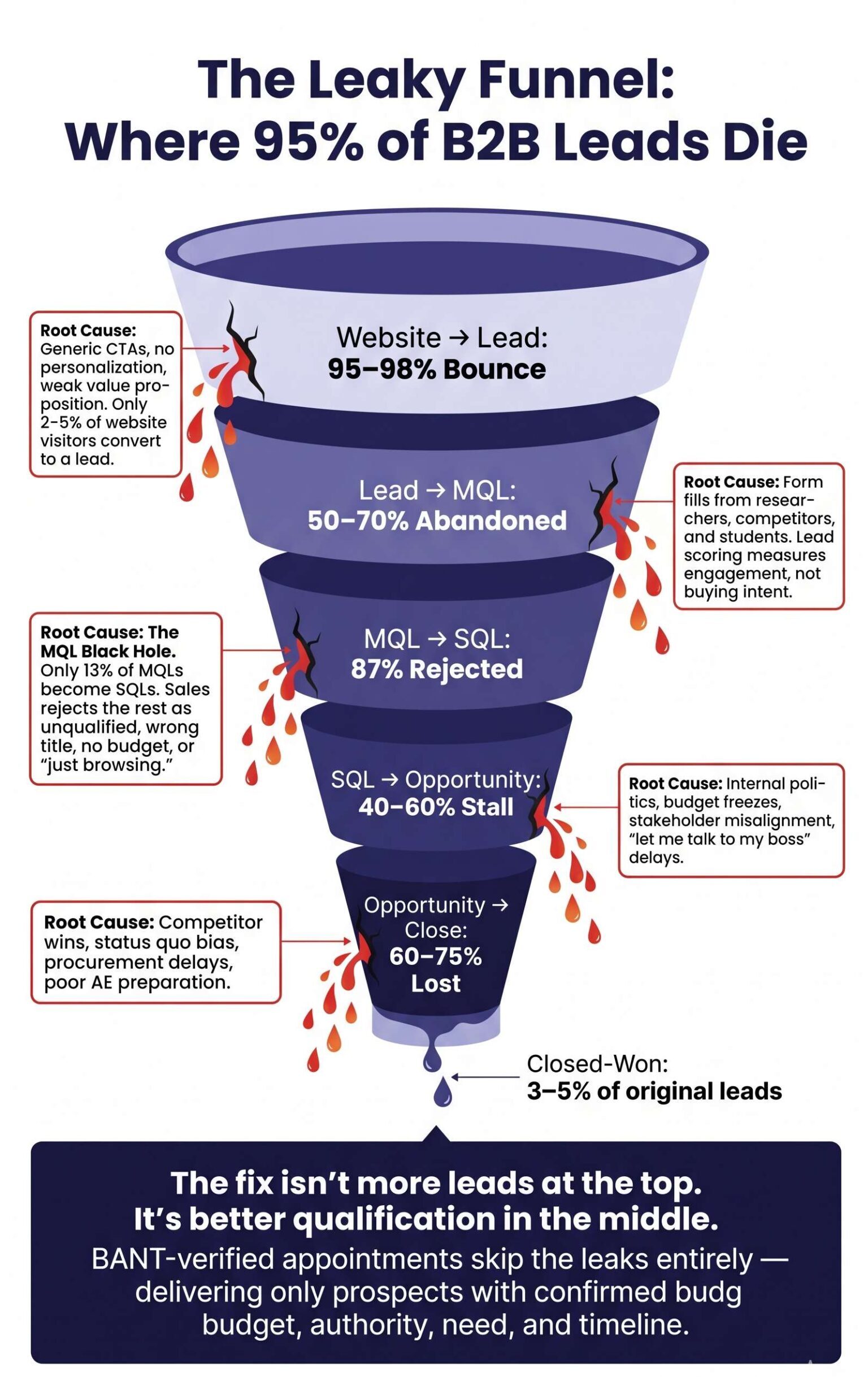
But here’s what the funnel diagrams don’t show you: the massive leakage at every stage.

Consider the typical journey. A prospect downloads a whitepaper and enters your funnel. Your marketing automation scores them based on engagement email opens, webinar attendance, pricing page visits. At 50 points, they become an MQL. Marketing celebrates. Sales receives the “hot lead.”
Then reality hits. Your SDR spends 30 minutes researching the prospect, another 15 minutes crafting a personalized outreach. They finally connect and discover the prospect is a college student researching for a class project. Or a competitor analyzing your messaging. Or a junior analyst with zero budget and no authority.

This isn’t an edge case. Research shows 87% of MQLs are rejected by sales teams. The traditional email funnel doesn’t qualify leads it simply measures engagement, which has almost no correlation with buying readiness.
The Fundamental Flaw: Engagement ≠ Intent
Traditional email funnels rely on lead scoring systems that track digital behaviors: email clicks (+5 points), webinar attendance (+15 points), pricing page visits (+20 points). Reach a threshold, and you’re magically “qualified.”
The fatal flaw is obvious once you see it: these systems measure engagement, not buying readiness.
A prospect can hit 100 points without ever having budget, authority, or a real timeline. Meanwhile, a genuine buyer who skims one email and picks up the phone could score 5 points and never appear on your radar.
This is why B2B companies are rethinking the entire funnel paradigm. Instead of asking “how do we nurture more leads through our funnel?” they’re asking “how do we ensure only qualified buyers enter the funnel in the first place?”
Rethinking the Funnel: Qualification Before Nurturing
The most effective B2B lead generation doesn’t start with awareness campaigns and email sequences. It starts with rigorous qualification using a framework that’s been proven for decades: BANT.
BANT qualification- Budget, Authority, Need, Timeline answers the only question that matters: Is this person ready to buy?
Budget: Has the prospect allocated funds, or can they secure budget for this initiative?
Authority: Is the prospect a decision-maker, or at minimum a key influencer in the buying process?
Need: Does the prospect have a genuine business problem your solution addresses?
Timeline: Is there an active buying window – not “someday,” but a real deadline?
When you verify all four criteria before a prospect ever touches your email funnel, you eliminate the waste that plagues traditional lead generation. No more nurturing tire-kickers. No more sales reps chasing dead ends. No more “let me talk to my boss” delays.
The Appointment Generation Model: Cutting Out the Waste
Instead of the traditional funnel -Traffic → Lead → MQL → SAL → SQL → Opportunity – the appointment generation model delivers something radically simpler:
Outbound Outreach → BANT Qualification → Scheduled Meeting with Decision-Maker
The result? Your sales team receives only qualified opportunities with confirmed budget availability, decision-making authority, an active business need, and a purchase timeline (typically 1-6 months).
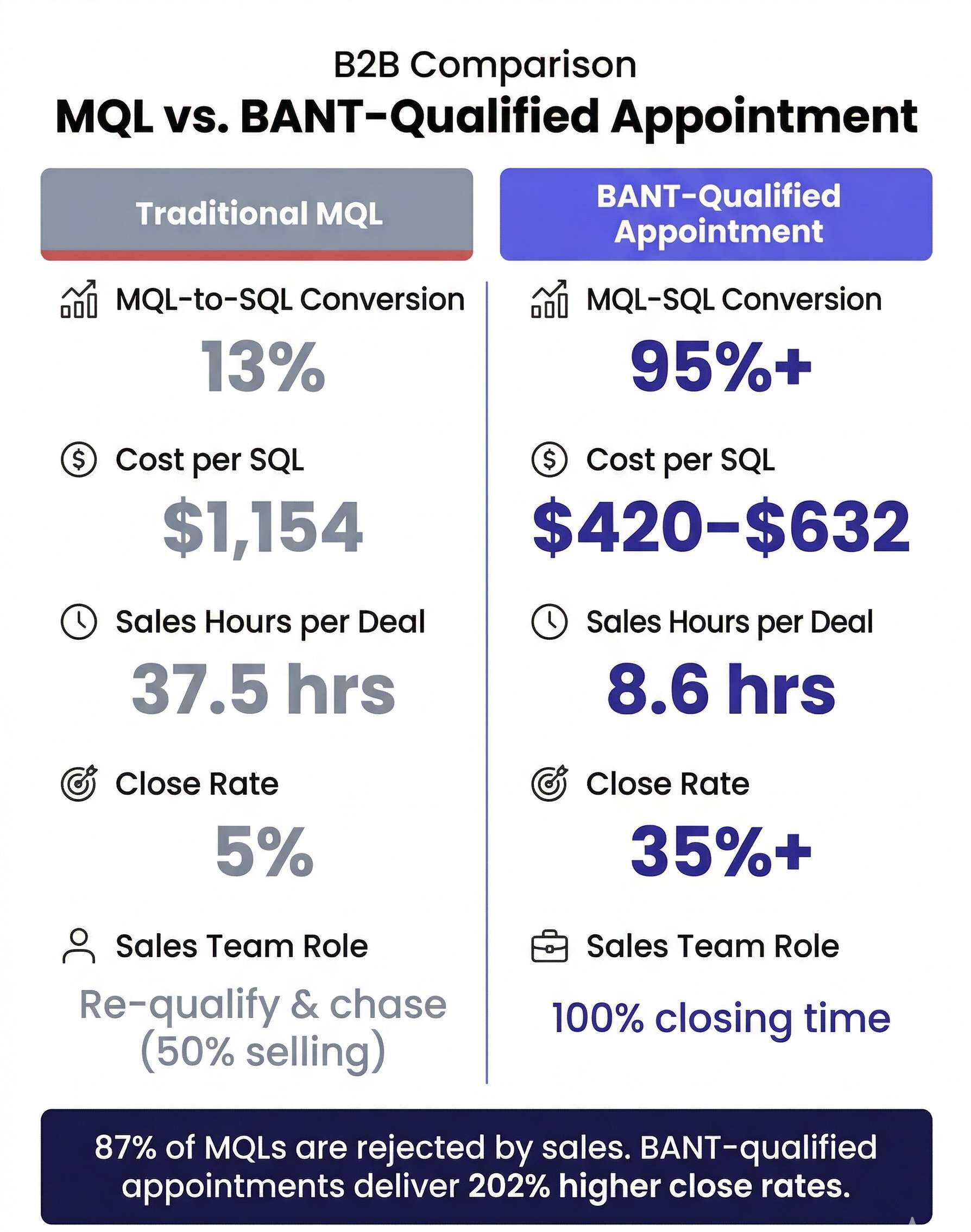
This isn’t theory. Organizations prioritizing BANT-qualified leads achieve 20% higher win rates versus non-BANT qualified leads, 72% improvement in lead-to-opportunity conversion, and 202% higher close rates compared to non-qualified leads.
The Economics: Why BANT-Qualified Appointments Outperform Email Funnels
Let’s compare the numbers.
Traditional MQL Email Funnel: If you’re generating 200 MQLs per month at $150 each, you’re investing $30,000 to produce roughly 26 SQLs (at the industry-average 13% MQL-to-SQL conversion). That’s $1,154 per SQL, plus 300+ hours of sales time spent qualifying leads that mostly go nowhere.
BANT-Qualified Appointment Model: With 40 BANT-qualified appointments at $500 each, you invest $20,000 to produce 38 SQLs (at 95%+ conversion, because they’re already qualified). That’s $526 per SQL, with less than 80 hours of sales time -100% focused on closing, not chasing.
The math is stark: 46% more SQLs, 33% less investment, and 220 sales hours saved every month.
What Gets Eliminated
When you shift from nurturing unqualified leads to generating BANT-qualified appointments, you eliminate the infrastructure that was never solving your real problem:
You no longer need complex lead scoring systems trying to divine buying intent from email clicks. You eliminate elaborate nurture campaign sequences that keep unqualified leads warm for months (or years) while they never buy. You cut the lead routing drama, the sales rep time wasted calling cold leads, and the endless “just doing research” responses.
What you get instead: meetings with decision-makers who have budget, need, and timeline. Meetings where your AE walks in prepared to close, not prepared to qualify.
The Appointment Handover: Sales Enablement That Actually Enables
The real power of BANT-qualified appointments isn’t just the qualification – it’s the intelligence that comes with each meeting.
Every qualified appointment should include a comprehensive briefing document -what Demand Nexus calls an Appointment Handover Sheet (AHO). This isn’t a vague note that says “interested in your product, call them.” It’s a strategic intelligence briefing containing the exact first-party intent signals that identified the prospect, their specific answers to all BANT criteria with verbatim quotes, their pain points in their own words, their timeline and urgency level with specific deadlines, competitive intelligence on what they’re currently evaluating, and a recommended opening strategy for your AE.
Your AE walks into the conversation knowing the prospect can afford the solution, can make the decision, has an urgent need, and is ready to buy now. This is the difference between a 5% close rate and a 35% close rate.
Case Study: Transforming a Broken Funnel
A mid-sized B2B SaaS company was generating 400 MQLs per month through content marketing and email nurture sequences. Their investment: $50,000 per month in content, advertising, and marketing automation.
The results were typical: 15% MQL-to-SQL conversion produced 60 SQLs. A 20% close rate yielded 12 deals. Sales teams spent 600 hours qualifying and chasing 400 leads. Cost per deal: $4,167. Sales hours per deal: 50.
After shifting to BANT-qualified appointments, their numbers transformed: 60 appointments per month, with 95% already SQL-qualified, produced 57 SQLs. A 30% close rate (higher because of richer qualification) yielded 17 deals. Sales spent 180 hours on 60 meetings – all focused on closing. Cost per deal: $1,765. Sales hours per deal: 10.6.
The improvement: 42% more deals closed, 58% lower cost per deal, 79% reduction in wasted sales time.
The Right Role for Email in B2B
This doesn’t mean email has no place in B2B sales. It means email should play a supporting role, not the starring role.
Email works for post-meeting follow-up, keeping qualified prospects engaged between conversations. It works for onboarding sequences after a deal closes. It works for customer retention and expansion campaigns with existing accounts. And it works as one channel in a multi-touch outreach sequence designed to book meetings with qualified prospects.
What email doesn’t work for is magically transforming unqualified leads into buyers through a sequence of nurture messages. If a prospect doesn’t have budget, authority, need, and timeline today, no email sequence will create those conditions. You’re better off focusing your resources on finding prospects who are already ready to buy.
Measuring What Matters
Traditional email funnel metrics – open rates, click-through rates, engagement scores – measure activity, not outcomes. The metrics that actually matter for B2B lead generation are different:
Appointments Set: How many qualified meetings appeared on your sales calendar?
BANT Verification Rate: What percentage of appointments met all qualification criteria?
Appointment-to-Opportunity Rate: How many meetings converted to pipeline?
Close Rate: What percentage of opportunities became customers?
Cost per Closed Deal: What did you actually invest to acquire each customer?
Sales Hours per Deal: How much time did your team spend closing each deal?
When you optimize for these metrics instead of email engagement metrics, you build a revenue engine rather than a content consumption engine.
Making the Shift
If your current approach involves flooding your pipeline with MQLs and hoping your email nurture sequences magically qualify them, consider what you’re actually paying for: the illusion of progress while your sales team drowns in unqualified leads.
The alternative is straightforward: invest in generating fewer, better-qualified opportunities. Your sales team stops wasting time on tire-kickers and starts closing deals with buyers who are ready to purchase.
The choice comes down to two models. You can continue feeding the traditional funnel and watching 80% of your leads evaporate. Or you can embrace rigorous BANT qualification and start delivering meetings that actually convert.
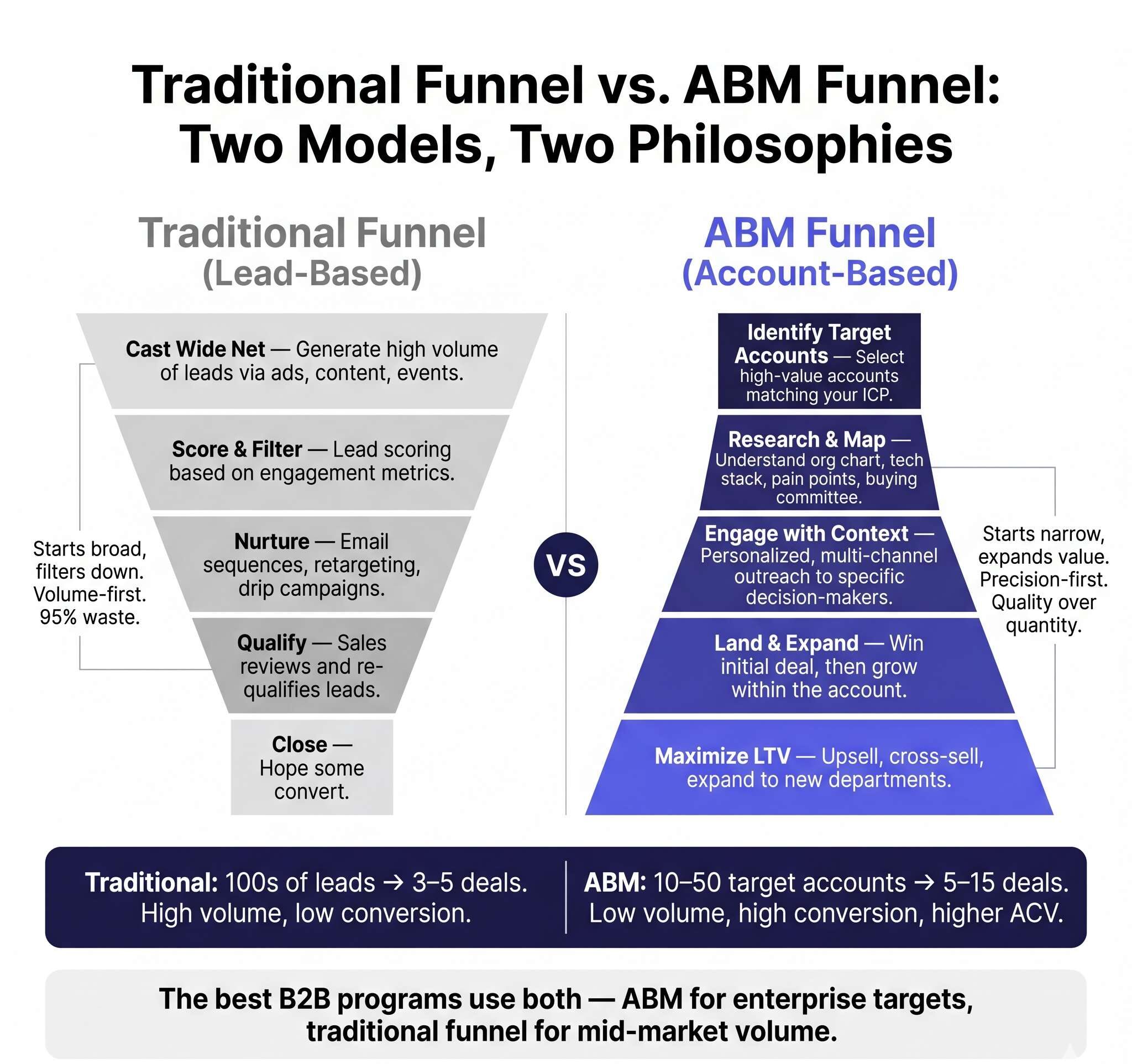
The companies that figure this out first will have a significant advantage. Their sales teams will be closing deals while their competitors are still nurturing leads who will never buy.
Demand Nexus specializes in BANT-qualified appointment generation for B2B technology companies. Our Waterfall model delivers 15+ guaranteed qualified meetings per month, backed by an SLA. Every appointment includes a comprehensive Appointment Handover Sheet so your AE walks in 100% prepared to close. Learn more at www.demandnexus.io
FAQs
Why do most B2B email funnels fail to generate qualified pipeline?
Most B2B email funnels fail because they measure engagement, not buying readiness. Lead scoring systems award points for email clicks, webinar attendance, and pricing page visits — but none of these behaviors confirm whether a prospect has budget, authority, a genuine need, or an active purchase timeline. The result: 87% of MQLs are rejected by sales teams, because a prospect who opened three emails is not the same as a prospect who is ready to buy. Until qualification precedes nurturing, email funnels will continue to deliver activity metrics instead of revenue.
What is the difference between lead scoring and BANT qualification in B2B email marketing?
Lead scoring is an automated, behavior-based system that infers buying intent from digital activity. BANT qualification is a human-verified process that confirms the four criteria that actually predict a purchase: Budget (has the prospect allocated funds?), Authority (are they the decision-maker?), Need (do they have an urgent business problem your solution solves?), and Timeline (is there an active buying window?). Where lead scoring produces a 13% MQL-to-SQL conversion rate, BANT-qualified appointments convert at 95%+, because qualification happens before the meeting — not during it.
How much does nurturing unqualified leads actually cost a B2B sales team?
The cost is significant in both money and time. A typical B2B company generating 200 MQLs per month at $150 each invests $30,000 to produce just 26 SQLs — a cost of $1,154 per SQL — while sales spends over 300 hours chasing leads that mostly go nowhere. By contrast, 40 BANT-qualified appointments at $500 each produce 38 SQLs at $526 per SQL, with less than 80 hours of sales time. That's 46% more SQLs, 33% less spend, and 220 sales hours saved every month. The hidden cost of unqualified leads isn't just the lead itself — it's the sales capacity consumed pursuing dead ends.
What should replace email nurture sequences for B2B pipeline generation?
The most effective replacement is the appointment generation model: Outbound Outreach → BANT Qualification → Scheduled Meeting with a Decision-Maker. Rather than warming unqualified leads over months of drip campaigns, this model verifies budget, authority, need, and timeline before any meeting is booked. Each appointment is accompanied by an Appointment Handover Sheet (AHO) — a pre-call intelligence briefing that gives the AE the prospect's verbatim pain points, confirmed BANT criteria, competitive context, and a recommended opening approach. The outcome is a sales conversation where the rep walks in prepared to close, not to qualify.
When does email still make sense in a B2B demand generation strategy?
Email remains effective in specific, supporting roles: post-meeting follow-up to keep qualified prospects engaged between conversations, onboarding sequences after a deal closes, and customer retention or expansion campaigns with existing accounts. It also works as one channel within a multi-touch outreach sequence designed to book meetings with already-identified qualified prospects. What email cannot do is manufacture buying intent where none exists — if a prospect lacks budget, authority, need, or timeline today, no nurture sequence will create those conditions. The highest-ROI use of email is as a closing and retention tool, not as a qualification substitute.