



Introduction
SaaS marketing tactics are only as valuable as the pipeline they produce. Most tactical playbooks focus on channel execution how to run LinkedIn campaigns, how to set up Google Ads, how to write cold email sequences. What they miss is the qualification layer that determines whether any of those tactics generate revenue or just activity.
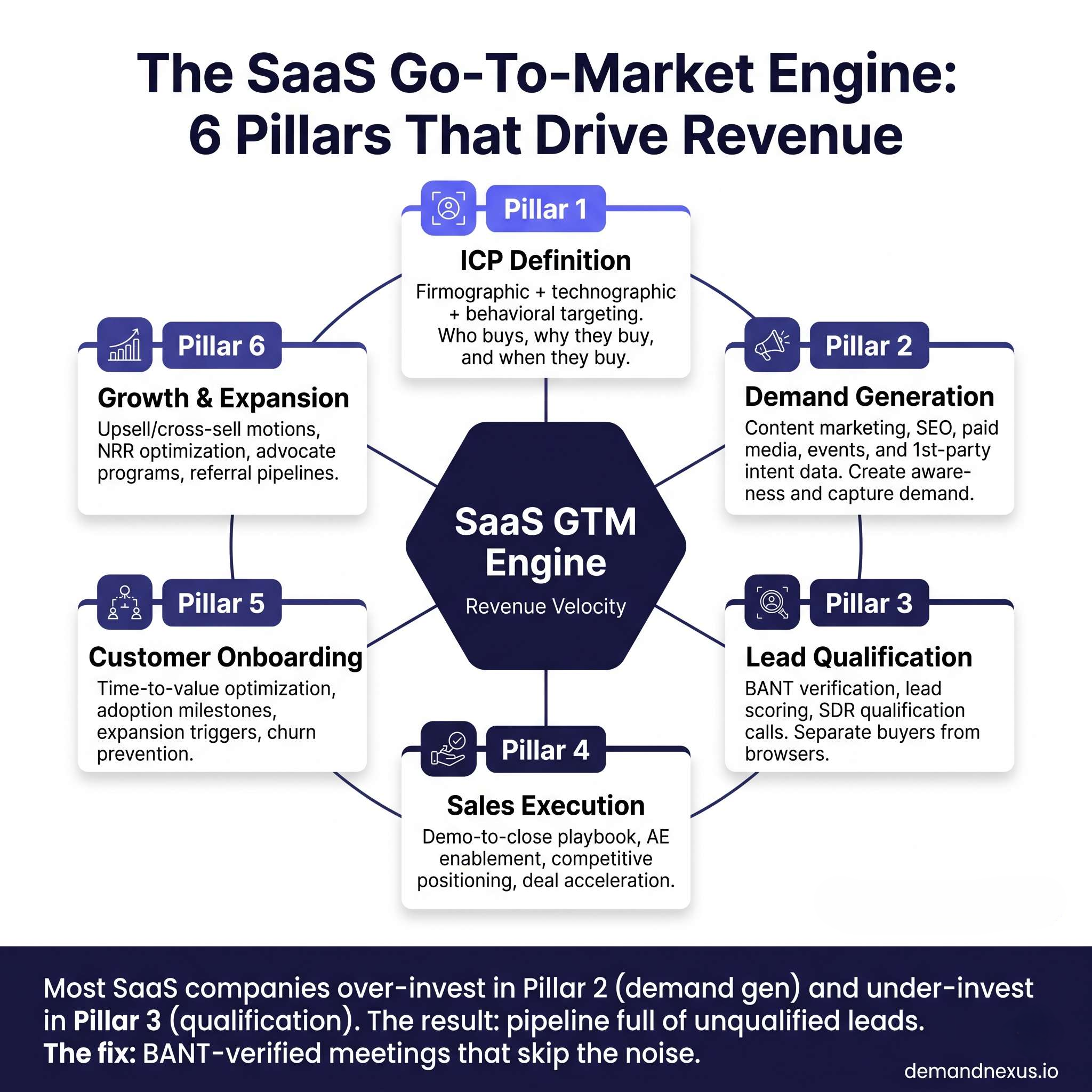

Most B2B teams lose 40–60% of qualified prospects to broken handoffs and weak qualification. Take our 2-minute diagnostic to find out where your pipeline is bleeding — and how to fix it.
Start the Quiz → Takes 2 minutes. No email required to start.This guide covers the tactics that produce the highest pipeline ROI in B2B SaaS and the execution principles that separate programs that generate revenue from programs that generate reports.
The 10 Highest-ROI SaaS Marketing Tactics
1. Intent-Driven Outbound Sequencing
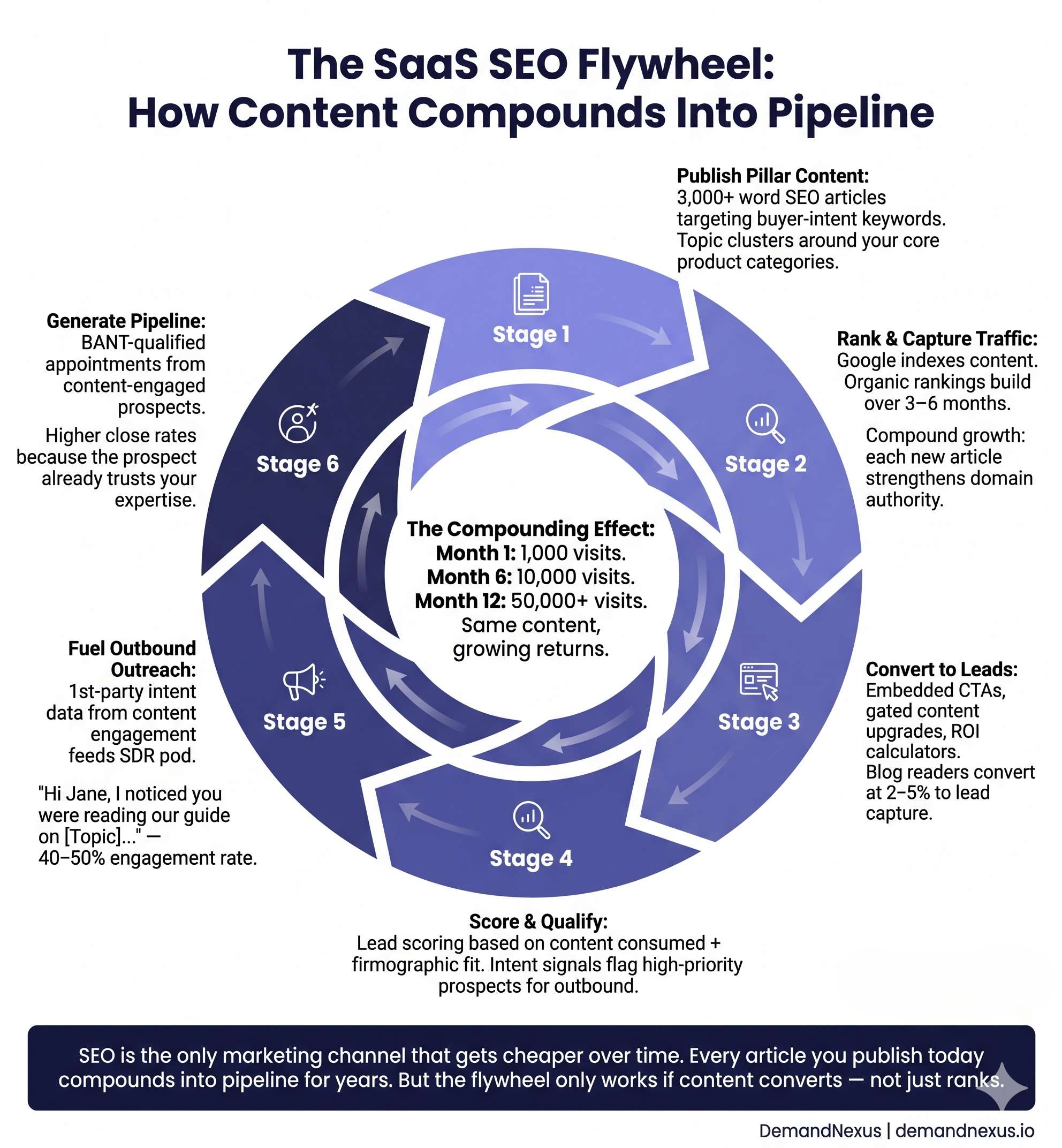
The highest-converting outbound tactic isn’t the best-written cold email it’s the most contextually relevant one. Using first-party intent data (behavioral signals from prospects engaging with category-relevant content), SDRs can open outreach with direct references to the specific problem the prospect was researching. Engagement rates: 40–50% versus under 5% for generic sequences.
2. Pillar-and-Cluster SEO Content Architecture
Building comprehensive pillar pages (2,500+ words) targeting primary keywords, supported by cluster articles on specific subtopics, establishes topical authority that ranks across an entire keyword cluster not just individual pages. This is the most capital-efficient long-term traffic strategy for SaaS.

3. BANT-Qualified Appointment Programs
Inserting a BANT qualification layer between your demand generation programs and your AE calendar is the single highest-ROI tactical change most SaaS marketing organizations can make. Converting AE meetings from MQL-sourced to BANT-verified increases close rates by 202% and reduces AE qualification time from 30+ hours/week to under 5.

4. ABM Target Account Programs
Account-based marketing for SaaS focuses content, outreach, and engagement resources on a defined list of high-value target accounts. The most effective ABM programs layer intent signals identifying which target accounts are actively researching your category to trigger personalized outreach at peak buyer interest.
5. Comparison and Alternative Pages
Comparison pages targeting ‘[competitor] vs [your product]’ and ‘[competitor] alternative’ queries attract late-stage buyers in active evaluation. These are the highest-converting SaaS content assets every visitor has a defined need, a likely budget, and a decision timeline.
6. Case Study Production and Distribution
Case studies with specific, quantified outcomes (‘$3.15M pipeline in Year 1,’ ‘202% higher close rates’) are the most trusted B2B content format. Produce them systematically, optimize them for search (case study + [use case] + [industry]), and use them as sales enablement assets in late-stage evaluation.
7. Retargeting High-Intent Visitors
Visitors who have viewed your pricing page, comparison pages, or demo request page have demonstrated commercial intent. Retargeting these segments with case studies and social proof typically produces 3–5x higher conversion rates than top-of-funnel retargeting.
8. Email Nurture for Long-Cycle Buyers
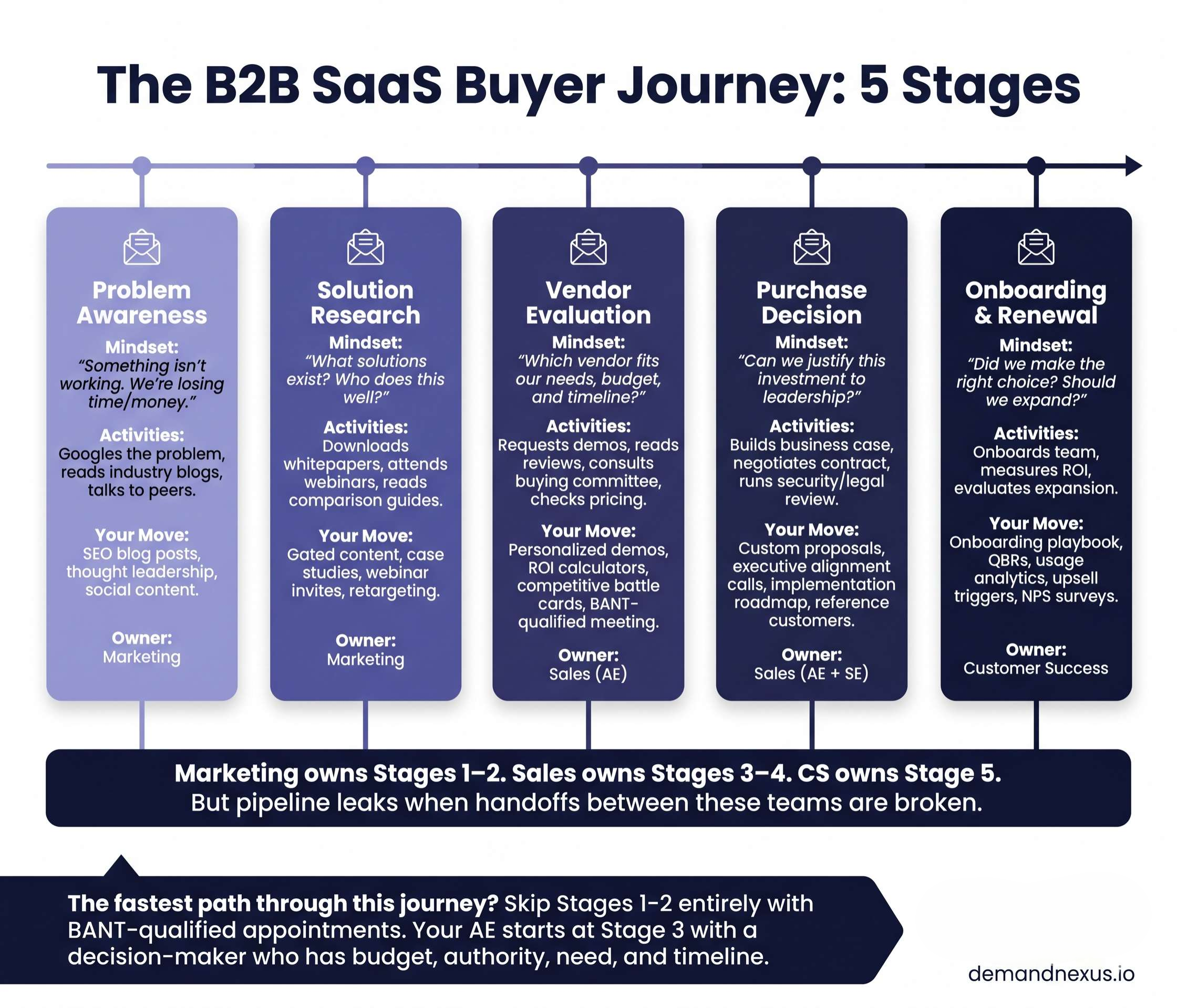
B2B SaaS buyers with 60–90 day evaluation cycles need ongoing engagement between marketing touchpoints and sales conversations. Content-focused email nurture sequences delivering insights, case studies, and relevant guides maintain consideration without triggering opt-outs.
9. Thought Leadership on LinkedIn
Founder and executive thought leadership on LinkedIn builds personal brand credibility that reinforces every other marketing touchpoint. Posts that share specific data, counter-intuitive insights, or direct POVs on category problems outperform generic content by 3–5x in engagement.
10. Product-Led Growth (PLG) Motion
For SaaS companies with self-serve adoption potential, free trial and freemium models create a parallel pipeline of product-qualified leads – users who have already experienced value and are expanding toward paid. PLG integrates with the demand generation motion: product-qualified users are among the highest-intent upgrade targets.
SaaS Marketing Tools: The Core Stack
- CRM: Salesforce, HubSpot pipeline tracking, AE workflow, deal attribution
- Marketing automation: Marketo, HubSpot email nurture, lead scoring, campaign management
- SEO: Ahrefs, Semrush keyword research, rank tracking, content gap analysis
- Intent data: Bombora, G2 Intent, DemandNexus first-party media signals behavioral buyer signals
- ABM: Demandbase, 6sense account targeting, intent layering, engagement orchestration
- Sales engagement: Outreach, Salesloft SDR sequencing, call tracking, performance analytics
- Analytics: GA4, Looker, Tableau attribution, pipeline reporting, channel ROI
SaaS Marketing Plan: The 90-Day Framework
Days 1–30: Audit and Baseline
Audit your current demand generation programs: Which channels are producing pipeline (not just leads)? What is your MQL-to-SQL conversion rate by source? What is your cost per closed deal by channel? Identify the two or three programs with the best pipeline ROI and the programs that produce activity without revenue.
Days 31–60: Restructure Around Pipeline
Replace MQL volume targets with pipeline generation targets. Insert a BANT qualification layer between marketing programs and your AE calendar. Cut or reduce investment in programs that produce MQL volume without pipeline conversion. Add or expand intent-driven outbound and content programs with documented pipeline attribution.
Days 61–90: Launch and Measure
Launch BANT-qualified appointment programs, expand high-performing content programs, and implement SQL conversion rate as the primary demand generation KPI. By day 90, you should have baseline data on pipeline generated per channel and a clear investment allocation model based on cost per closed deal.
FAQs
What are the best SaaS marketing tactics?
The highest-ROI SaaS marketing tactics are: intent-driven outbound sequencing, pillar-and-cluster SEO content, BANT-qualified appointment programs, ABM target account engagement, and comparison/alternative page content. The common thread: all are optimized for pipeline quality, not lead volume.
What marketing metrics should a SaaS company track?
Primary: pipeline generated by source, SQL conversion rate, cost per opportunity, cost per closed deal, and revenue attributed by marketing program. Secondary: AE qualification time, sales cycle length, and win rate by source. Avoid using MQL volume or CPL as primary KPIs.
What tools do SaaS marketing teams use?
Core SaaS marketing stack: CRM (Salesforce, HubSpot), marketing automation (Marketo, HubSpot), SEO tools (Ahrefs, Semrush), intent data platforms (Bombora, DemandNexus first-party signals), ABM platforms (Demandbase, 6sense), sales engagement (Outreach, Salesloft), and analytics (GA4, Looker).
How do I create a SaaS marketing plan?
Start with an ICP definition and keyword/intent research. Audit current demand generation programs by pipeline attribution. Allocate budget by cost per closed deal, not by CPL. Insert BANT qualification as the conversion layer between marketing and sales. Measure success on pipeline and revenue, not MQL volume.
What is the difference between SaaS marketing tactics and strategy?
Strategy defines what you're trying to achieve and which channels and audiences you'll use to achieve it. Tactics are the specific execution activities within each channel: which keywords to target, which sequences to run, which content to create. Tactics without strategy optimize for the wrong outcomes; strategy without tactics produces plans that never execute.