



What Is B2B SaaS?
B2B SaaS (business-to-business software-as-a-service) refers to cloud-based software products sold to other businesses on a subscription basis. Unlike perpetual software licenses, SaaS products are accessed via the internet, updated continuously, and priced on recurring subscription models – typically monthly or annual contracts.
Examples of B2B SaaS categories include CRM software (Salesforce), marketing automation (HubSpot, Marketo), project management (Asana, Monday.com), data analytics (Tableau, Looker), and sales engagement (Outreach, Salesloft). The defining characteristics: recurring revenue, continuous product updates, and retention as a core business metric.

Most B2B teams lose 40–60% of qualified prospects to broken handoffs and weak qualification. Take our 2-minute diagnostic to find out where your pipeline is bleeding — and how to fix it.
Start the Quiz → Takes 2 minutes. No email required to start.What Is B2B SaaS Marketing?
B2B SaaS marketing is the set of activities designed to attract, engage, qualify, and convert business buyers for a software subscription product. It encompasses the full demand generation ecosystem: content marketing, SEO, paid acquisition, account-based marketing (ABM), outbound SDR programs, intent data programs, and customer marketing.
The goal of B2B SaaS marketing is not simply to generate leads it is to generate qualified pipeline: buyers who have confirmed budget, decision-making authority, a specific need, and a timeline for purchase. The distinction between leads and qualified pipeline is the central challenge of SaaS marketing.
B2B SaaS Marketing vs. B2C Marketing: Key Differences
Buying Process
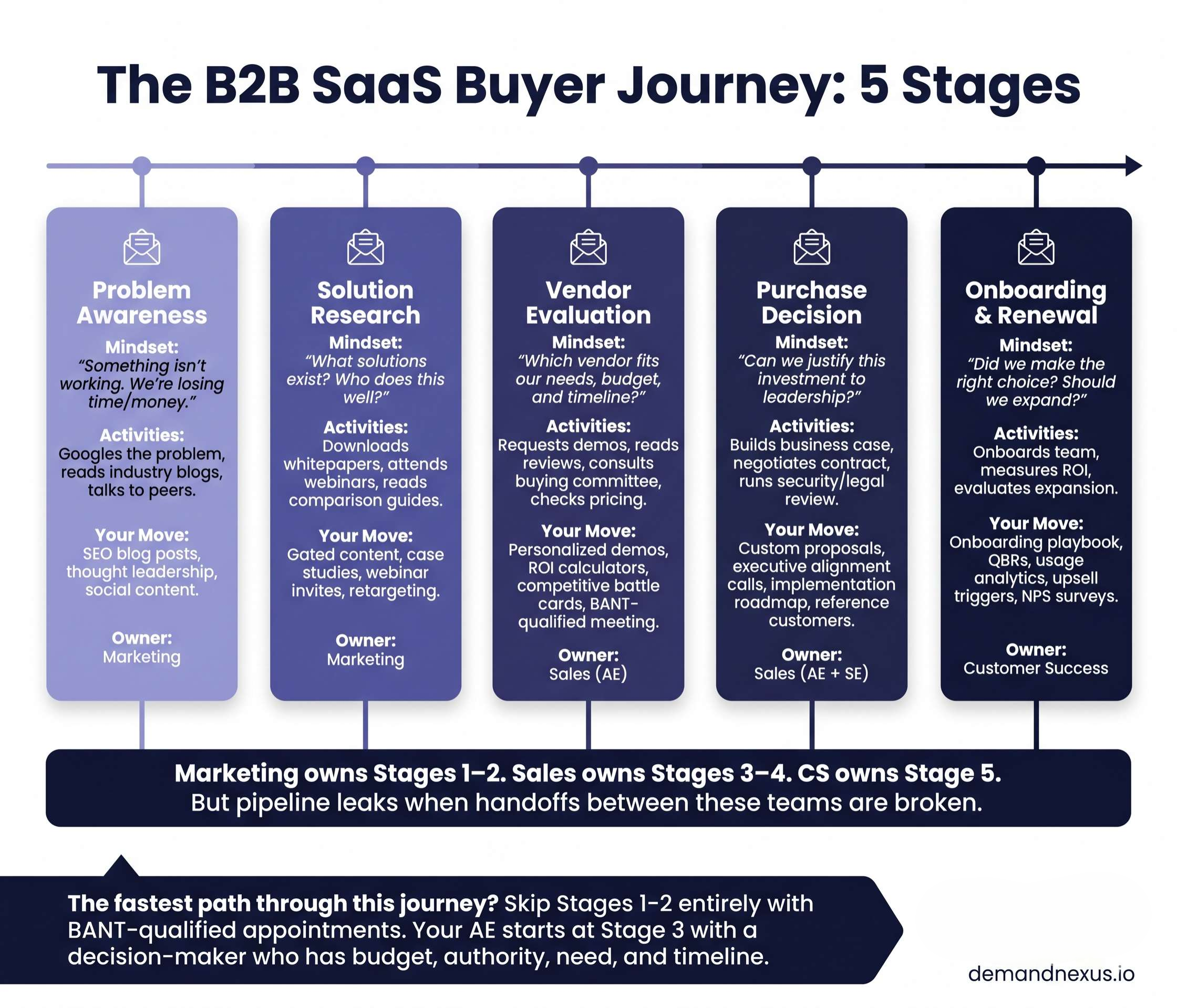
B2C purchases are typically individual decisions, often made in minutes or hours based on price, convenience, and brand perception. B2B SaaS purchases involve multi-stakeholder buying committees (6–10 decision-makers on average for deals over $100K), procurement processes, legal review, security audits, and 84-day average evaluation cycles.

Content Strategy
B2C content marketing is primarily emotional and aspirational. B2B SaaS content must serve multiple buyers with different information needs: the champion who identified the problem, the economic buyer who controls budget, the technical evaluator who assesses integration requirements, and the executive sponsor who needs ROI framing.
Channel Mix
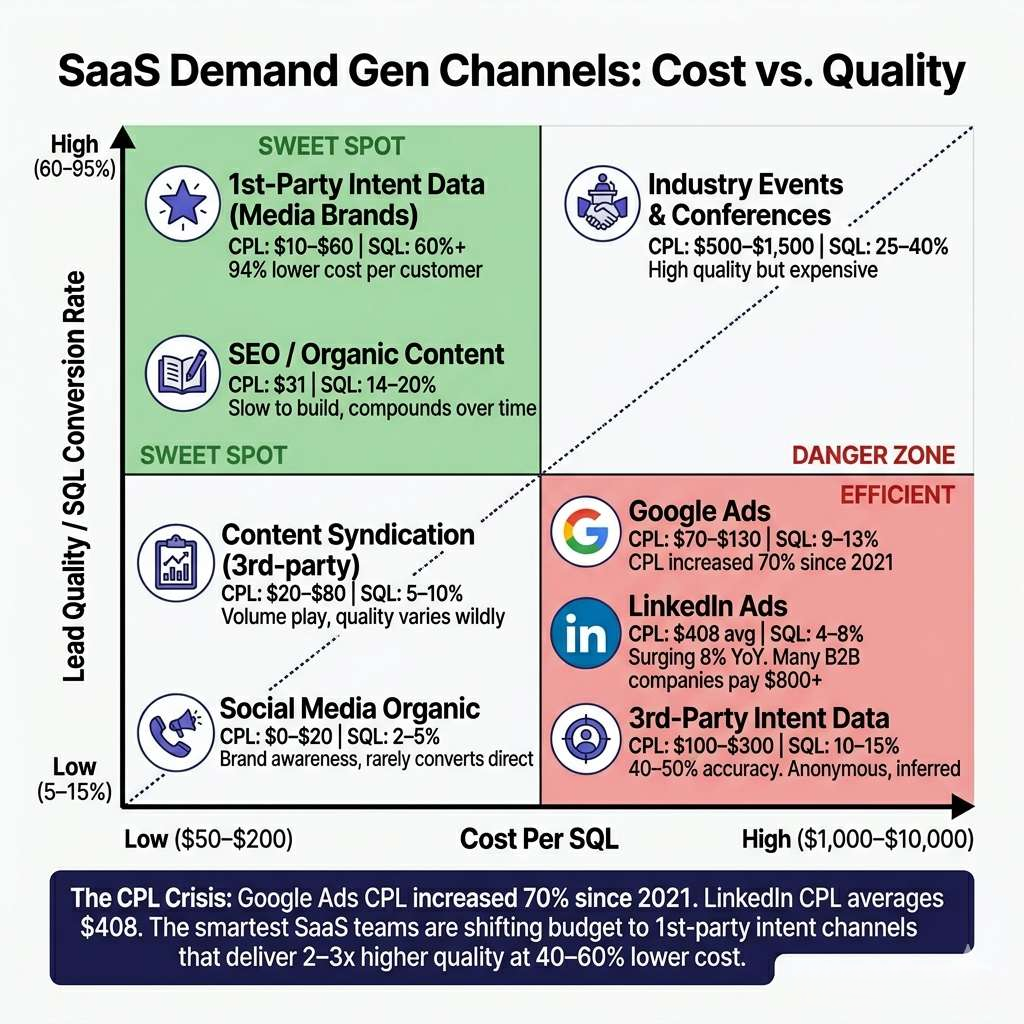
B2C marketing relies heavily on paid social (Facebook, Instagram, TikTok) and influencer channels. B2B SaaS marketing is dominated by organic search (SEO), LinkedIn, Google Ads, content marketing, and outbound SDR programs. Events and category media also play a larger role in B2B SaaS than in consumer marketing.

Metrics
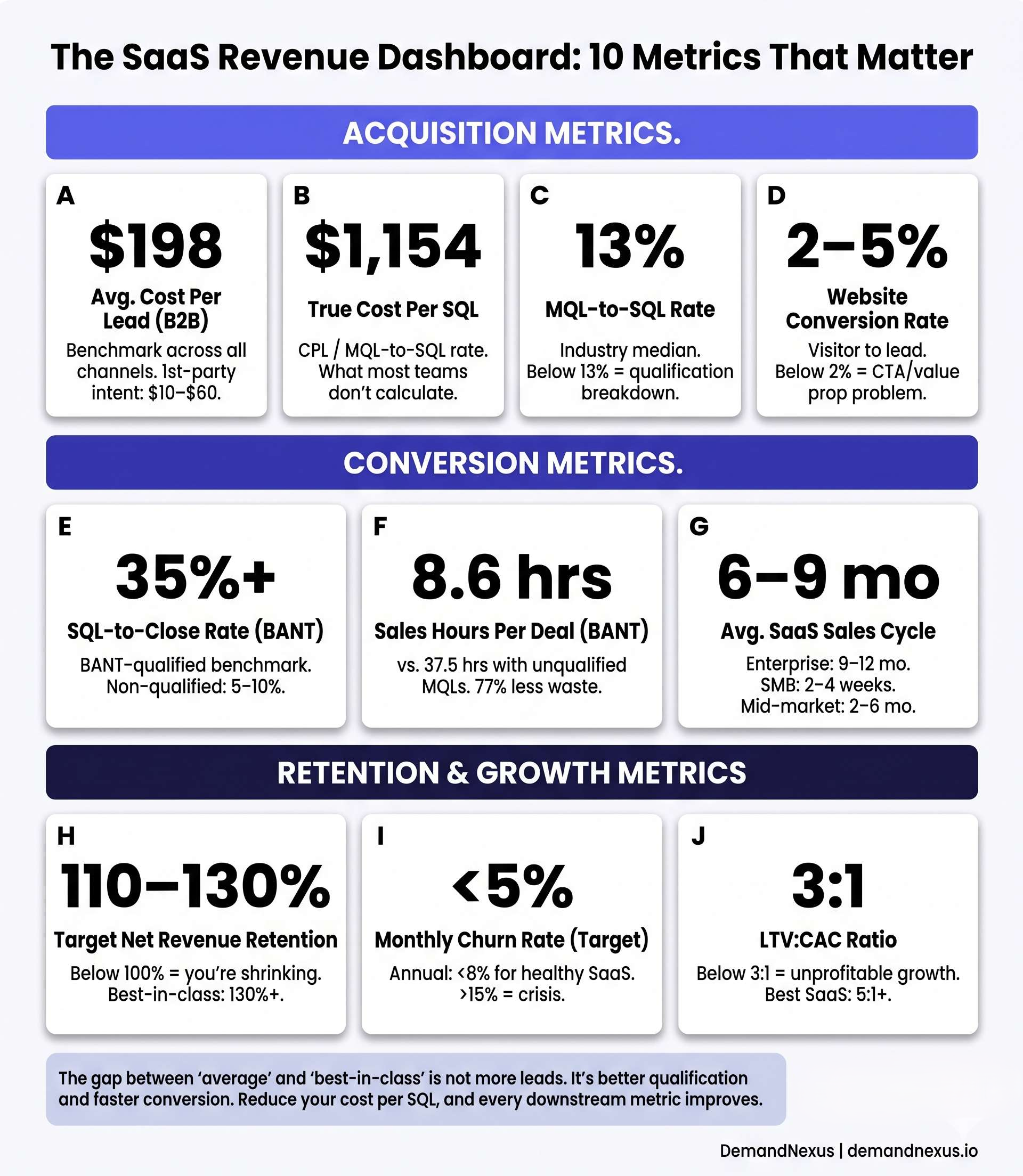
B2C metrics focus on conversion volume, ROAS, and customer acquisition cost at scale. B2B SaaS metrics center on pipeline quality: MQL-to-SQL conversion rate, cost per opportunity, sales cycle length, ACV, and net revenue retention. The longer conversion path in B2B makes attribution more complex and pipeline quality more critical.
The B2B SaaS Marketing Channels
Organic Search (SEO)
For most B2B SaaS companies, organic search is the highest long-term ROI channel. Content that ranks for problem-aware and solution-aware keywords drives compounding traffic. SaaS SEO strategy targets three keyword tiers: problem-aware, solution-aware, and vendor comparison.
Paid Search and LinkedIn
Google Ads and LinkedIn Ads are the dominant paid channels for B2B SaaS. Google captures in-market demand through search intent; LinkedIn targets specific job titles and companies through demographic precision. Both have seen significant CPL increases (Google Ads up 70% since 2021; LinkedIn averaging $408 CPL), driving more focus on organic and intent-data-driven programs.
Account-Based Marketing (ABM)
ABM focuses marketing and sales resources on a defined list of target accounts coordinating personalized content and engagement to move specific companies through the buying process. ABM is most effective when powered by intent data signals that identify which target accounts are actively researching your category.
Outbound and Demand Generation
Outbound SDR programs and demand generation services remain essential for B2B SaaS companies targeting enterprise accounts. The ROI of outbound depends entirely on qualification quality SDRs working BANT-qualified leads close at 202% higher rates than those working cold contact lists.
Why B2B SaaS Marketing Needs BANT-Qualified Pipeline
The defining failure mode of B2B SaaS marketing is measuring success by lead volume rather than pipeline quality. 87% of MQLs never convert to closed revenue. Sales teams spend 30–50% of their time re-qualifying contacts that marketing passed as ‘ready.’ AEs walk into discovery calls without confirmation that the prospect has budget, authority, or urgency.
The solution: BANT qualification as a mandatory step between marketing and sales. Every appointment that reaches an AE’s calendar should have confirmed Budget, Authority, Need, and Timeline verified through a direct SDR conversation, not inferred from an engagement score.
DemandNexus’s Waterfall Model delivers this qualification layer as a pay-for-performance service: $500 per BANT-verified appointment, with full Appointment Handover Sheet documentation delivered to your AE before every call. The result: 90%+ SQL conversion versus 13% for MQL-sourced pipeline.
FAQs
What does B2B SaaS mean?
B2B SaaS means business-to-business software-as-a-service — cloud-based software products sold to other businesses on a subscription basis, with recurring revenue, continuous updates, and internet-based access.
What is the goal of B2B SaaS marketing?
The goal is to generate qualified pipeline — buyers who have confirmed budget, decision-making authority, a specific need, and a purchase timeline. Lead volume is a secondary metric; pipeline quality is the primary one.
How is B2B SaaS marketing different from B2C marketing?
B2B SaaS marketing involves multi-stakeholder buying committees, long evaluation cycles (average 84 days), complex content strategies serving multiple buyer roles, and pipeline-focused measurement. B2C marketing targets individual purchase decisions with shorter cycles, emotional content, and volume-based metrics.
What are the main B2B SaaS marketing channels?
Organic search (SEO), paid search (Google Ads), LinkedIn advertising, outbound SDR programs, account-based marketing (ABM), content marketing, intent data programs, and customer marketing are the primary channels for B2B SaaS marketing.
What is the MQL problem in B2B SaaS marketing?
MQLs are contact records qualified by engagement activity (downloads, page views, email opens) rather than buyer readiness. The average MQL-to-SQL conversion rate is 13% — meaning 87% of marketing-generated leads never become revenue. BANT qualification before appointments are booked solves this problem at the source.
What metrics should B2B SaaS marketing teams track?
Primary: pipeline generated by source, SQL conversion rate, cost per opportunity, cost per closed deal, revenue attributed by program. Secondary: AE qualification time, sales cycle length, win rate by source. Avoid MQL volume and CPL as primary KPIs.