
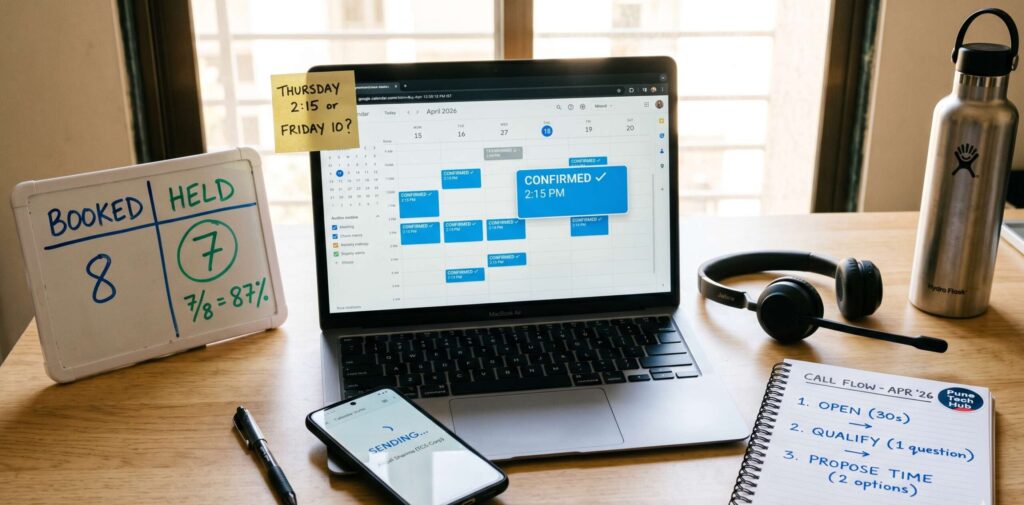


This guide covers what appointment setting actually is in 2026, the cold calling engine that powers it, proven scripts for booking meetings, the tech stack, show-rate tactics that matter more than booking tactics, and whether to do it in house or outsource.

Most B2B teams lose 40–60% of qualified prospects to broken handoffs and weak qualification. Take our 2-minute diagnostic to find out where your pipeline is bleeding — and how to fix it.
Start the Quiz → Takes 2 minutes. No email required to start.What Appointment Setting Actually Is
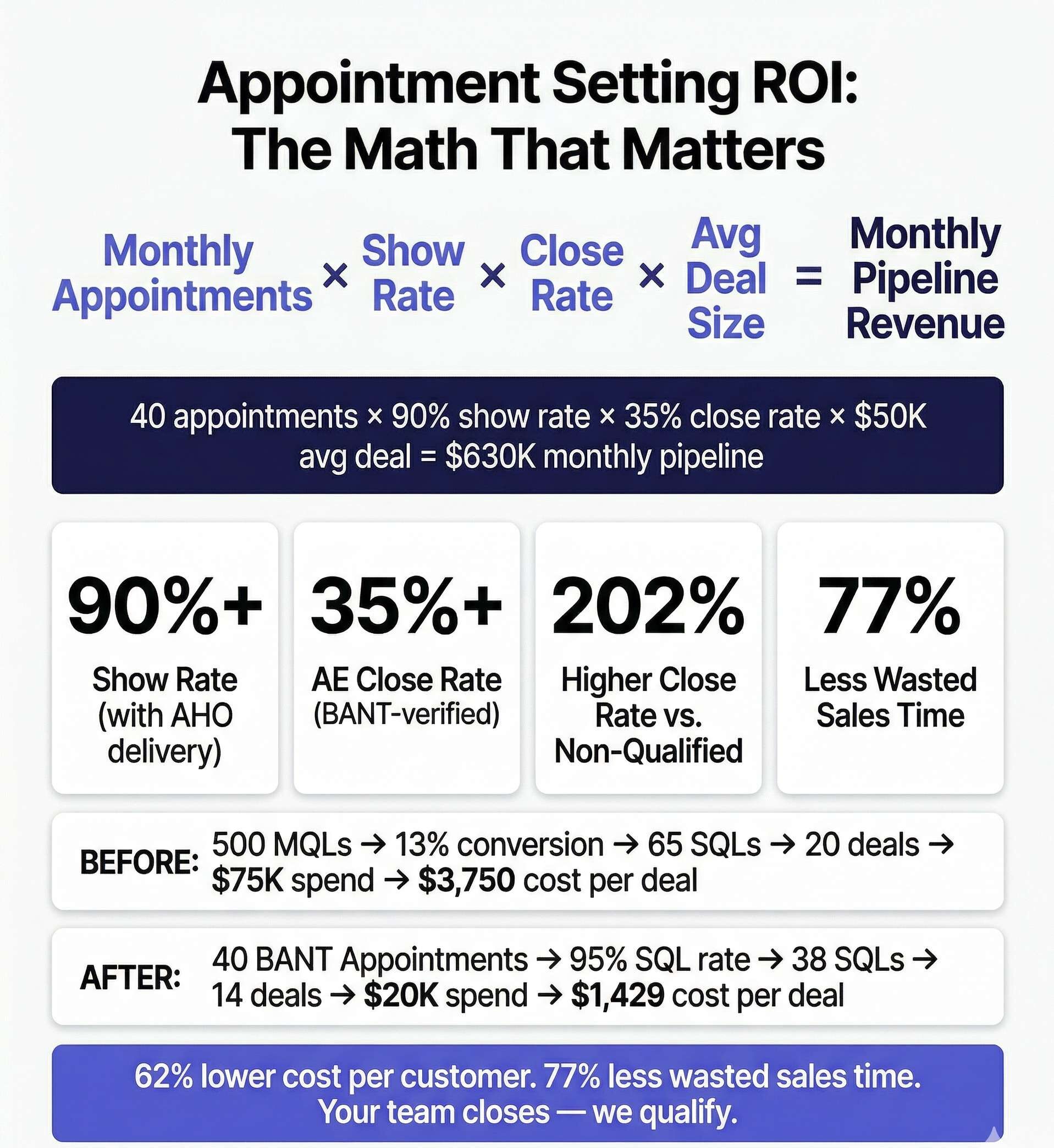
Appointment setting is the sales development function of booking qualified first meetings between prospects and account executives. It is intentionally narrow. The appointment setter does not try to close. They do not handle demos. They focus entirely on getting the right people into the right meeting at the right time.
Separating appointment setting from selling is the single biggest productivity unlock in modern B2B sales. A full-cycle rep splits their time 3 ways and does all 3 poorly. A dedicated appointment setter can hyper-focus on the one job and book 3 to 5 times more meetings than a generalist.

Cold Calling as the Appointment Setting Engine
Cold calling remains the fastest outbound channel to first meeting. A cold email gets a reply in 3 to 7 days on average. A cold call books a meeting on the same call. For appointment setters who are measured on weekly meetings booked, this speed is decisive.
That does not mean call-only. The best appointment setting cadences use email and LinkedIn as warmers and coolers around the call attempts.

Scripts for Booking Meetings
The scripts that work for appointment setting differ from full-cycle cold calling scripts in one important way: they end with the meeting ask earlier. A full-cycle rep might have a 6-minute discovery conversation. An appointment setter aims for a 2 to 3 minute call that ends with “Thursday at 2:15?”
The Direct Appointment Opener
“Hi [Name], [Your Name] from [Company]. I know you were not expecting my call. The reason I am calling: we help [role] at [similar companies] with [specific outcome]. I am not trying to sell you anything today. I am trying to see if a 15-minute call with our [expert role] makes sense. One quick question to find out.”
The Single Qualifying Question
One yes/no question that confirms fit. Example: “Are you currently [specific situation that implies need]?” If yes, move directly to the meeting proposal.
The Specific Time Proposal
“Great. [Expert] has two slots open this week, Thursday at 2:15 or Friday at 10. Which works for you?” Never ask “what does your week look like.” That is a yes/no that becomes a no 80 percent of the time.
The Modern Appointment Setting Cadence
A tested 10-day appointment setting cadence.
- Day 1: LinkedIn connection request with a personal note.
- Day 2: Call 1 plus voicemail if no answer.
- Day 3: Email 1 (short, specific, 3 sentences).
- Day 5: Call 2 plus voicemail if no answer (different time of day than Call 1).
- Day 7: LinkedIn message referencing prior outreach.
- Day 8: Call 3 plus voicemail.
- Day 10: Breakup email plus final call.
The Appointment Setting Tech Stack
- CRM: HubSpot, Salesforce, or Pipedrive.
- Dialer: Kixie, Orum, or Nooks depending on volume.
- Sales engagement platform: Outreach, Salesloft, or Apollo.
- Scheduling: Calendly, Chili Piper, or Outreach Meetings for round-robin booking.
- Call recording and analysis: Gong, Chorus, or built into the dialer.
Show Rate Tactics (More Important Than Booking)
A 10-meeting week with a 50 percent show rate is 5 meetings held. An 8-meeting week with an 80 percent show rate is 6.4 meetings held. The team with fewer bookings ended up with more real pipeline. Show rate is almost always the higher-leverage metric to optimize.
- Send calendar invite within 60 seconds of ending the call. Do this on the call, live.
- Double-confirm verbally: “I am sending this invite right now. Can you accept it before we hang up?”
- Send a confirmation email 24 hours before the meeting with the agenda and what they will get out of it.
- Send a same-day reminder text or email 1 to 2 hours before the meeting.
- Identify no-show patterns by industry and role, and adjust cadence accordingly.
Teams that implement these steps see show rates climb from 50 percent to 75 to 85 percent within 30 days. This single improvement often doubles net pipeline without changing anything about booking volume.
In-House vs Outsourced Appointment Setting
Three options. In-house SDR team: highest control, longest ramp, highest cost. Outsourced appointment setting service: fastest to output, shared control, predictable monthly cost. Pay-per-appointment providers: lowest-commitment, variable quality. The right choice depends on your stage and goals.
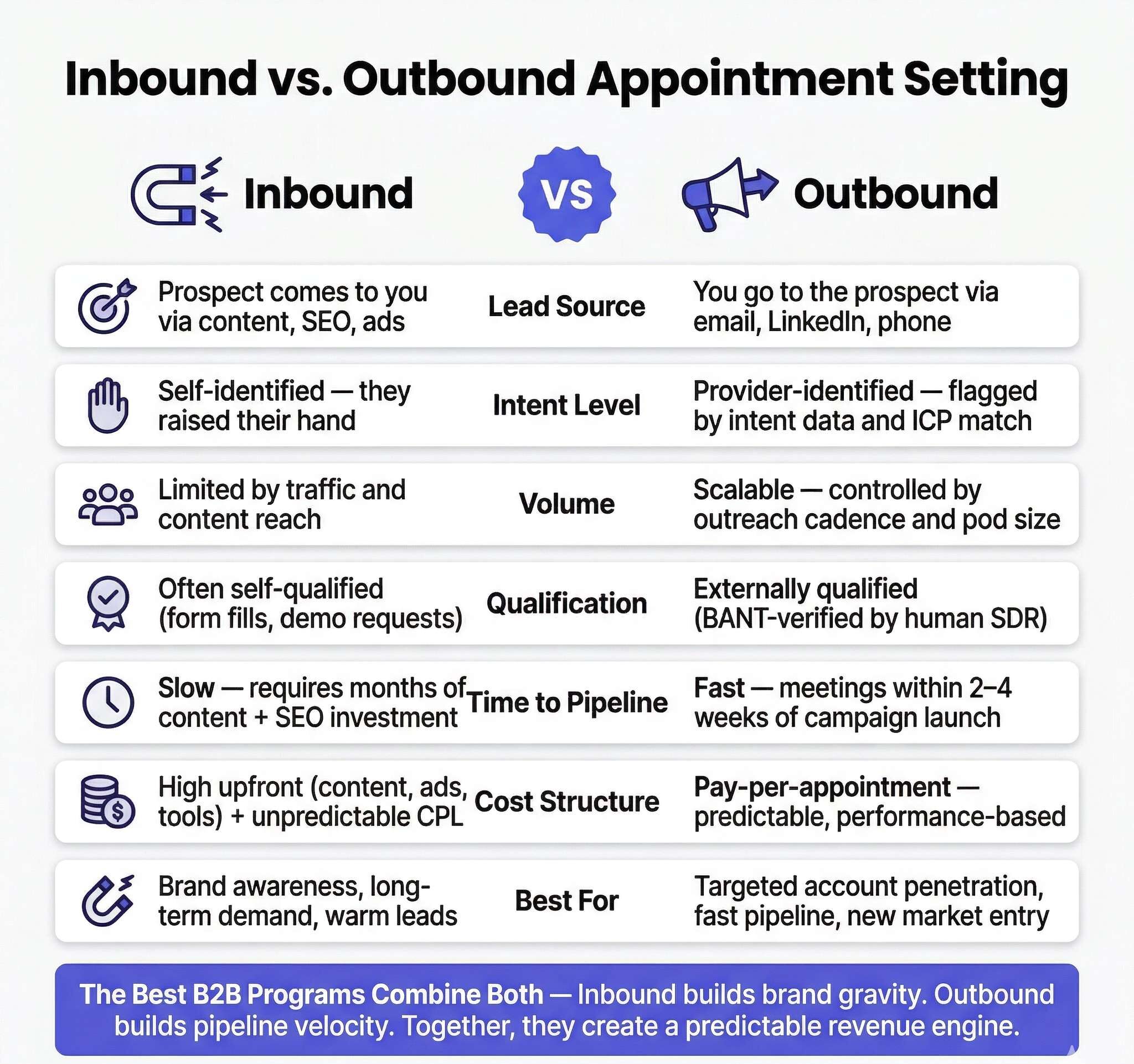
For most B2B companies under 200 employees, outsourced appointment setting hits the best balance. You get a trained, coached caller working on your account within 2 weeks at a fraction of the cost of building in house. DemandNexus structures appointment setting as part of our full cold calling services package with a hybrid retainer plus meeting bonus model that keeps incentives aligned with quality meetings, not volume.
Common Appointment Setting Mistakes
- Over-qualifying on the cold call: appointment setters should confirm fit in 30 seconds, not 5 minutes.
- Booking low-quality meetings to hit targets: damages trust with AEs and ruins show rate.
- Using one time slot suggestion instead of two: doubles the chance of a no.
- Sending calendar invites hours after the call: show rate plummets.
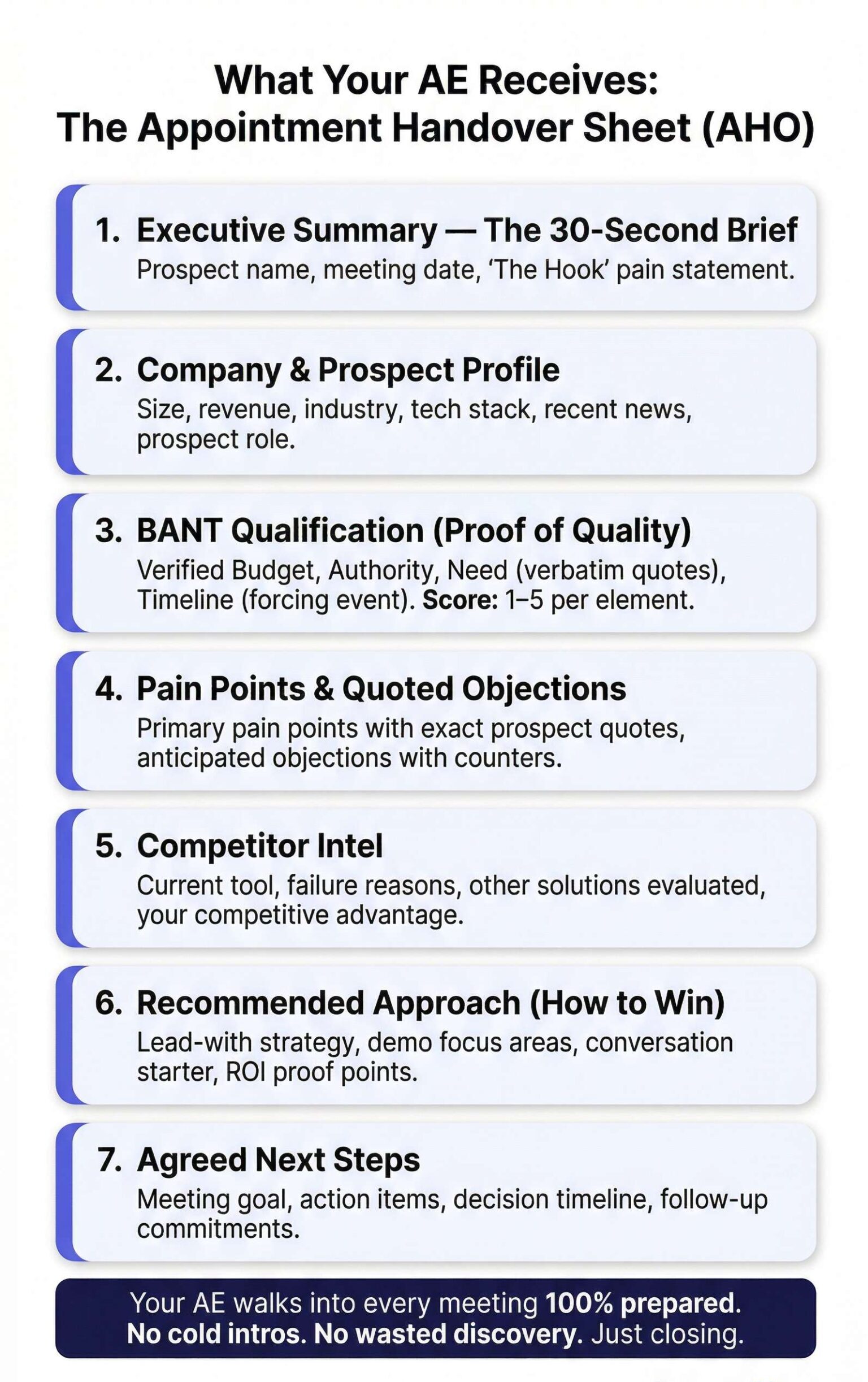
- No handoff process to AEs: meetings show but AEs are unprepared.
- Measuring meetings booked without measuring meetings held or opportunities created.
Metrics That Matter for Appointment Setters
| Metric | Benchmark | What It Tells You |
| Meetings booked per week | 8 to 15 per SDR | Activity and skill |
| Show rate | 70 to 85 percent | Booking quality |
| Meeting to opportunity conversion | 30 to 50 percent | Qualification quality |
| Dials per meeting booked | 40 to 80 | Efficiency |
| Days from booking to meeting | 3 to 10 | Calendar momentum |
FAQs
How many meetings should an appointment setter book per week?
A trained appointment setter in B2B books 8 to 15 qualified meetings per week. Under 8 signals a list or script problem. Over 15 usually means quality is being sacrificed for volume.
How much does outsourced appointment setting cost?
US-based services: $3,000 to $9,000 per month per campaign, or $150 to $500 per booked meeting on per-performance models. Offshore: $1,500 to $3,500 per month with more variable quality.
How do I improve my appointment setting show rate?
Send the calendar invite live on the call, verbally confirm acceptance, send a pre-meeting confirmation 24 hours out, and send a same-day reminder. These four steps take show rate from 50 to 80+ percent.