

This guide answers the real question most people are asking: does cold calling still produce measurable business results in 2026? We cover the benchmark data, where it works, where it does not, the benefits, and the future trajectory.

Most B2B teams lose 40–60% of qualified prospects to broken handoffs and weak qualification. Take our 2-minute diagnostic to find out where your pipeline is bleeding — and how to fix it.
Start the Quiz → Takes 2 minutes. No email required to start.The Short Answer
Yes. Cold calling works in 2026 for B2B companies selling deals over roughly $5,000 in annual contract value, to buyers whose role involves decision-making on a meaningful problem, when executed with modern techniques. It does not work well for small-ticket B2C, commoditized products with no differentiation, or contexts where the buyer has zero tolerance for phone interruptions (a shrinking but real segment).
What the Data Actually Shows
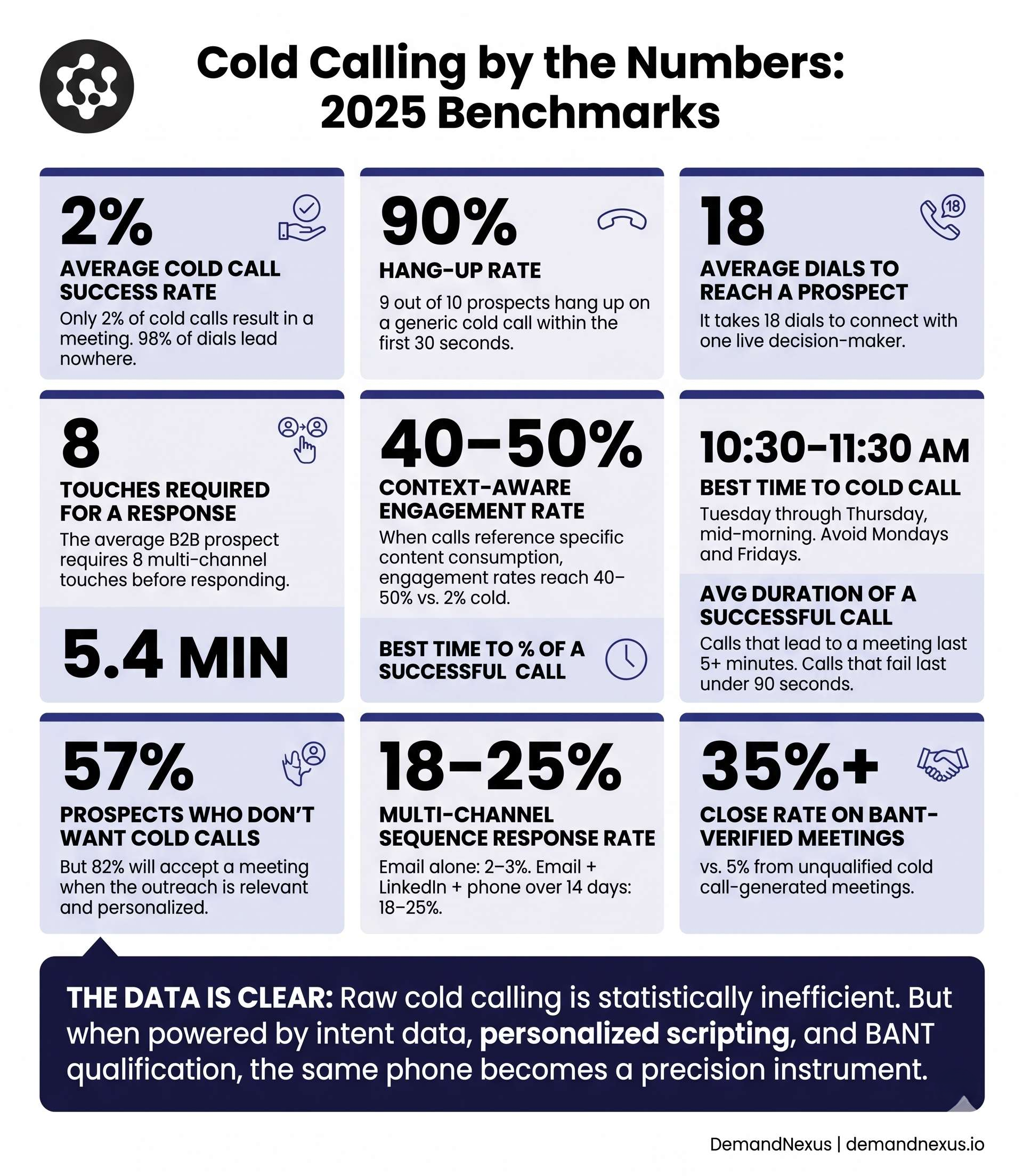
We pulled recent industry benchmarks from publicly reported sales performance studies and our own book of business at DemandNexus. The numbers we see consistently:
- B2B cold call connect rate (call reaches a live human): 4 to 9 percent of dial attempts.
- Conversation-to-meeting conversion: 20 to 40 percent of live conversations.
- Dials to booked meeting: 40 to 80 for good programs, 200+ for poor ones.
- Meeting-to-opportunity conversion: 30 to 50 percent, similar to inbound meetings.
- Cost per booked meeting for in-house SDR: $180 to $400.
- Cost per booked meeting for outsourced program: $150 to $350.
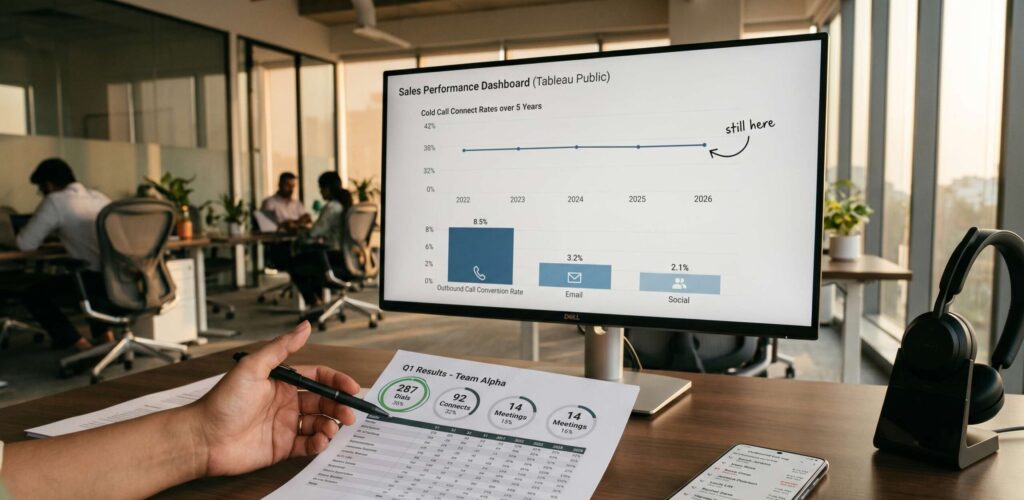
These numbers have been roughly stable over the past 3 years, which itself is a data point. If cold calling were dying, we would expect to see the connect rate falling off a cliff. It is not.

Cold Calling vs Other Channels: Conversion Data
| Channel | Typical Reply/Response Rate | Meeting Conversion | Time to First Meeting |
| Cold calling | 20 to 40 percent of conversations | 1 to 3 percent of dials | Same day |
| Cold email | 1 to 3 percent of sends | 0.5 to 1.5 percent of sends | 3 to 7 days |
| LinkedIn outreach | 5 to 15 percent of messages | 1 to 3 percent of messages | 5 to 14 days |
| Inbound (SEO/content) | N/A | Depends on traffic | 6 to 12 months to scale |
| Referrals | 40 to 60 percent | 25 to 40 percent | 1 to 14 days |
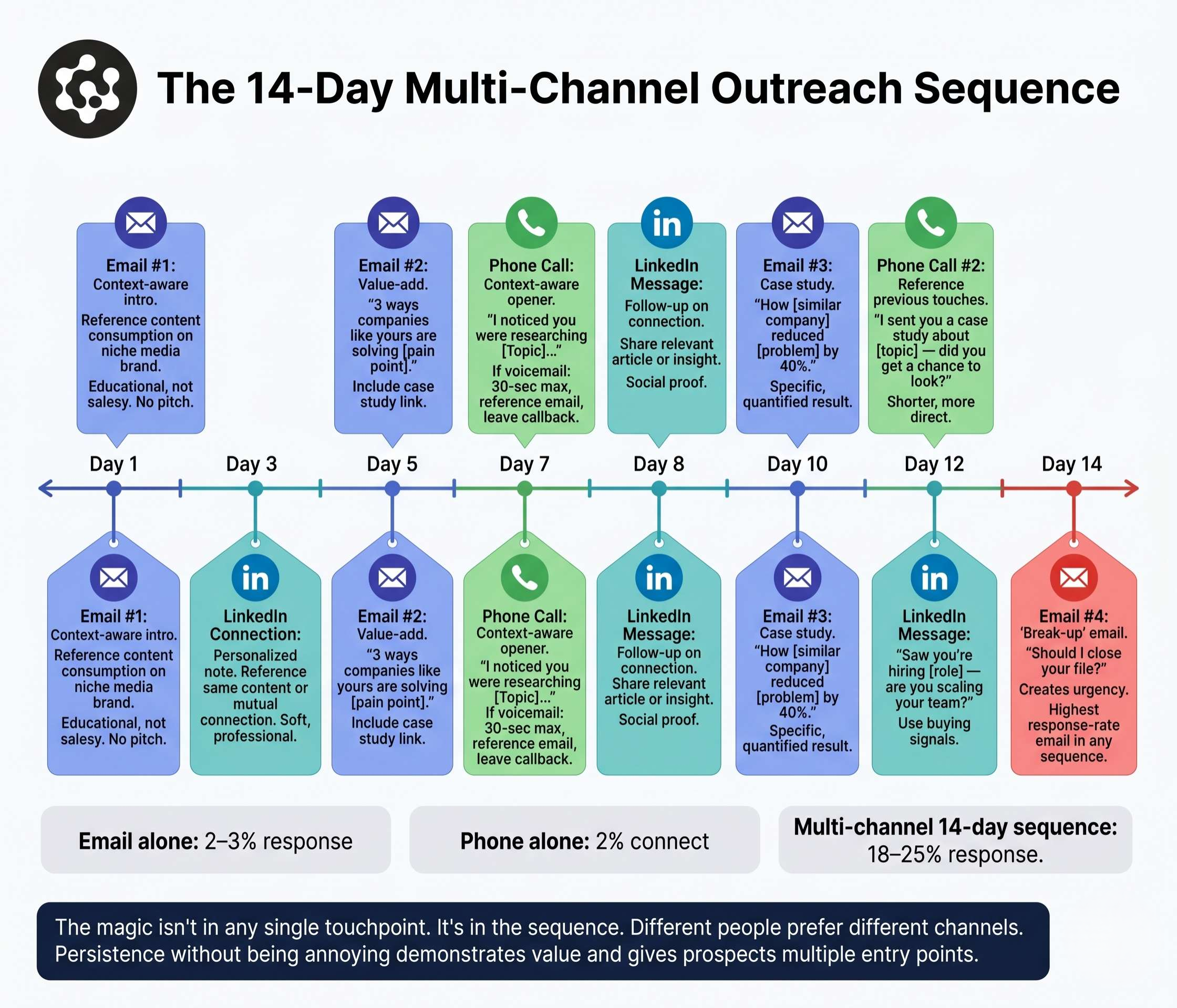

Per touch, cold calling has the highest conversion rate of any outbound channel. Per hour, it trails cold email because emails scale further. The answer for most teams is both, not either.
Where Cold Calling Wins in 2026
- B2B deals with $5,000+ annual contract value
- Markets with under 10,000 total prospects (too small for inbound to reach)
- New categories where buyers are not yet searching for solutions
- Selling to senior executives who do not have time for marketing content
- Industries that still prefer phone conversations: financial services, legal, industrial, construction, logistics
- Account-based sales where multi-threading requires live conversations
- Product launches where speed to market matters more than efficiency
Where Cold Calling Loses
- Small-ticket B2C consumer products under $200
- Digital products with a clear self-serve funnel
- Developer-focused SaaS where buyers are actively hostile to sales calls
- Commodity services where price alone wins
- Markets saturated with content where inbound dominates
The Benefits That Survive 2026
Speed
Cold calling is the fastest outbound channel to first meeting. If you dial today, you book a meeting today. No other channel delivers that.
Feedback
A live conversation gives you real-time objection data that no email campaign can match. The first 100 cold calls of a new product launch often reshape the messaging more than any focus group.
Trust
Counter-intuitively, a well-executed cold call builds more trust faster than a cold email. Hearing a human voice that is competent, respectful, and specific makes you memorable in a way no text can.
Multi-Threading
Complex B2B deals require talking to multiple people inside an account. Cold calling is the fastest way to build relationships with 3 to 7 stakeholders in parallel.
Data Depth
A 10-minute conversation produces more qualifying data than 50 email replies combined. This data makes every downstream touch more effective.
The Future of Cold Calling: What Changes Next
Three trends are reshaping cold calling right now. First, AI dialers that use parallel calling and real-time call scoring have roughly doubled the productivity of the average SDR. Second, buyers increasingly expect calls to be personalized (a generic pitch is now faster-dismissed than 5 years ago). Third, regulation is tightening globally, which is pushing programs toward B2B-only and consented-consumer markets.
What does not change: the fundamental psychology. People still prefer to buy from people they trust, and a real conversation still builds trust faster than anything else.
Should You Invest in Cold Calling in 2026?
Three questions answer it. Does your deal size justify $150 to $400 per booked meeting? Is your buyer senior enough to answer their phone at least sometimes? Are you selling something that benefits from a conversation before a purchase? If all three are yes, cold calling will work for you. If any is no, invest elsewhere.
FAQs
What percentage of cold calls actually convert?
Roughly 1 to 3 percent of dial attempts convert to booked meetings. From live conversations, 20 to 40 percent convert to meetings. From meetings, 30 to 50 percent become opportunities.
Is cold calling dying?
No, but it has narrowed. The version that died was generic high-volume telemarketing. The version that survives is targeted, researched, and consultative. Our full take is in "Is Cold Calling Dead".
Why do successful salespeople still cold call?
Because it is the fastest way to fill a quarter. No other channel delivers same-day meetings with target accounts.