



Introduction
B2B SaaS SEO is the practice of optimizing a software company’s website to rank for search terms that target buyers use when researching, evaluating, and purchasing software solutions. Done well, SaaS SEO is the highest long-term ROI demand channel available generating compounding organic traffic without per-click costs.
Done poorly, SaaS SEO produces traffic with no pipeline correlation: high-volume informational keywords that attract researchers, not buyers; content that ranks but converts at sub-1%; technical optimization without strategic keyword architecture.

Most B2B teams lose 40–60% of qualified prospects to broken handoffs and weak qualification. Take our 2-minute diagnostic to find out where your pipeline is bleeding — and how to fix it.
Start the Quiz → Takes 2 minutes. No email required to start.This guide covers the full architecture of B2B SaaS SEO: keyword strategy, content structure, technical requirements, timelines, and how to integrate organic search with your broader demand generation program.
What Is B2B SaaS SEO?
B2B SaaS SEO is the application of search engine optimization principles to a software-as-a-service business that sells to other businesses. It differs from consumer or e-commerce SEO in several important ways:
- Buyer journey complexity: B2B software purchases involve multiple decision-makers and evaluation stages SEO must address content for every role in the buying committee
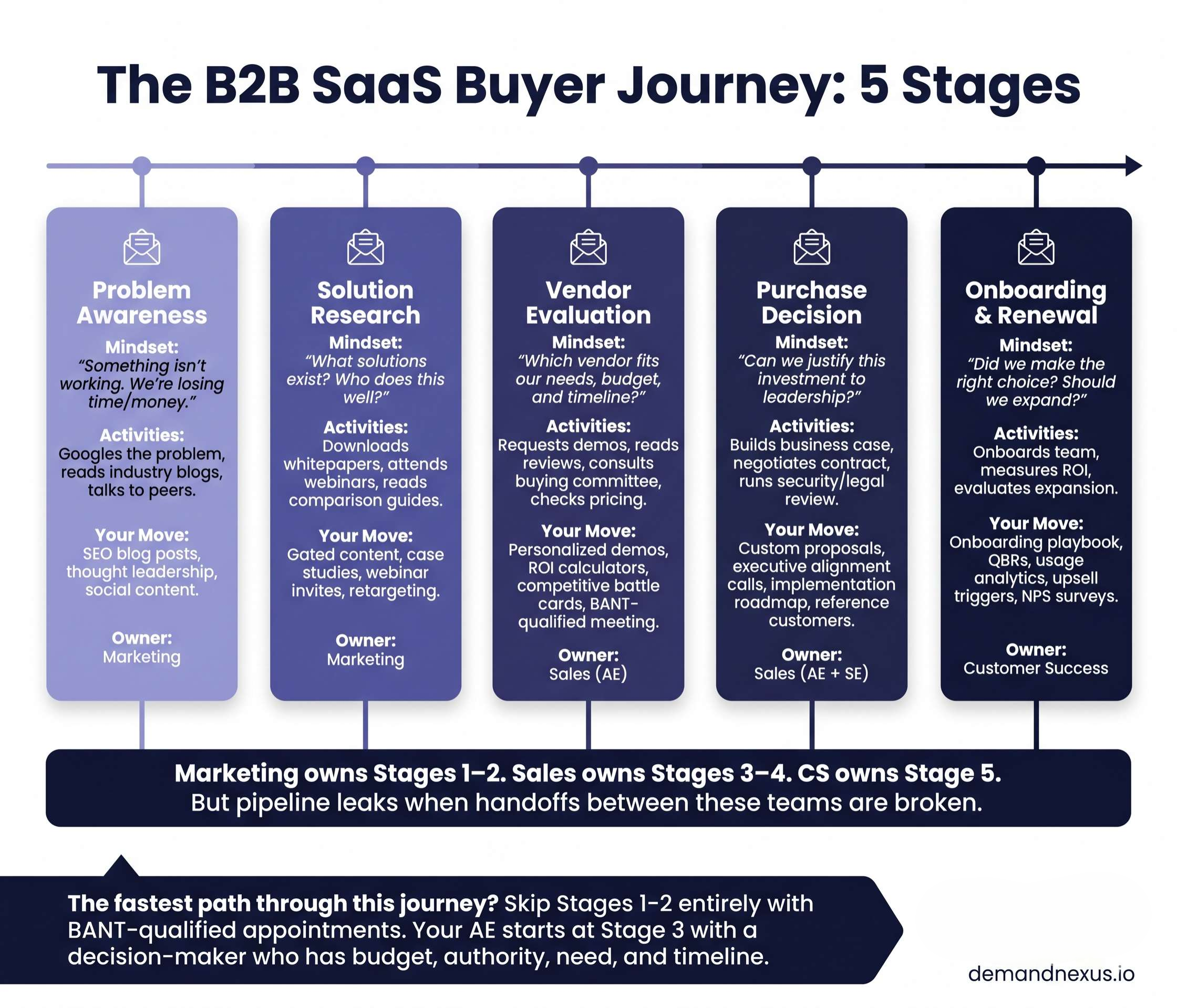
- Keyword intent diversity: SaaS buyers use different search terms at different stages problem awareness, solution evaluation, vendor comparison, and pricing research
- Longer conversion paths: The average SaaS buyer visits 5–7 pieces of content before requesting a demo; organic search must capture and re-engage across multiple touchpoints
- Technical depth requirements: SaaS buyers often have technical backgrounds shallow or generic content performs poorly against deep, specific competitive content
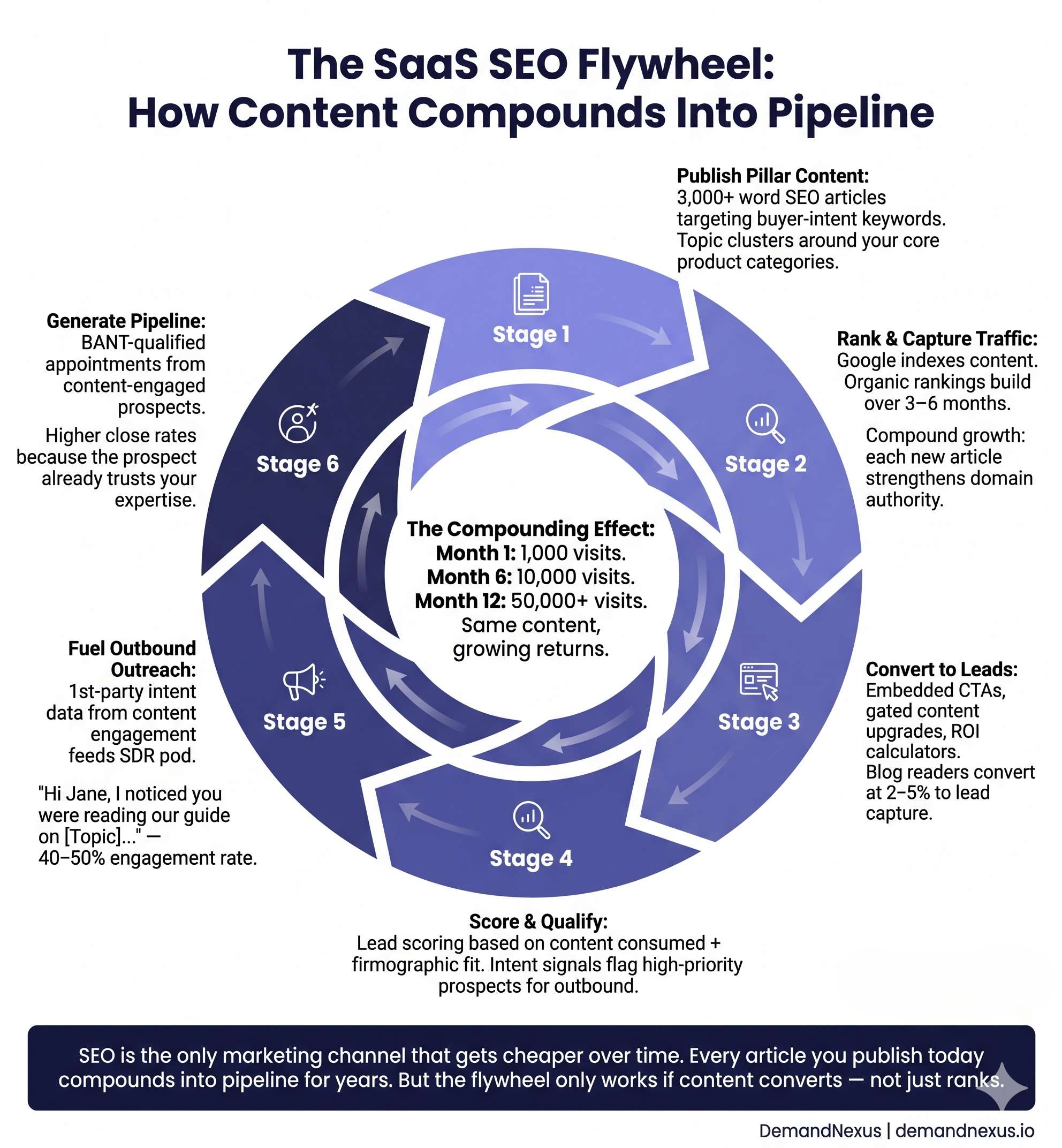

The SaaS SEO Keyword Framework: Three Tiers
Tier 1: Problem-Aware Keywords
Problem-aware keywords target buyers who know they have a problem but haven’t yet identified a solution category. Examples: ‘why are my sales leads not converting,’ ‘how to improve MQL to SQL conversion,’ ‘why does my pipeline keep missing forecast.’ These keywords drive top-of-funnel awareness and are typically high-volume, low-competitive-intent.
Tier 2: Solution-Aware Keywords
Solution-aware keywords target buyers actively researching a solution category. Examples: ‘best B2B demand generation software,’ ‘BANT lead qualification tools,’ ‘appointment setting services for SaaS.’ These keywords drive mid-funnel consideration and tend to have higher commercial intent and conversion potential.

Tier 3: Vendor-Comparison Keywords
Vendor-comparison keywords target buyers in active evaluation comparing specific products and providers. Examples: ‘[competitor] vs [your product],’ ‘[competitor] alternative,’ ‘best [your category] agency 2026.’ These are the highest-conversion keywords in SaaS SEO and typically the most competitive.
B2B SaaS Content Architecture
Pillar Pages
Pillar pages are comprehensive guides targeting a primary keyword cluster typically 2,500–5,000 words covering a topic exhaustively. Examples: ‘The Complete Guide to B2B SaaS Demand Generation,’ ‘SaaS Sales Process: A to Z.’ Pillar pages serve as the topical authority anchor for a cluster, with cluster articles linking back to them.
Cluster Articles
Cluster articles are 1,000–2,000 word pieces targeting specific sub-topics within a pillar’s umbrella. They link to the pillar and to each other, building internal topical authority. For a demand generation pillar, clusters might include: ‘BANT qualification guide,’ ‘intent data for B2B,’ ‘ABM vs demand generation,’ ‘outbound vs inbound SaaS.’
Comparison and Alternative Pages
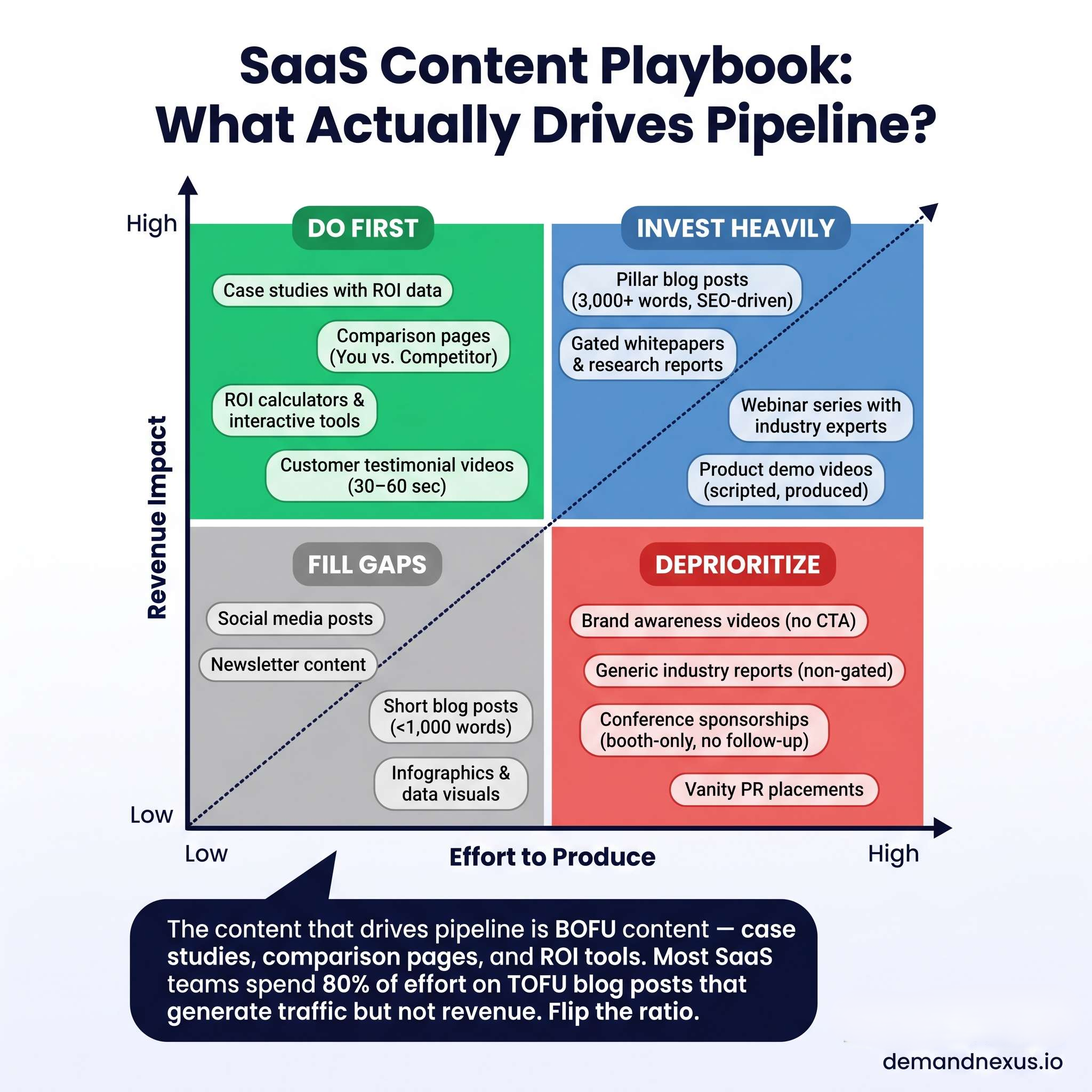
Comparison pages (‘X vs Y’) and alternative pages (‘best [competitor] alternatives’) are among the highest-converting SaaS content types. Buyers using these queries are in late-stage evaluation they have a defined need, they’re comparing options, and they’re close to a purchase decision. These pages should be direct, specific, and focused on decision-making criteria.
Bottom-of-Funnel Conversion Content
Bottom-of-funnel content supports the final evaluation stage: case studies, ROI calculators, pricing guides, implementation timelines, and integration documentation. This content rarely drives high organic traffic volume but converts the traffic it does receive at the highest rates.
Technical SaaS SEO Requirements
Site Speed and Core Web Vitals
Google’s Core Web Vitals (LCP, FID, CLS) are ranking factors and SaaS sites often perform poorly due to complex JavaScript applications, large media files, and third-party script loads. Target: LCP under 2.5 seconds, CLS under 0.1, FID under 100ms.
Schema Markup for SaaS
Implement SoftwareApplication schema for product pages, FAQPage schema for FAQ sections (critical for AI Overviews and answer engine visibility), Article schema for blog content, and Organization schema for the homepage. Schema markup improves click-through rates and enhances visibility in AI-generated search summaries.
Internal Linking Architecture
B2B SaaS sites should implement a hub-and-spoke internal linking model pillar pages link to cluster articles, cluster articles link back to pillars, and all content links to relevant service and demo pages. Clear internal linking distributes page authority and signals topical relevance to search engines.
B2B SaaS SEO Timelines and ROI
Month 1–3: Technical Foundation
First three months focus on technical audit and remediation, keyword research and content architecture planning, on-page optimization of existing pages, and schema implementation. Ranking improvements in this phase are minimal.
Month 3–6: Content Build-Out
Months 3–6 are the content production phase pillar pages, cluster articles, and comparison pages. Early-stage ranking movements emerge. Expect single-digit traffic increases.
Month 6–12: Compounding Growth
Months 6–12 are when SaaS SEO begins to compound. Content published in months 3–6 reaches ranking maturity; new content builds on established authority. Traffic growth typically accelerates 2–4x in this phase.
Month 12+: Pipeline Attribution
By month 12+, organic search becomes a predictable pipeline channel. High-intent comparison and solution-aware keywords drive demo requests and qualified pipeline. The key measurement: pipeline generated from organic, not just traffic volume.
Integrating SaaS SEO with Demand Generation
The highest-performing SaaS marketing programs don’t treat SEO as a standalone channel they integrate it with demand generation to create a full-funnel organic acquisition machine.
The integration model: SEO drives top-of-funnel and mid-funnel awareness and research traffic. That traffic encounters content that builds category credibility and product consideration. High-intent visitors those visiting solution-aware or comparison pages, pricing pages, or demo request pages are flagged as intent signals for the demand generation qualification process.
DemandNexus’s owned media network (AITechTrend, MarTechTrend, HRTechTrend, FinTechFilter, LegalTechTrend, DevTechTrend) bridges SEO and demand generation: category-relevant content drives organic reach among target decision-makers, and behavioral engagement signals power the BANT qualification process. SEO creates the audience; demand generation qualifies it.
FAQs
What is B2B SaaS SEO?
B2B SaaS SEO is the practice of optimizing a software company's website to rank for search terms used by business buyers researching, evaluating, and purchasing software solutions. It encompasses keyword strategy, content architecture, technical optimization, and internal linking structure.
How long does SaaS SEO take to show results?
SaaS SEO typically shows initial ranking movements in months 3–6, with meaningful traffic growth in months 6–12, and pipeline-attributed ROI becoming measurable by month 12–18. The investment is long-term but compounds — unlike paid channels, organic traffic doesn't stop when you stop spending.
What are the best keywords for B2B SaaS SEO?
The highest-value SaaS SEO keywords combine solution-aware terms (best [category] software), comparison terms ([competitor] vs [your product]), and alternative terms ([competitor] alternative). These keywords attract late-stage buyers in active evaluation — the highest-converting audience for SaaS content.
How do I build a SaaS SEO content strategy?
Start with an ICP-aligned keyword research process to identify the specific search terms your target buyers use at each stage of the buying journey. Build a pillar-and-cluster architecture with comprehensive pillar pages anchoring topic authority, supported by cluster articles, comparison pages, and bottom-of-funnel conversion content.
What is the ROI of B2B SaaS SEO?
SaaS SEO ROI is highest over a 24-month+ horizon. Early-stage ROI is difficult to measure directly, but by month 12–18, organic search typically contributes 30–50% of qualified pipeline for SaaS companies with mature SEO programs — at near-zero marginal cost per visitor compared to paid channels.
How does content marketing support B2B SaaS SEO?
Content marketing is the primary vehicle for SaaS SEO. Pillar pages, cluster articles, comparison pages, and case studies are both the content assets that rank organically and the conversion assets that move buyers through the funnel. Quality and depth of content is the primary ranking differentiator in competitive SaaS categories.