


Introduction
SaaS inbound marketing is the practice of attracting business buyers through content, SEO, and value-driven engagement rather than interrupting them with outbound campaigns. When combined with marketing automation tools that nurture, score, and route prospects through defined workflows inbound becomes the most capital-efficient pipeline channel available to B2B SaaS companies.
The challenge: most SaaS inbound programs are built to optimize for MQL volume, not pipeline quality. Content attracts traffic. Automation converts visitors to contacts. Lead scoring passes contacts to sales. And then 87% of those contacts never become revenue.

Most B2B teams lose 40–60% of qualified prospects to broken handoffs and weak qualification. Take our 2-minute diagnostic to find out where your pipeline is bleeding — and how to fix it.
Start the Quiz → Takes 2 minutes. No email required to start.This guide covers how to build a SaaS inbound marketing and automation program that produces pipeline not just leads.
What Is SaaS Inbound Marketing?
SaaS inbound marketing is the strategy of attracting target buyers by creating and distributing content they actively seek blog posts that answer their questions, guides that explain their problems, tools that help them evaluate solutions. Inbound is the opposite of outbound: rather than pushing messages at prospects, inbound pulls them toward you through search, social, and recommendation.
The three pillars of SaaS inbound marketing are:

- Attract: SEO-optimized content, social media, and thought leadership that pulls target buyers to your properties
- Engage: Lead nurture sequences, gated content, webinars, and interactive tools that deepen buyer interest and move prospects down the funnel
- Convert: BANT qualification, demo requests, and appointment booking that turn engaged prospects into pipeline opportunities
SaaS Marketing Automation: What It Does
Marketing automation platforms (Marketo, HubSpot, Pardot) automate the workflows that manage prospects at scale:
- Lead capture: Landing page forms, gated content, event registrations
- Lead scoring: Assigning values to engagement actions (email opens, page visits, content downloads)
- Email nurture: Automated sequences that deliver relevant content based on buyer stage and behavior
- Lead routing: Automatically assigning qualified contacts to the right SDR or AE based on geography, company size, or score
- CRM integration: Syncing prospect activity and notes to Salesforce, HubSpot, or your sales system
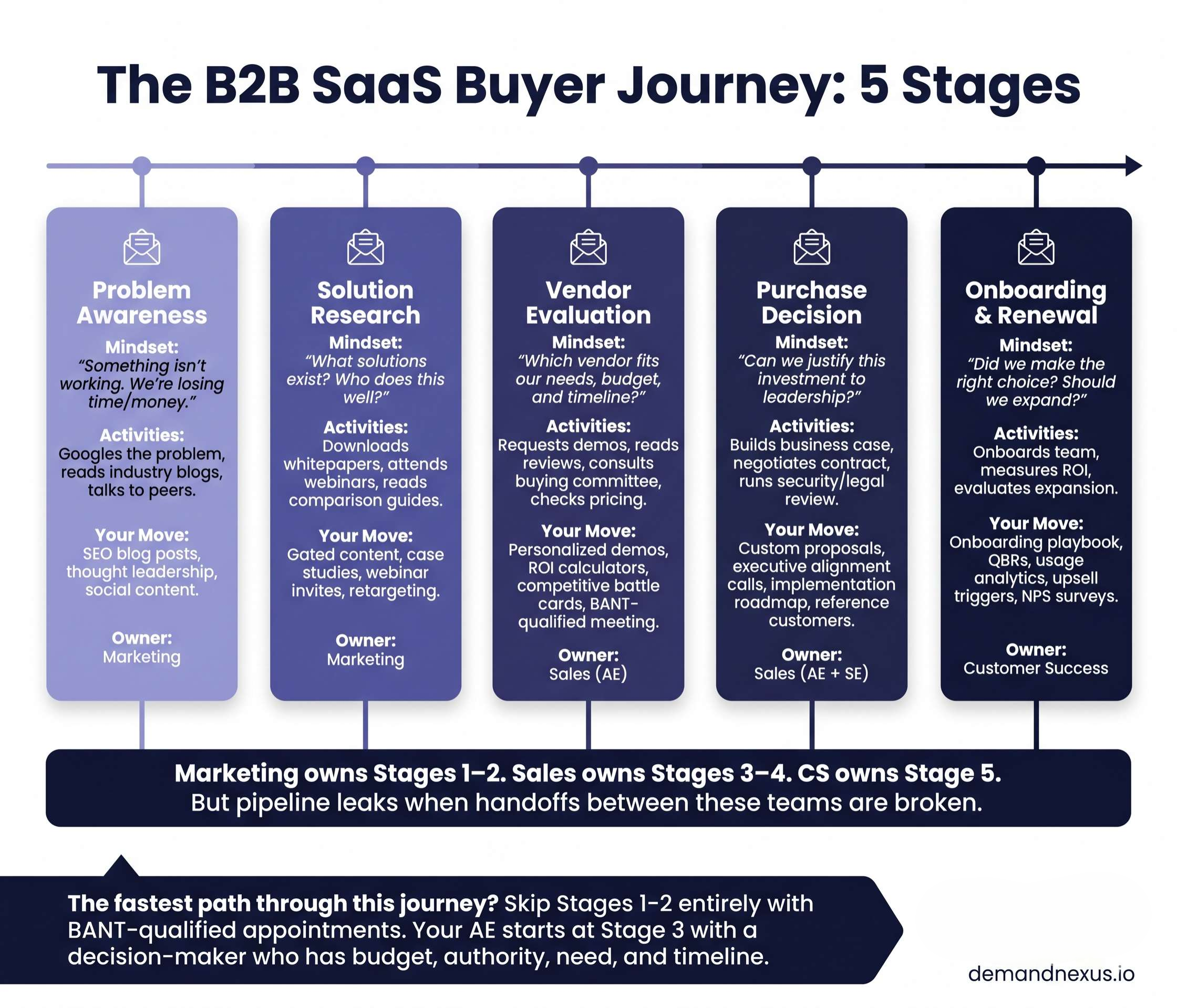

The power of automation is scale: a single marketer can manage a nurture program reaching thousands of prospects. The limitation: automation doesn’t confirm buyer readiness. It confirms buyer activity. A prospect who has opened five emails and downloaded two guides has engaged with your marketing -but hasn’t confirmed Budget, Authority, Need, or Timeline.
Building a High-Performing SaaS Inbound Strategy
Step 1: ICP-Aligned Content Architecture
Inbound works when you’re attracting the right people. Start with your ICP: which job titles, company sizes, industries, and problem statements define your best customers? Build your content architecture around the specific search terms these buyers use at each stage of their evaluation.
Step 2: Funnel-Stage Content Mapping
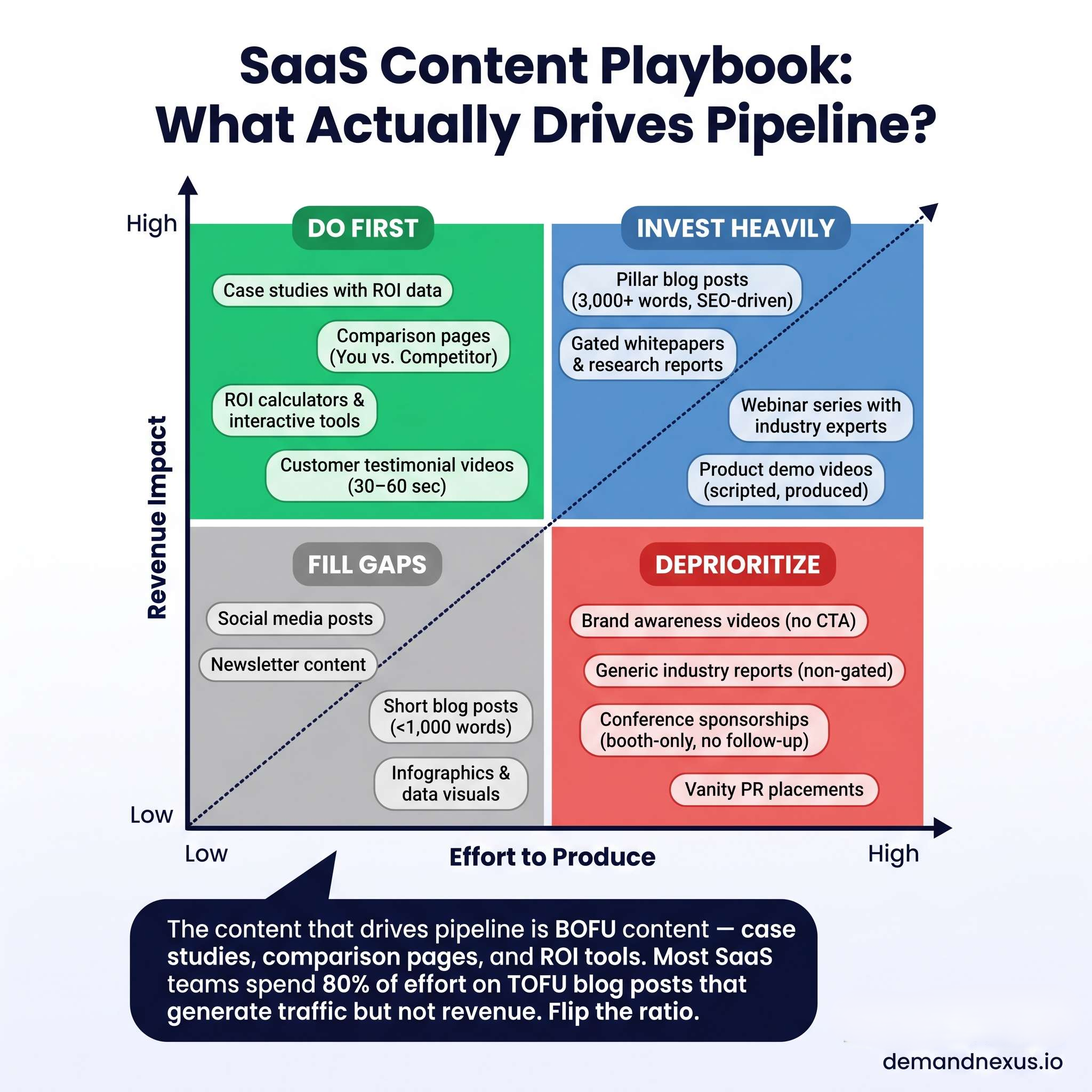
Map content types to funnel stages: top-of-funnel (problem-aware informational content), mid-funnel (solution-aware comparison and evaluation content), bottom-of-funnel (vendor-specific conversion content – case studies, pricing guides, ROI calculators). Most SaaS inbound programs underinvest in mid-funnel and bottom-of-funnel, where conversion potential is highest.
Step 3: Lead Scoring That Predicts Pipeline
Traditional lead scoring models reward activity quantity. A better model weights activities by their purchase-intent signal: pricing page visits should score higher than blog views; demo requests higher than email opens; comparison page engagement higher than newsletter subscriptions. The goal is a score that predicts BANT readiness, not just content engagement.
Step 4: BANT Qualification as the Automation-to-Sales Bridge
The critical gap in most SaaS inbound programs is the handoff from marketing automation to sales. Automation can surface a high-scoring lead – but it can’t confirm that the prospect has budget, authority, an acknowledged need, and a decision timeline. That confirmation requires a human conversation.
Between your marketing automation system and your AE calendar, insert a BANT qualification layer: an SDR who reviews high-scoring inbound leads, conducts a qualification conversation, confirms BANT criteria, and books only verified prospects on the AE’s calendar.
DemandNexus operates this qualification layer as a pay-for-performance service: every appointment is BANT-confirmed before it reaches your AE, with a full Appointment Handover Sheet documenting the prospect’s answers, pain points, and urgency drivers.
Step 5: Closed-Loop Reporting
Connect your marketing automation data to CRM pipeline and revenue data. Every lead source should be traced to its pipeline and revenue outcome – not just its conversion to MQL. This closed-loop reporting reallocates investment from high-volume low-conversion programs to low-volume high-pipeline programs.
Inbound Marketing + Outbound: The Integrated SaaS Demand Engine
The highest-performing SaaS demand generation programs don’t choose between inbound and outbound – they integrate both:
- Inbound creates category demand and captures organic pipeline from buyers who self-select
- First-party behavioral data from inbound engagement powers context-aware outbound outreach
- Outbound reaches high-ICP prospects who haven’t yet found your inbound content
- BANT qualification converts the highest-intent prospects from both channels into verified appointments
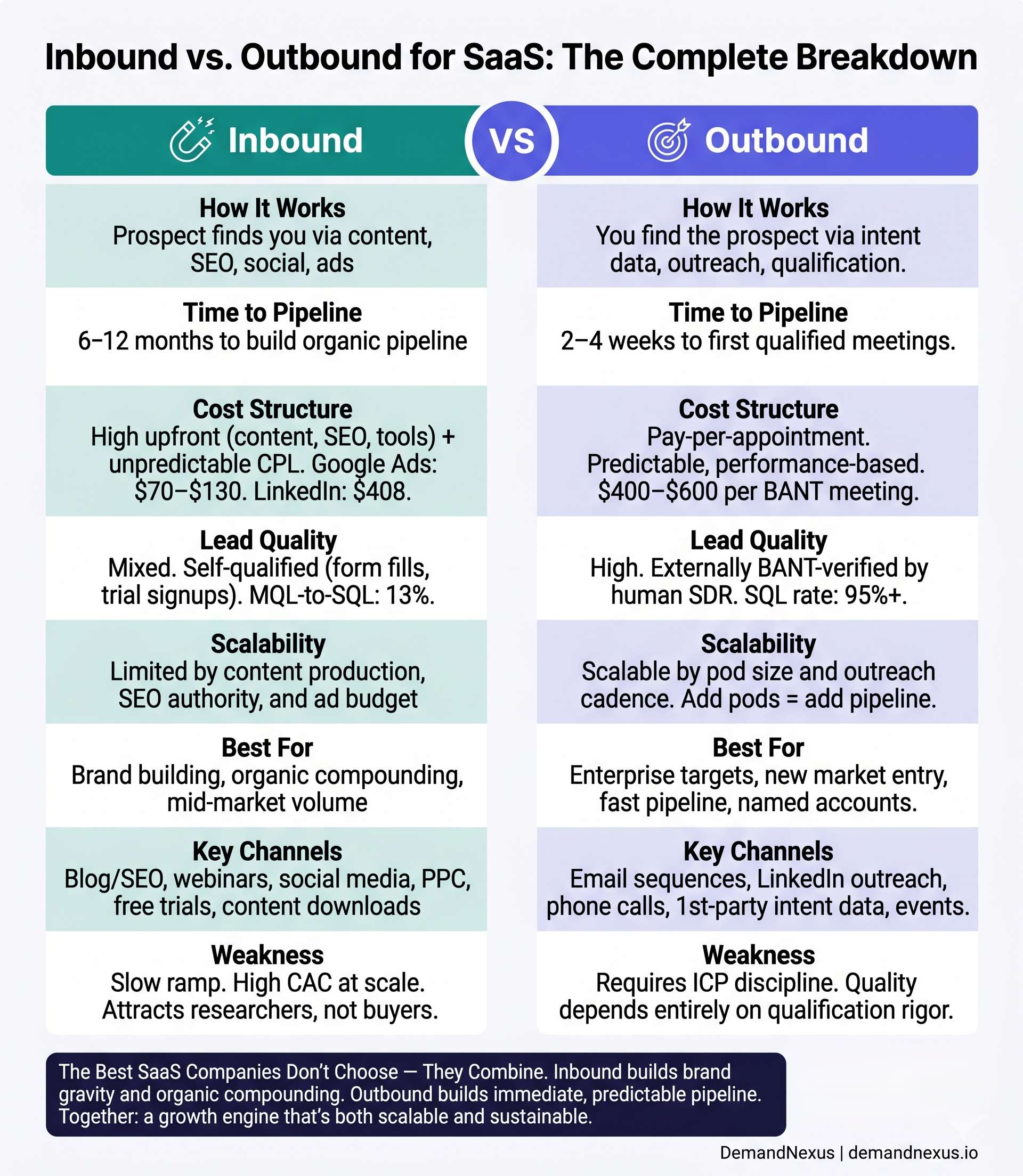
DemandNexus’s Cyborg SDR model integrates AI-flagged intent signals from our owned media brands with human-led BANT qualification conversations – combining the reach of inbound content marketing with the precision of outbound qualification.
FAQs
What is SaaS inbound marketing?
SaaS inbound marketing is the strategy of attracting target buyers through SEO-optimized content, social media, and value-driven engagement — pulling them toward your brand rather than interrupting them with outbound campaigns.
What is marketing automation for SaaS?
Marketing automation for SaaS uses platforms like HubSpot, Marketo, or Pardot to automate lead capture, scoring, nurture sequences, and CRM routing — managing prospect engagement at scale and routing high-scoring leads to sales.
How does inbound marketing generate pipeline for SaaS?
Inbound generates pipeline by attracting buyers researching your solution category, engaging them with relevant content throughout their evaluation, and converting high-intent prospects through demo requests, qualification conversations, and BANT-verified appointment booking.
What is the difference between inbound and outbound in SaaS marketing?
Inbound pulls buyers toward you through content they actively seek (SEO, social, thought leadership). Outbound reaches buyers who haven't yet found you through proactive outreach (cold email, SDR calls, ABM campaigns). The highest-performing SaaS programs integrate both.
What lead scoring model works best for SaaS?
Lead scoring models that weight purchase-intent signals (pricing page visits, comparison page engagement, demo requests) over content activity (email opens, blog views) better predict pipeline readiness. The most accurate qualification, however, remains a human BANT conversation that directly confirms Budget, Authority, Need, and Timeline.
How do I connect inbound marketing to revenue in SaaS?
Implement closed-loop reporting that traces every lead source to its pipeline value and closed revenue. Route all high-scoring inbound leads through BANT qualification before AE contact. Measure marketing performance on pipeline generated and cost per closed deal — not MQL volume or CPL.