


What Makes SaaS Demand Generation Different
SaaS is not just another B2B category. The business model itself changes what demand gen optimizes for. Three structural differences matter:

Most B2B teams lose 40–60% of qualified prospects to broken handoffs and weak qualification. Take our 2-minute diagnostic to find out where your pipeline is bleeding — and how to fix it.
Start the Quiz → Takes 2 minutes. No email required to start.First, LTV math dominates. A SaaS customer is worth recurring revenue over multiple years, which means CAC can be higher than in one-time-sale B2B categories, but only if retention is strong. If your net revenue retention is below 100 percent, no amount of demand gen velocity will fix a leaky bucket.
Second, product-led and sales-led motions coexist. The best SaaS programs feed both: free trials and PLG signals generate bottom-up adoption, while outbound and ABM land enterprise accounts. Demand gen has to orchestrate both without cannibalizing either.
Third, churn is a demand problem, not just a customer success problem. Pipelines that mislead prospects about product fit create churn downstream. SaaS demand gen that ignores product-ICP alignment is building revenue that leaks.

The SaaS Demand Generation Funnel
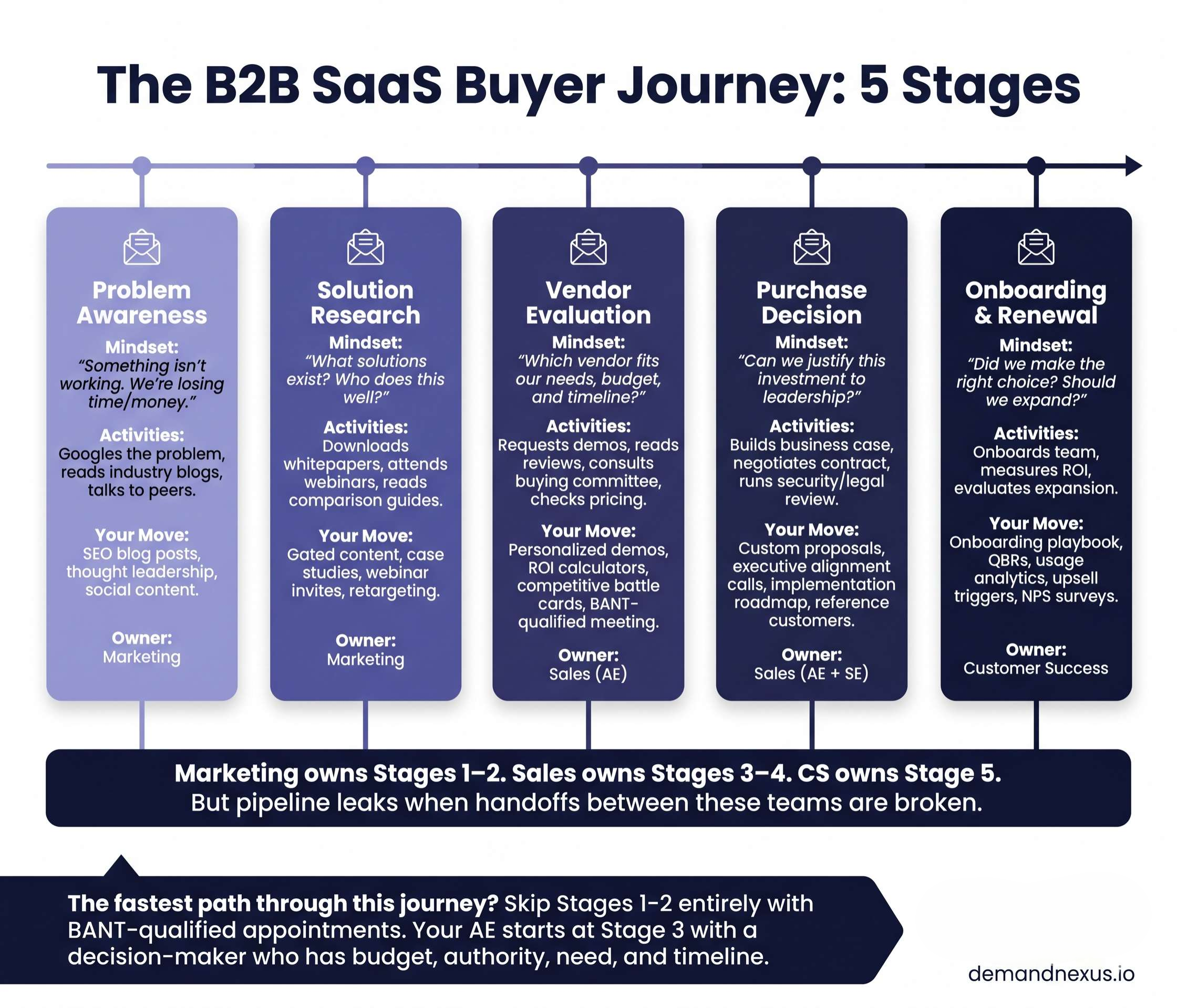
The SaaS funnel has three paths, not one, and modern programs run all three in parallel.
Path 1: Self-Serve PLG
Free trial, freemium, or self-serve signup. The goal is product activation, not a meeting booking. Demand gen supports this path with onboarding content, in-product nurture, and expansion triggers.

Path 2: SMB and Mid-Market Inbound
Demo request through your site. Pipeline velocity is the primary metric. Conversion from demo request to paid customer typically runs 10 to 20 percent in healthy SMB SaaS programs.
Path 3: Enterprise Outbound and ABM
Named-account plays targeting large logos. Sales cycles run 6 to 18 months. BANT qualification and multi-stakeholder orchestration matter far more than volume here.
SaaS Demand Generation Benchmarks
These are the 2026 benchmarks we see across SaaS clients, broken by company stage.
| Metric | Early-Stage SaaS (<$5M ARR) | Growth-Stage SaaS ($5M to $50M ARR) | Scale SaaS ($50M+ ARR) |
| Demo request to opportunity | 25 to 35% | 20 to 30% | 15 to 25% |
| Opportunity to closed-won | 15 to 25% | 20 to 30% | 25 to 35% |
| Payback period | 18 to 24 months | 12 to 18 months | 12 months or less |
| Paid CPL on LinkedIn | $300 to $500 | $400 to $600 | $500 to $800 |
| Cost per qualified opportunity | $500 to $1,500 | $2,000 to $4,000 | $3,000 to $8,000 |
| Net revenue retention target | 90%+ | 110%+ | 120%+ |
SaaS Demand Generation Strategy: The Core Channels
Content and SEO for SaaS
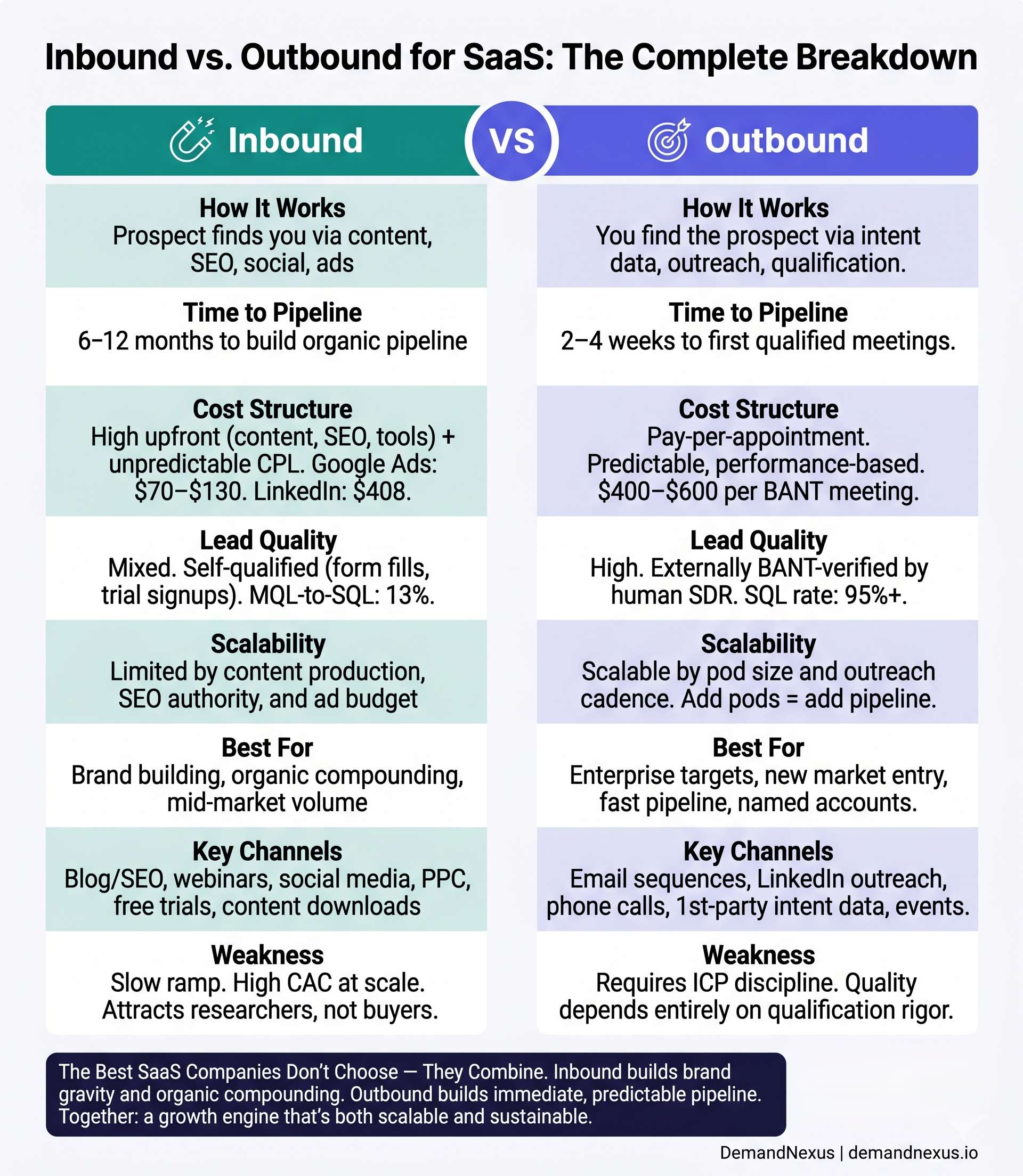
SaaS buyers research before buying. A content engine that ranks for your category keywords and captures buyers in research mode is compounding pipeline. Target keywords should include problem-aware searches (‘how to reduce churn’), solution-aware searches (‘best customer success software’), and comparison searches (‘Gainsight vs ChurnZero’).
Paid Search and Paid Social
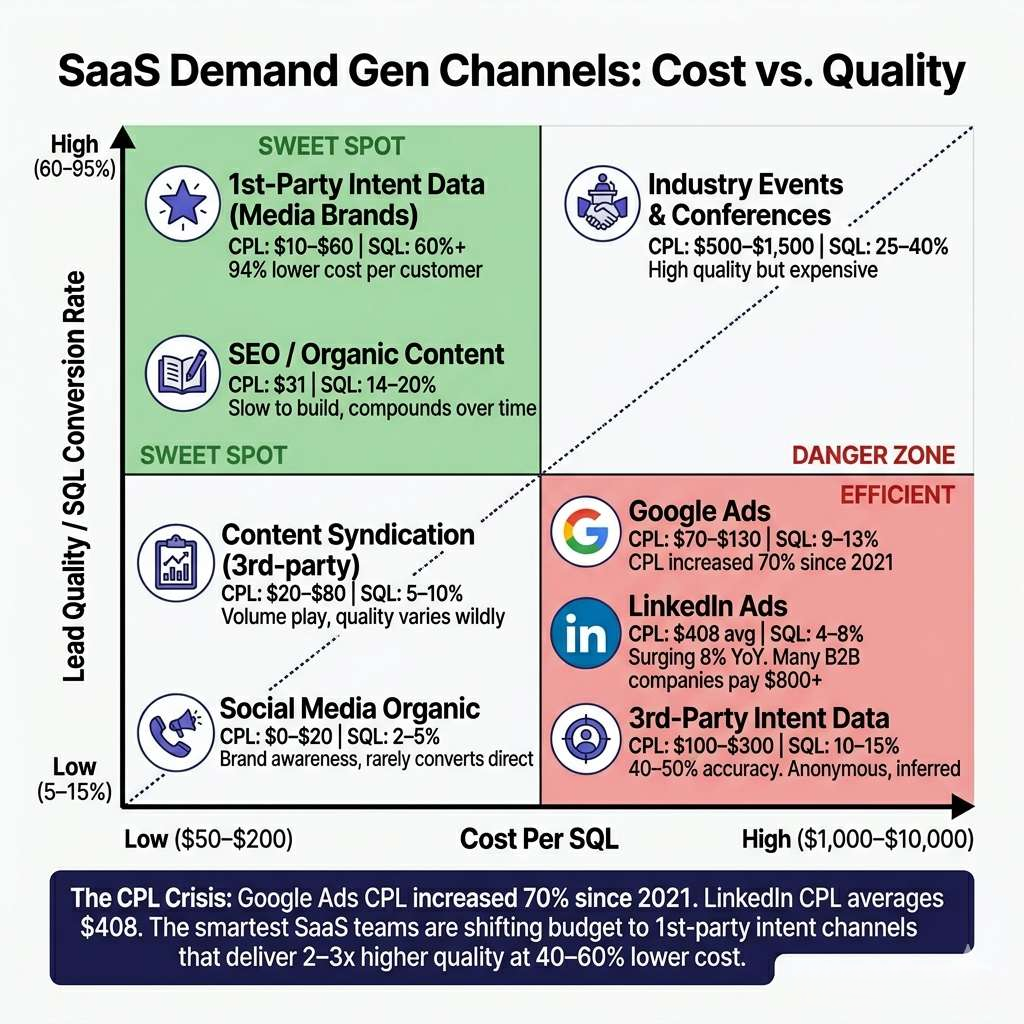
Google Ads CPLs are up 70 percent since 2021 across B2B SaaS. LinkedIn averages $408 per lead. This channel is more expensive than ever, but still works when the buyer is high-intent. For SaaS, protect branded search spend above all else, then layer non-branded category terms if LTV supports the CPL math.
Product-Led Acquisition
Free trials, freemium plans, and self-serve signup create a flywheel where product usage generates qualified signals. The best PLG motions route power users to sales when expansion value crosses a threshold, rather than forcing everyone through the same funnel.
Account-Based Outbound
For enterprise SaaS deals above $50K ACV, outbound ABM still produces the highest-converting pipeline. First-party intent data, named-account targeting, and multi-stakeholder plays matter. Generic SDR spray-and-pray does not work for enterprise SaaS in 2026.
Community and Ecosystem
SaaS categories often have engaged communities (HubSpot Academy, Figma community, dbt Community). Participating in and sponsoring these communities produces warm pipeline that paid channels cannot replicate. The CAC math is almost always favorable.
Integration and Partner Marketing
Marketplaces (Salesforce AppExchange, HubSpot Marketplace, Shopify App Store) can be a massive demand channel for SaaS products that integrate into platforms your ICP already uses. Partner co-marketing with complementary tools tends to outperform standalone brand plays.
Best Tools for SaaS Demand Generation
The search ‘which is the best tools for saas demand generation’ surfaces hundreds of results that all recommend the same generic stack. Here is what we actually see working across SaaS clients, organized by deal size.
| Stack Layer | SMB SaaS (<$25K ACV) | Mid-Market SaaS ($25K to $100K ACV) | Enterprise SaaS ($100K+ ACV) |
| CRM | HubSpot | HubSpot or Salesforce | Salesforce |
| Marketing Automation | HubSpot Marketing | HubSpot or Marketo | Marketo or Eloqua |
| Outbound | Apollo | Outreach or Salesloft | Outreach, Salesloft, Gong |
| Intent Data | G2 Buyer Intent | G2 + Bombora or ZoomInfo | 6sense, Demandbase, first-party intent |
| PLG Analytics | Mixpanel, Amplitude | Amplitude, Heap | Amplitude, Pendo |
| Attribution | HubSpot reporting | Dreamdata, Rockerbox | Bizible, Dreamdata |
The SaaS CAC Discipline
Every demand gen decision in SaaS should trace back to CAC payback period. If your payback is longer than 18 months, you do not have a demand gen problem. You have an economics problem. Here are the levers that move payback fastest:
- Qualification rigor: BANT-verified pipeline reduces wasted AE time
- Channel mix: shift spend to channels with better CAC-to-LTV ratios
- Expansion revenue: build demand for upsell as aggressively as for new logo
- Activation focus: PLG programs need activation milestones, not just signups
- Segment focus: narrow your ICP before scaling spend; scaling a wide ICP amplifies waste
DemandNexus for SaaS Companies
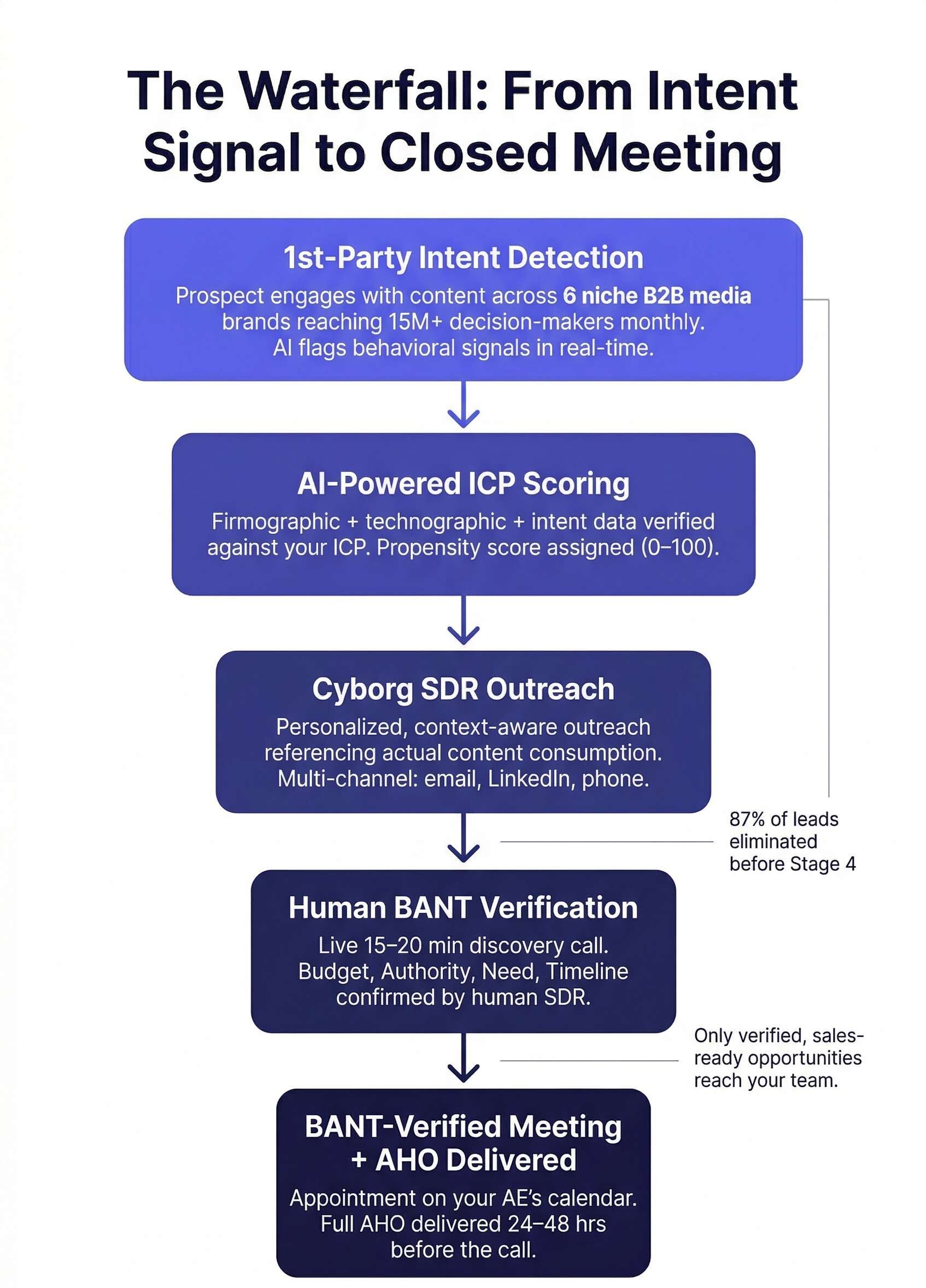
Most of the SaaS programs we run at DemandNexus are mid-market and enterprise motions where BANT-verified appointments produce the compounding effect on CAC payback. Our first-party intent data from six B2B media properties reaching 15 million decision-makers monthly gives SaaS clients signal density no third-party platform matches. Combined with the Cyborg SDR pod and pay-per-appointment pricing, SaaS clients typically see a 60 percent plus SQL conversion rate (versus 13 percent industry median) and payback periods 3 to 6 months shorter than their previous programs.
Run the ROI calculator at demandnexus.io/roi-calculator to see how pay-per-appointment pricing would affect your current SaaS CAC math.
FAQs
How is SaaS demand generation different from traditional B2B?
SaaS demand generation optimizes for recurring revenue, expansion, and retention in addition to new logo acquisition. CAC is evaluated against LTV over multiple years, not against one-time deal size. SaaS programs also typically run product-led and sales-led motions in parallel, which traditional B2B demand gen does not.
What channels work best for SaaS demand generation?
The highest-performing SaaS channels in 2026 are content and SEO (for compounding organic pipeline), product-led acquisition (for high-intent self-serve signals), account-based outbound with first-party intent (for enterprise), community and ecosystem marketing, and integration or partner marketing. Paid search and paid social still work but are more expensive than ever.
What is a good CAC payback period for SaaS?
For SaaS companies, a CAC payback period under 12 months is healthy, 12 to 18 months is acceptable, and above 18 months signals efficiency problems. The payback target tightens with company scale: early-stage SaaS can tolerate 18 to 24 months, while scale SaaS above $50M ARR should target under 12.
Should SaaS companies focus on PLG or sales-led demand gen?
Most SaaS companies should run both in parallel. PLG captures bottom-up adoption and produces qualified expansion signals, while sales-led motions land enterprise accounts that PLG cannot reach. The choice is not either/or, it is how to orchestrate both without cannibalizing.
How do you measure SaaS demand generation performance?
The core SaaS demand gen metrics are: cost per qualified opportunity, opportunity-to-closed-won conversion rate, CAC payback period, net revenue retention, and pipeline coverage ratio. Vanity metrics like MQL volume and demo requests are diagnostic at best and misleading at worst.