



Yet SaaS companies with deal values of $50K-$500K+ cannot afford to rely solely on inbound. Product-led growth fills the bottom of the funnel, but enterprise deals require proactive outreach to specific accounts with specific buying timelines. That is where specialized appointment setting for technology companies becomes a revenue multiplier.

Most B2B teams lose 40–60% of qualified prospects to broken handoffs and weak qualification. Take our 2-minute diagnostic to find out where your pipeline is bleeding — and how to fix it.
Start the Quiz → Takes 2 minutes. No email required to start.The challenge is not booking meetings it is booking meetings with the right technical decision-makers who have budget allocated, a genuine integration need, and an active evaluation timeline. This guide covers how to build an appointment setting program specifically designed for SaaS and technology sales, including the qualification modifications required for technical buyers and the outreach strategies that earn credibility before you ever pitch.
Why Technology Buyers Require Specialized Outreach
Technology decision-makers evaluate vendors differently than business buyers. They research independently before engaging sales (78% of B2B tech buyers complete most of their research before speaking to a vendor). They prioritize peer validation over marketing claims. They evaluate technical fit, integration complexity, and security before discussing pricing. And they are highly sensitive to generic outreach that reveals the sender knows nothing about their stack or challenges.
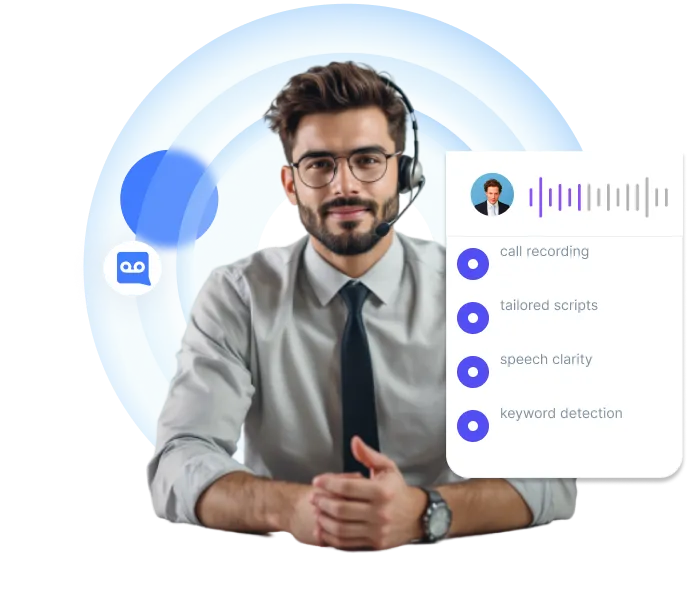
Generic appointment setting providers who blast “Hi [Name], I’d love to show you how [Product] can transform your business” get filtered, blocked, and blacklisted. Technology-focused appointment setting requires outreach that demonstrates genuine understanding of the buyer’s technical environment, references specific challenges relevant to their role, and offers value before asking for time.
For SaaS companies building their go-to-market strategy alongside appointment setting, our guide to SaaS GTM strategy provides the strategic foundation, and our article on SaaS sales strategies covers the full sales motion from first touch to close.

The Technology Buyer Qualification Framework
Budget in SaaS Context
SaaS budget allocation follows distinct patterns. Engineering budgets are often decentralized individual teams may have discretionary spending up to $50K without procurement involvement, while larger contracts require formal approval cycles. Qualification must identify where the budget sits (departmental vs. centralized IT), whether it is allocated for this fiscal period, and what the approval process looks like above the prospect’s authority level.
Key questions: “Is this funded from your team’s existing tooling budget, or would it require a new line item?” “What is your typical procurement process for tools in this price range?” “Has your team made similar purchases recently what did that approval cycle look like?”
For SaaS companies navigating complex sales cycles, our article on shortening the B2B sales cycle provides specific tactics for accelerating procurement in technology organizations.
Technical Fit as a Qualification Criterion
In technology sales, technical fit is as important as budget and authority. A prospect with unlimited budget and C-suite authority is still unqualified if their infrastructure cannot integrate with your solution, or if your product does not address their specific technical requirements.
Appointment setters working technology accounts must verify: What is their current technology stack? Which systems would need to integrate with your solution? Are there known technical constraints (legacy systems, security requirements, compliance mandates) that could block implementation? This technical discovery does not replace a full demo it ensures the demo is worth scheduling.
Multi-Threaded Engagement
Technology purchases involve multiple stakeholders: the technical evaluator (VP of Engineering or CTO), the business sponsor (VP of Operations or Product), the security/compliance gatekeeper, and the economic buyer (CFO or CEO). Scheduling a meeting with only one stakeholder often leads to a dead deal because the others were not involved early enough.
The best appointment setting programs for technology companies identify and engage multiple stakeholders within the same account simultaneously, ensuring the scheduled meeting includes (or has buy-in from) the key members of the buying committee. This multi-threaded approach reduces the cycle time between first meeting and decision. For more on engaging complex buying committees, see our guide to account-based marketing.
Outreach Strategies for Technology Buyers
Lead with technical value, not product features. Technology buyers respond to content that helps them solve problems benchmark data, architecture comparisons, migration guides, and peer case studies. Your outreach should position you as a knowledgeable peer, not a salesperson.
Example framework for SaaS appointment setting email: “Hi [Name], I noticed [Company] recently posted a role for a Senior DevOps Engineer that typically signals an infrastructure scaling initiative. Companies at your stage often face [specific challenge: e.g., API latency at scale / CI/CD pipeline bottlenecks]. We recently published a benchmark report on how Series C SaaS companies handle [related topic]. Worth sharing? If it resonates, might be worth 20 minutes to compare notes on how [peer company] approached the same challenge.”
This works because it references a verifiable trigger (the job posting), demonstrates domain knowledge (the specific challenge), offers value first (the benchmark report), and makes a low-pressure ask. For companies building their cold outreach for technical audiences, our guides on cold email templates and sales prospecting techniques provide additional frameworks.
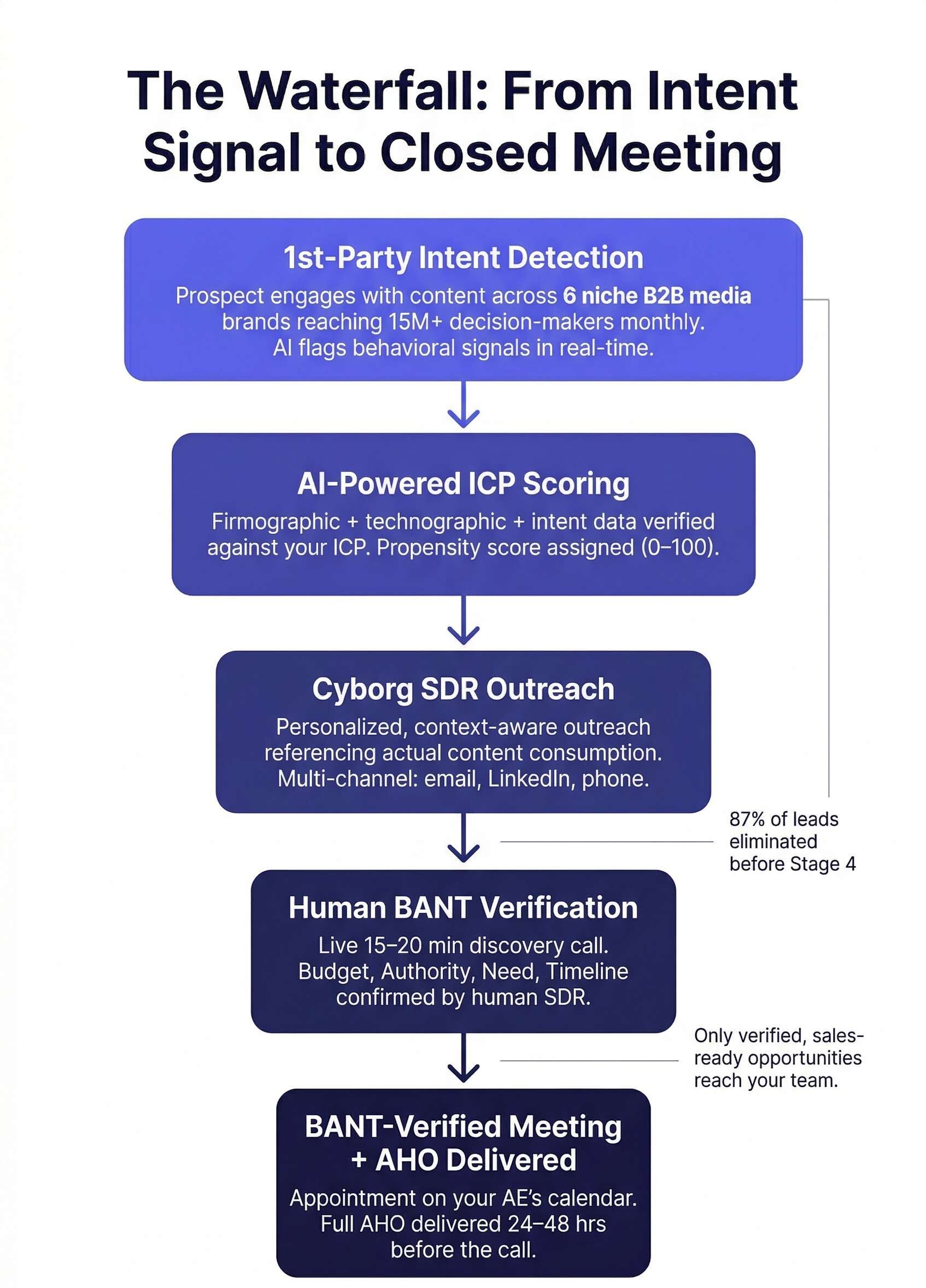
DemandNexus brings a particular advantage for technology appointment setting through their media brands AITechTrend and DevTechTrend, which capture first-party intent from millions of technology decision-makers monthly. When a CTO reads articles about API infrastructure scaling on DevTechTrend, that behavioral signal feeds directly into outreach that references their specific research interests producing engagement rates dramatically higher than generic cold outbound. Explore DemandNexus’s B2B appointment setting services.
SaaS-Specific Metrics for Appointment Setting
Beyond standard appointment setting metrics, SaaS companies should track: demo-to-trial conversion rate (percentage of appointments that result in product trials or POCs), multi-threaded meeting rate (percentage of scheduled meetings with 2+ stakeholders present), technical qualification pass rate (percentage of meetings that survive technical evaluation), and pipeline velocity by source (how quickly appointments from different channels move through the sales cycle).
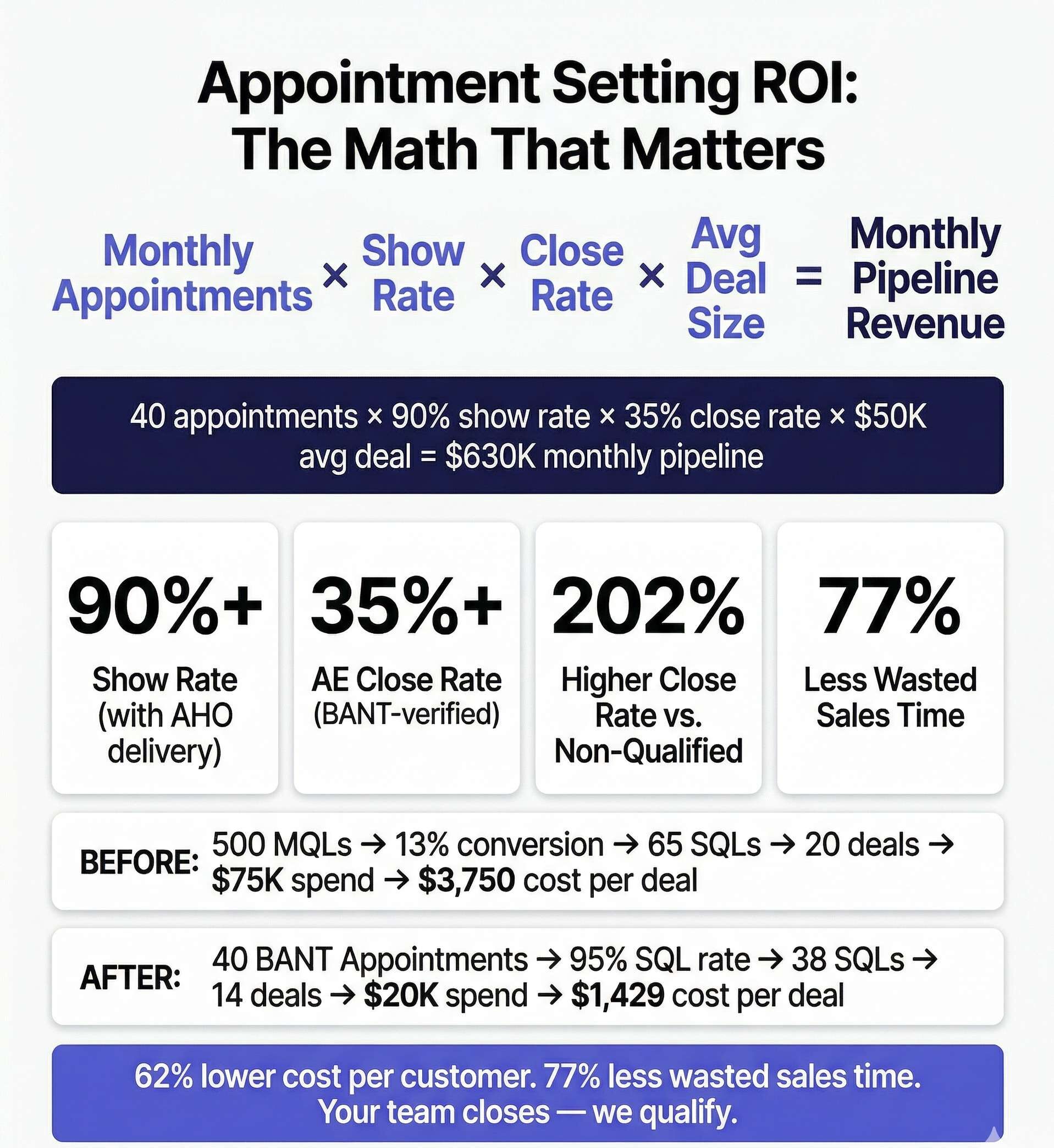
These metrics connect appointment setting performance directly to SaaS revenue outcomes. For a broader view of SaaS-specific measurement, our guide to SaaS demand generation covers the full metrics framework from awareness to expansion revenue, and our article on demand generation metrics provides benchmark data across industries.
FAQs
How is appointment setting for SaaS companies different from other B2B?
SaaS buyers are more technical, research-heavy, and skeptical of vendor claims. Outreach must demonstrate domain expertise, reference specific technical challenges, and offer value before asking for time. Qualification must include technical fit alongside standard BANT criteria, and multi-threaded engagement across buying committees is essential.
What is the best way to reach CTOs and VPs of Engineering?
Lead with technical value — benchmark data, architecture insights, peer case studies — not product pitches. Use multi-channel outreach (email + LinkedIn + warm calling) with messaging that references specific triggers like hiring patterns, funding events, or technology evaluation signals
How many appointments per month should a SaaS company target?
For enterprise SaaS with $100K+ deal sizes, 10-20 qualified appointments per month generates meaningful pipeline. For mid-market SaaS with $25-75K deals, 20-40 appointments per month is typical. Quality always matters more than volume — 15 BANT-qualified meetings outperform 50 unqualified demos.
Should SaaS companies outsource appointment setting?
Outsourcing is effective for SaaS companies entering new markets, scaling beyond founder-led sales, or needing faster time-to-pipeline than in-house SDR hiring allows. Choose a provider with specific SaaS vertical expertise and access to technology buyer intent data.
What role does product-led growth play alongside appointment setting?
PLG and appointment setting serve different segments. PLG drives self-service adoption for smaller deals and individual users. Appointment setting targets enterprise accounts with larger deal sizes that require executive engagement, security reviews, and custom implementation. The two strategies are complementary, not competing.