


But here’s the uncomfortable truth most sales leaders won’t say out loud: it doesn’t matter whether a call is cold or warm if the prospect isn’t BANT-qualified.

Most B2B teams lose 40–60% of qualified prospects to broken handoffs and weak qualification. Take our 2-minute diagnostic to find out where your pipeline is bleeding — and how to fix it.
Start the Quiz → Takes 2 minutes. No email required to start.At DemandNexus, we’ve watched sales teams obsess over call temperature while 80% of their leads evaporate into the MQL black hole. This guide explores what cold and warm calling actually are, their key differences, and why the real question isn’t how you call—it’s who you call and whether they’re ready to buy.
What Is Cold Calling?
Cold calling is an outbound sales tactic where reps contact prospects who have no prior relationship with the brand. It’s a proactive approach to generate leads, often using prospecting lists and scripts. The goal is typically to qualify leads, schedule appointments, or introduce products—not to close sales immediately.
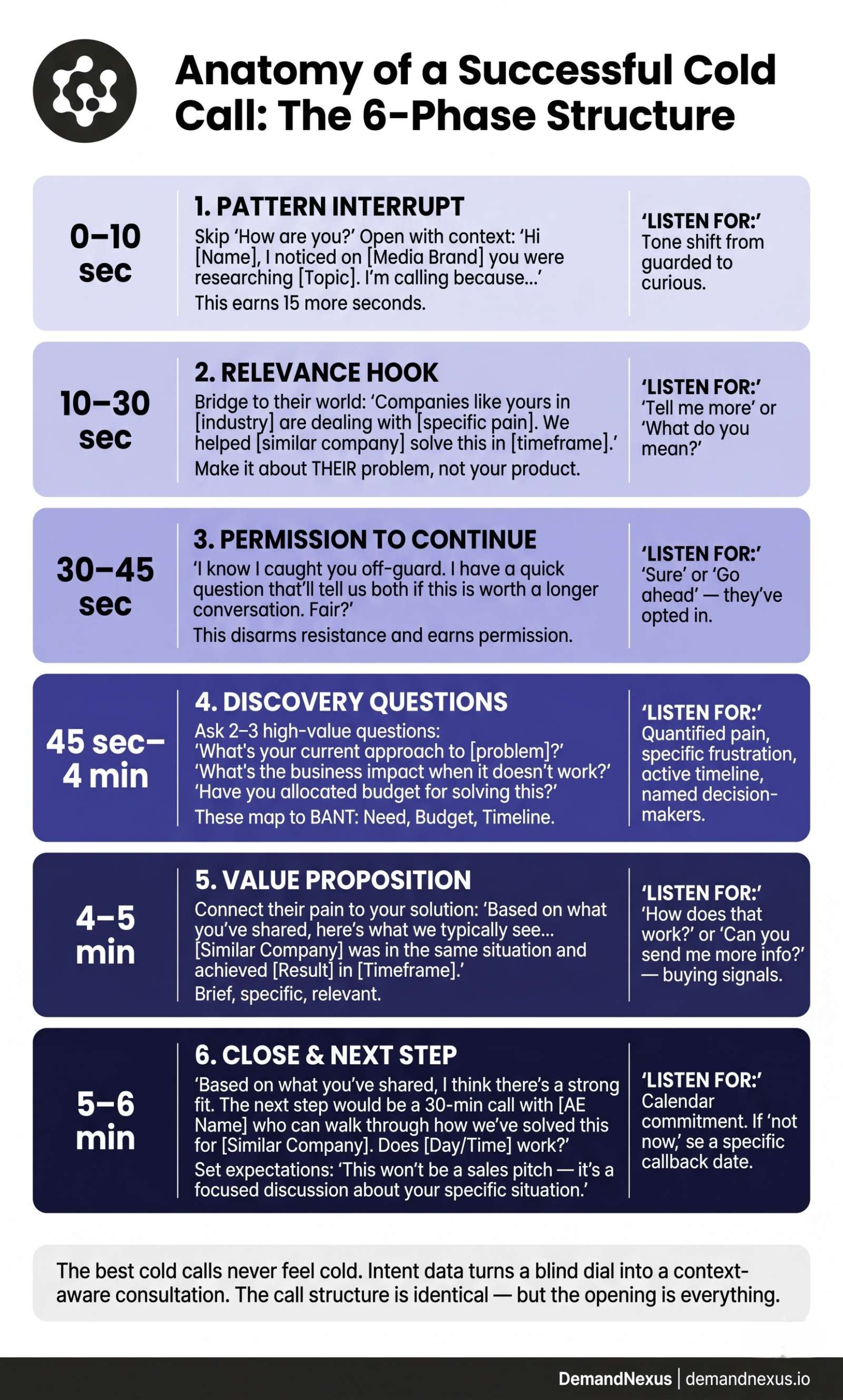

The numbers paint a stark picture: only 28% of cold calls get answered, and conversion rates hover between 2-4.8%. Industry research shows it takes an average of 22.5 cold calls to generate one meaningful conversation.
Despite these challenges, cold calling remains essential for expanding market reach and initiating conversations with new audiences.

What Is Warm Calling?
Warm calling involves contacting prospects who have already engaged with your brand—through website visits, email sign-ups, content downloads, or social media interactions. These leads range from lukewarm (minimal engagement) to red-hot (expressed buying intent).
Warm calling boasts higher success rates due to pre-existing familiarity, making it a more efficient way to nurture leads down the sales funnel. Prospects are more receptive to tailored pitches when they recognize your brand.
Key Differences Between Cold Calling and Warm Calling
The difference between cold calling and warm calling lies in lead awareness, trust levels, and rep effort:
Lead Awareness: Cold prospects are unaware of your brand or offerings. Warm prospects have engaged with your content, visited your site, or downloaded resources.
Prospect Trust: Cold calls face immediate skepticism due to no prior interaction. Warm calls benefit from familiarity, easing conversations.
Rep Effort: Cold calling requires high effort—an average of 22.5 calls for one meaningful conversation according to Gartner. Warm calling requires less effort due to pre-qualified interest.
Success Rate: Cold calling converts at 2-4.8% with more objections. Warm calling converts faster due to established interest.
Understanding these differences helps sales teams allocate resources effectively. But neither approach solves the fundamental problem plaguing B2B pipelines.
Related Articles
What Is Cold Calling? The Complete Definition and Guide
Cold Calling Techniques: Proven Methods for B2B Sales
Why Call Temperature Matters Less Than Qualification
The most important insight in the cold calling vs warm calling debate is that call temperature is less predictive of pipeline quality than the qualification standard applied during the call. An 87% MQL rejection rate proves that warm leads (prospects who have engaged with content and raised their hand) are not automatically qualified. A BANT-verified cold call to an intent-signaled account produces a more qualified meeting than an unqualified follow-up call to a webinar attendee.
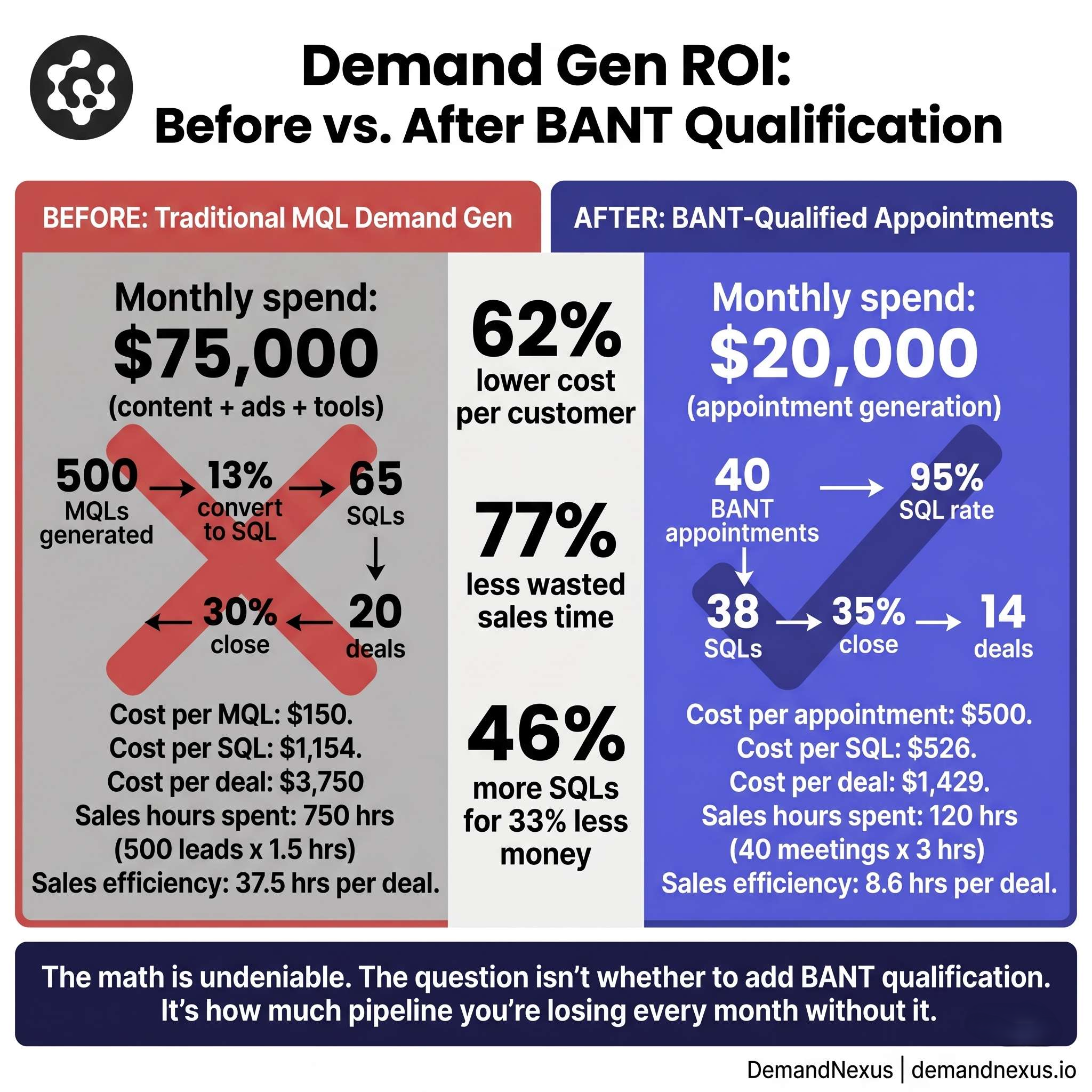
This is why the DemandNexus Waterfall qualification model applies the same BANT verification standard regardless of whether the initial engagement was cold or warm. Every meeting, regardless of source, must pass ICP match, engagement depth, live BANT verification, and AHO documentation before it reaches the seller’s calendar. This standard is why our clients see 90%+ show rates and close rates more than 200% higher than non-qualified alternatives, whether the meeting originated from a cold call, a warm follow-up, or an inbound request.
Cold Calling Challenges: Rejection rates reach 60% of prospects declining per Chet Holmes’ Buyer’s Pyramid. Gatekeepers block access to decision-makers. High call volumes are needed for conversions, creating time pressure that incentivizes quantity over quality.
Warm Calling Challenges: Requires robust inbound strategies to produce warm leads in the first place. Understanding prior engagement demands significant research time. Multiple reps contacting the same lead can frustrate prospects and damage brand perception. And warm doesn’t equal qualified—a content download signals interest, not buying readiness.
At DemandNexus, we’ve found that the real challenge isn’t warming up cold leads or generating more inbound interest. It’s ensuring every meeting your AEs take is with someone who has confirmed budget, decision-making authority, a genuine business need, and an active purchase timeline.
Why Traditional Cold and Warm Calling Strategies Fall Short
Most cold and warm calling strategies focus on the wrong metrics.
Cold calling advice typically includes: Research prospects using LinkedIn or CRM data. Use a flexible script with a permission-based opener. Time calls for Tuesdays or Thursdays at 3-5 p.m. Prioritize pain points. Follow up with multi-channel touchpoints.
Warm calling advice typically includes: Reference prior engagement. Ask open-ended questions. Provide value through tailored content. Respect timing preferences. Track interactions in your CRM.
This is all reasonable guidance. It’s also insufficient.
These strategies optimize for getting meetings. They don’t optimize for getting meetings that convert. The result is a pipeline filled with activity but starved of qualified opportunities. Your SDRs hit their meeting quotas. Your AEs burn hours on prospects who were never going to buy. Your close rates suffer while your cost-per-customer skyrockets.
The BANT-Qualified Appointment Model: Beyond Cold vs. Warm
Instead of asking whether to call cold or warm, ask whether your prospects meet BANT criteria before they ever land on your AE’s calendar.
Budget: Does this prospect have allocated funds for a solution like yours?
Authority: Is this person the decision-maker, or will they need to “talk to their boss”?
Need: Do they have a genuine business problem your solution solves?
Timeline: Are they looking to purchase within 1-6 months, or is this “research for next year”?
When every appointment is BANT-verified before it reaches your sales team, the cold-versus-warm distinction becomes largely academic. A cold prospect with confirmed budget, authority, need, and timeline is infinitely more valuable than a warm prospect who downloaded your ebook out of curiosity but has no intention of buying.
The Economics: Traditional Calling vs. BANT-Qualified Appointments
The financial case for qualification over call temperature is stark.
Traditional MQL Model: Cost per MQL averages $150. MQL-to-SQL conversion sits at 13%. Cost per SQL reaches $1,154. Sales hours wasted per SQL: 8-12 hours of re-qualifying.
BANT-Qualified Appointment Model: Cost per appointment ranges from $400-600. Appointment-to-SQL conversion exceeds 95%. Cost per SQL drops to $420-632. Sales hours wasted: less than 1 hour per appointment.
One mid-market B2B software company comparison illustrates this clearly. With 500 traditional MQLs at $150 each ($75,000 investment), they generated 65 SQLs (13% conversion), requiring 750 hours of sales time. With 40 BANT-qualified appointments at $500 each ($20,000 investment), they generated 40 SQLs (100% conversion), requiring only 120 hours of sales time.
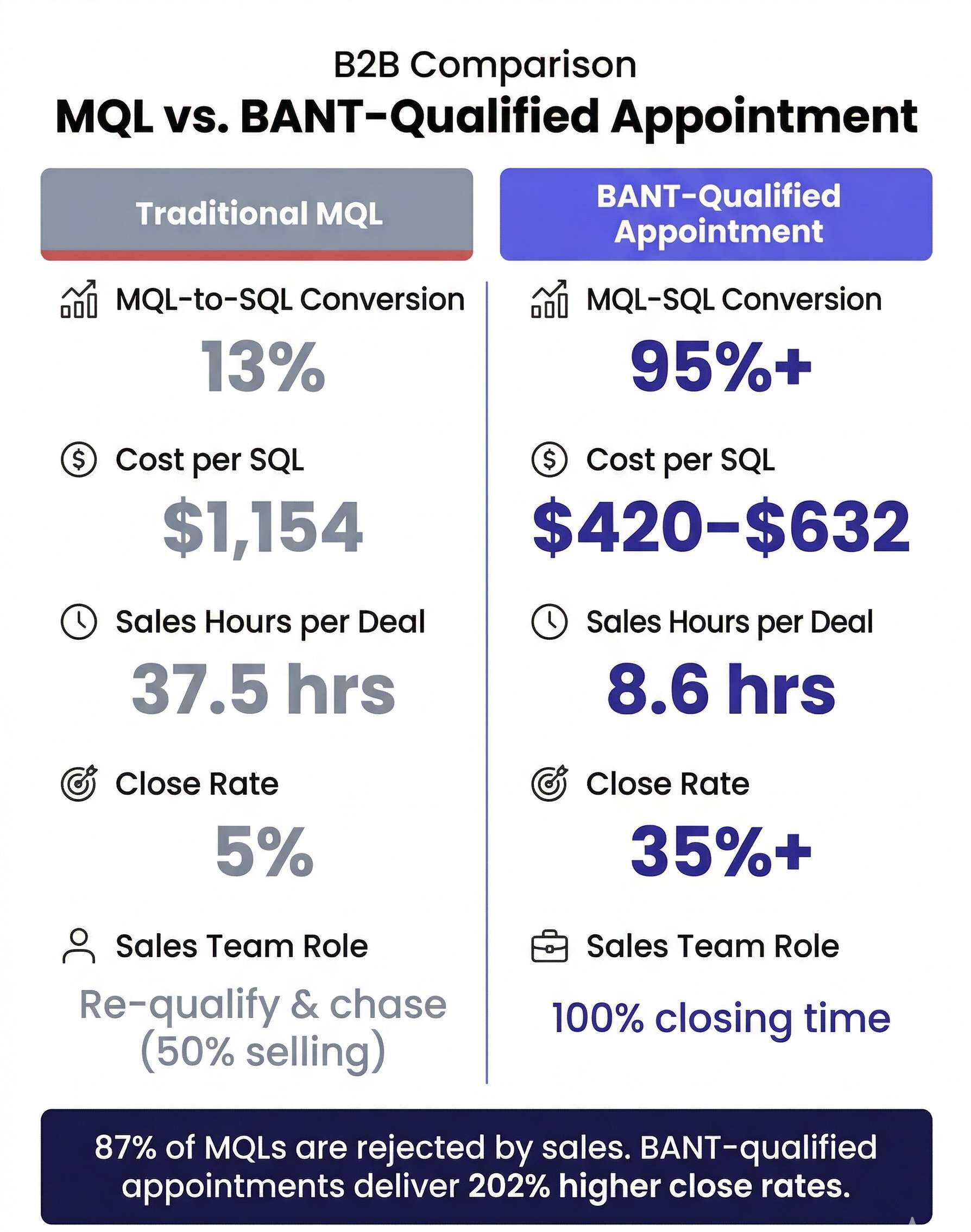
That’s 62% lower cost per customer and 77% less wasted sales time.
Examples: Cold Calling vs. Warm Calling vs. BANT-Qualified
These examples illustrate how qualification transforms outcomes regardless of call temperature.
Cold Calling Example (Traditional Approach)
Rep: Hi [Prospect Name], I’m [Your Name] from [Company]. I noticed [Company Name] is growing in [industry]. Is now a good time for a quick chat about [challenge]?
Prospect: Who’s this? I’m busy.
Rep: I hear you! I’m with [Company], and we’ve helped [Client] cut [metric] by 20%. Can I take 30 seconds to share how, or is tomorrow better?
Prospect: Send an email.
Rep: Happy to! What info would help? I’ll follow up with a case study and a call slot for next week.
Analysis: The rep faces skepticism, uses personalization, and pivots to a follow-up. But they’ve learned nothing about budget, authority, need, or timeline. This “success” likely results in a meeting that goes nowhere.
Warm Calling Example (Traditional Approach)
Rep: Hi [Prospect Name], it’s [Your Name] from [Company]. Thanks for joining our [webinar] last week! Did [topic] spark any ideas for your team?
Prospect: It was helpful, but I’m not sure it fits.
Rep: Glad you found it valuable! What’s making you unsure? We helped [Client] with [similar issue]—can I share how over a 10-minute call next Tuesday?
Prospect: Sounds good.
Analysis: The rep leverages prior engagement and secures a meeting. But “not sure it fits” signals potential lack of need. Without BANT verification, this meeting could still waste the AE’s time.
BANT-Qualified Appointment Example
Before any meeting reaches the AE’s calendar, the prospect has confirmed: they have budget allocated for Q2 implementation, they’re the VP of Operations with purchasing authority, they’re currently evaluating solutions because manual processes are costing them $200K annually, and they’re looking to make a decision within 60 days.
The AE walks into the meeting with a comprehensive handover document including all qualification details, competitive intelligence, and buying committee dynamics.
Analysis: Whether this prospect came from a cold outreach campaign or a warm inbound inquiry is irrelevant. They’re ready to buy, and the AE is prepared to close.
Which Approach Is Right for Your B2B Strategy?
Cold calling excels at expanding reach and generating new leads in uncharted markets. It’s essential for early-stage pipeline building when you’re entering new segments or territories.
Warm calling excels at nurturing engaged leads, driving higher conversions, and accelerating deals. It requires robust inbound strategies to produce warm leads consistently.
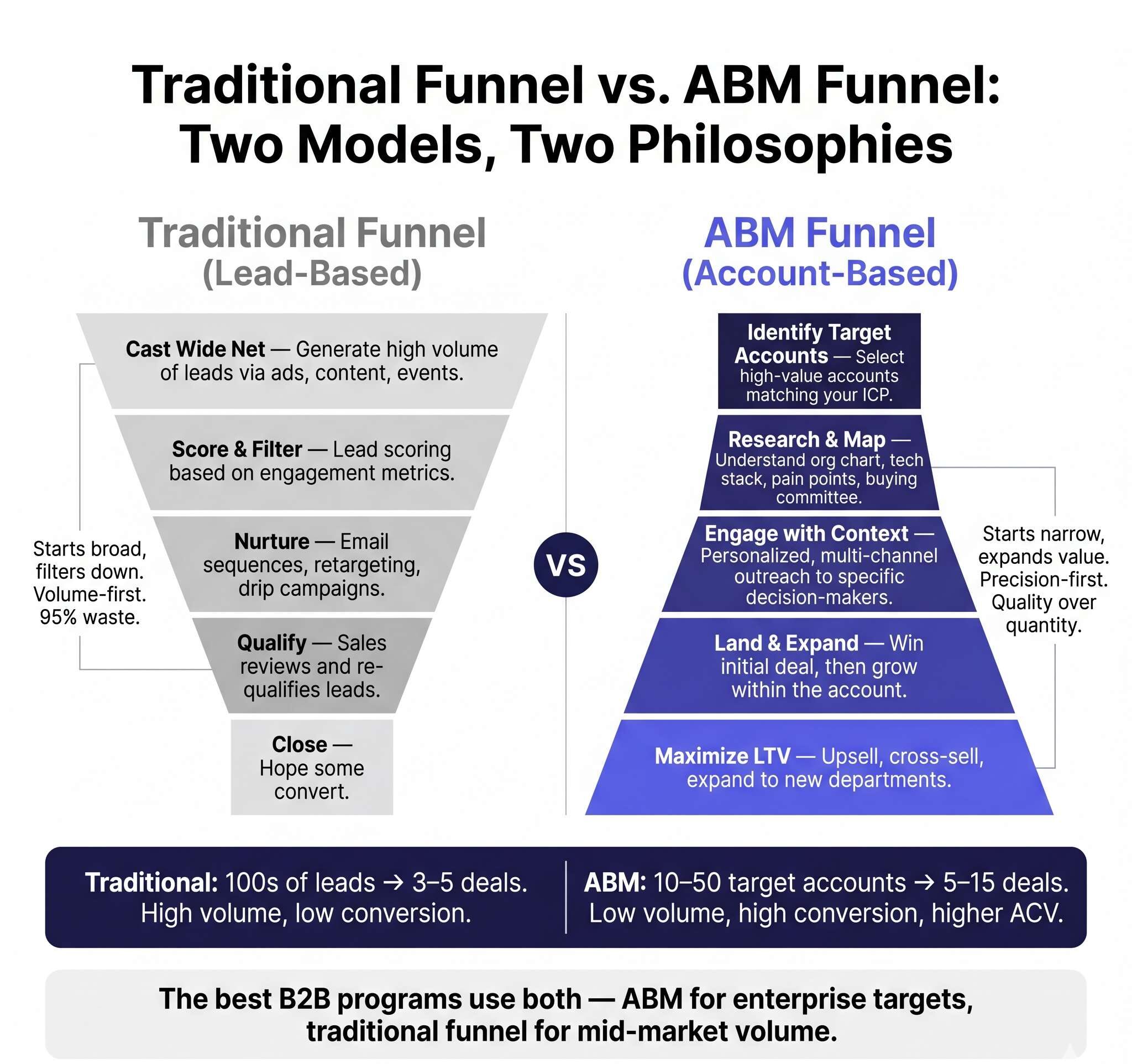
But neither approach solves the fundamental qualification problem. A balanced strategy that combines outreach methods with rigorous BANT verification maximizes results.
At DemandNexus, we’ve built our entire model around this insight. We don’t measure success by leads generated, clicks tracked, or emails sent. We measure success by qualified appointments on your calendar—meetings that meet your BANT criteria, that your sales team is eager to work, that actually convert.
Stop Debating Call Temperature. Start Demanding Qualification.
The cold calling vs. warm calling debate has consumed sales strategy discussions for too long. Both approaches have merit. Neither solves the real problem: 80% of leads wasting your sales team’s time.
The question isn’t whether to call cold or warm. The question is whether every meeting on your calendar is worth your AE’s time.
When you demand BANT verification before appointments reach your team, you stop paying for activity and start investing in accountability. You stop flooding your pipeline with unqualified leads and start filling it with decision-makers who have budget, authority, need, and timeline.
FAQs
What is the difference between cold calling and warm calling?
Cold calling contacts prospects who have had no prior engagement with your company. Warm calling contacts prospects who have previously engaged (downloaded content, attended a webinar, visited your website). The key distinction is prior awareness, not call technique. Both require qualification to produce meetings that close.
Which is more effective: cold calling or warm calling?
Warm calling converts at higher per-call rates because of prior awareness, but cold calling reaches a larger audience. The most effective programs use both in combination. More importantly, the qualification standard applied during the call is a stronger predictor of meeting quality than call temperature. A BANT-verified cold call outperforms an unqualified warm follow-up.
Is warm calling better than cold calling for B2B?
Not necessarily. Warm calling produces higher per-call conversion rates but is limited to prospects who have engaged with marketing. Cold calling reaches any target account. For B2B companies that need pipeline beyond what inbound produces, cold calling with intent-driven targeting and BANT qualification is often the more productive channel. The best approach combines both.
What is the best approach for outbound sales: cold or warm calling?
The best approach is a structured outbound cadence that includes both cold and warm touches. Start with intent data to identify which accounts to prioritize, use cold calls to initiate conversations with decision-makers who have not engaged, and use warm follow-ups to re-engage prospects who have interacted with content or emails. Apply BANT verification to all conversations regardless of call temperature.
Focus on Qualification, Not Temperature
Whether your pipeline comes from cold calls, warm calls, or a mix of both, the qualification standard at the handoff to sales determines whether that pipeline converts. To benchmark your current qualification approach against the BANT-verified Waterfall standard, take the diagnostic at demandnexus.io/start-quiz/ or book a strategy call at demandnexus.io/book-a-call.