
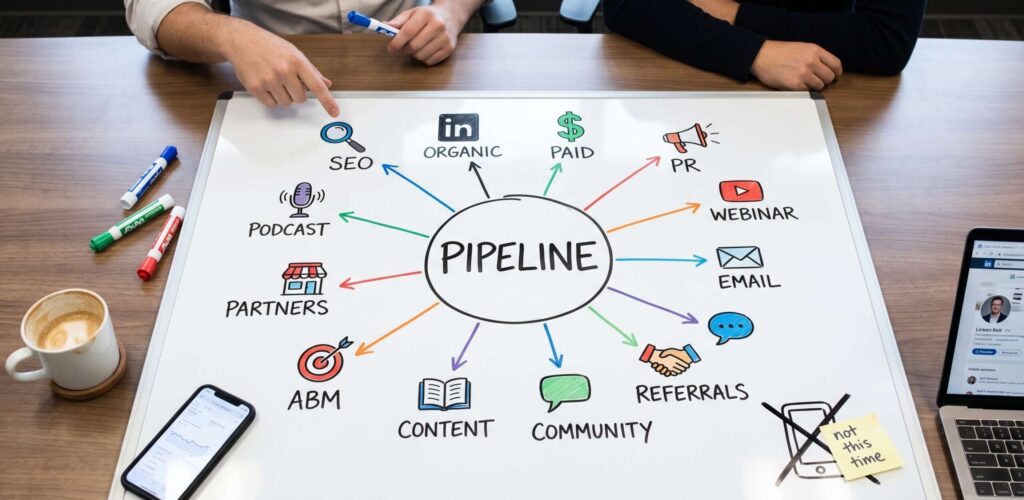


This guide is for people who want to avoid cold calling and are being realistic about the alternatives. We cover 12 channels that work, the honest tradeoffs of each, how long they take to produce results, and the cases where cold calling will still outperform all of them combined.

Most B2B teams lose 40–60% of qualified prospects to broken handoffs and weak qualification. Take our 2-minute diagnostic to find out where your pipeline is bleeding — and how to fix it.
Start the Quiz → Takes 2 minutes. No email required to start.The Honest Truth About Avoiding Cold Calling
Most cold calling alternatives trade speed for scale. Cold calling gives you pipeline next week. Inbound marketing gives you more pipeline in six months. Neither is better. They serve different stages of a business and different risk profiles.
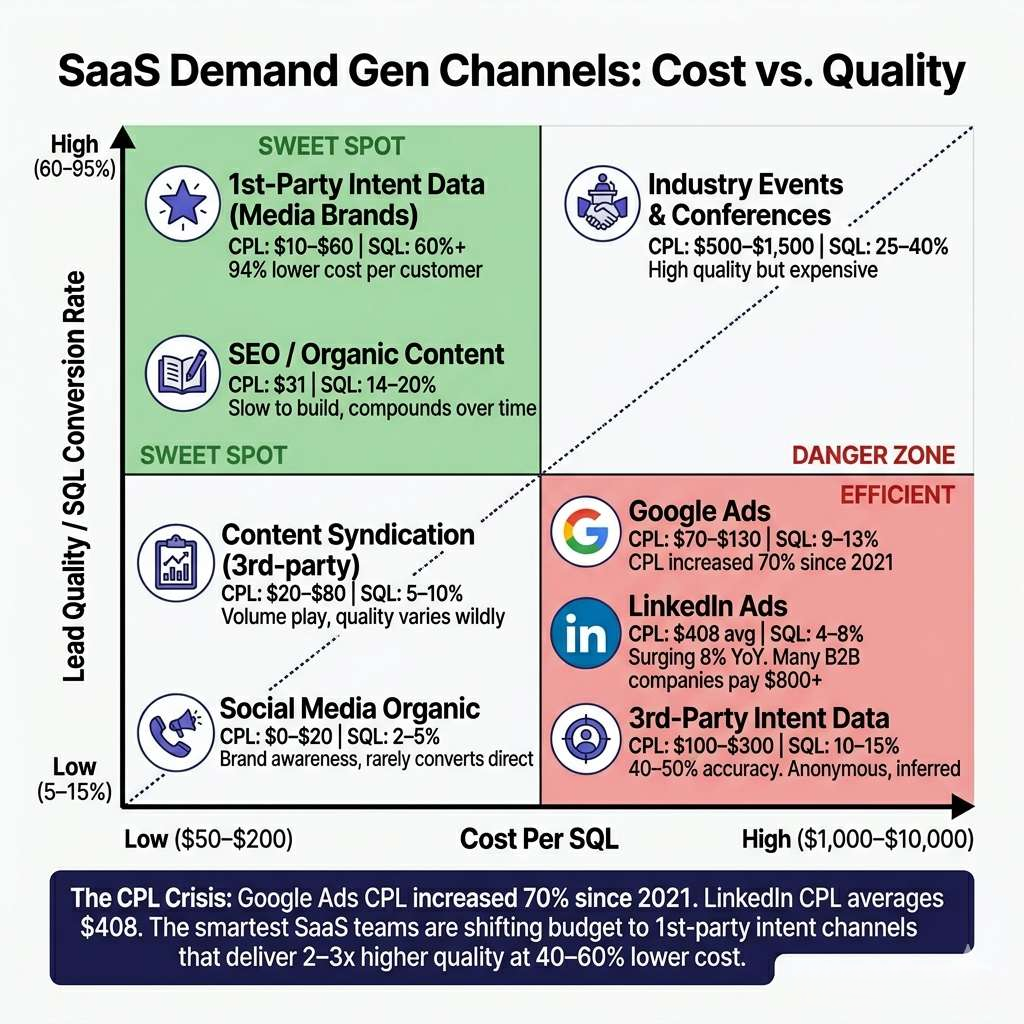
If you need revenue in 30 days, the fastest path is still outbound (cold calling or cold email). If you can afford to wait 6 to 12 months, the systems below compound and eventually produce lower-cost, higher-quality pipeline than outbound ever will.
12 Lead Generation Alternatives to Cold Calling
1. Search-Engine Optimization (SEO)
Rank for the questions your buyers type into Google. Time to first leads: 4 to 9 months. Best for: businesses whose buyers research online before buying. Downside: Google changes, competitors catch up, and content gets stale. Upside: compounding, high-intent, near-zero marginal cost per lead once it is working.
2. LinkedIn Organic Content
Post three to five times a week sharing insights your buyer cares about. Time to first leads: 2 to 6 months. Best for: founders and executives who can credibly speak to buyer problems. Downside: it takes consistent time from someone senior. Upside: trust compounds faster on LinkedIn than almost anywhere else.

3. Paid Search (Google Ads)
Pay to show up when buyers search for your solution. Time to first leads: days. Best for: validating demand fast and filling pipeline in urgent quarters. Downside: CPCs in competitive B2B categories run $10 to $80 per click. Upside: you control the volume. Spend more, get more.
4. LinkedIn Ads
Targeted ads aimed at specific job titles and companies. Time to first leads: 2 to 8 weeks. Best for: narrow B2B ICPs where precision targeting matters. Downside: the most expensive ad platform for B2B on a per-click basis. Upside: you can put your message directly in front of the exact CFO or CIO you want to reach.
5. Referral Programs
Structured programs that reward existing clients, partners, and contacts for introducing prospects. Time to first leads: 1 to 3 months. Best for: service businesses with happy clients. Downside: requires existing clients to activate. Upside: referral leads close at 3 to 5 times the rate of cold leads.
6. Content Marketing (Blog, Video, Podcast)
Long-form content that attracts buyers to your site. Time to first leads: 6 to 12 months. Best for: companies whose buyer research is deep and multi-stage. Downside: front-loaded time investment. Upside: a single great podcast episode or blog post can drive leads for years.
7. Webinars and Virtual Events
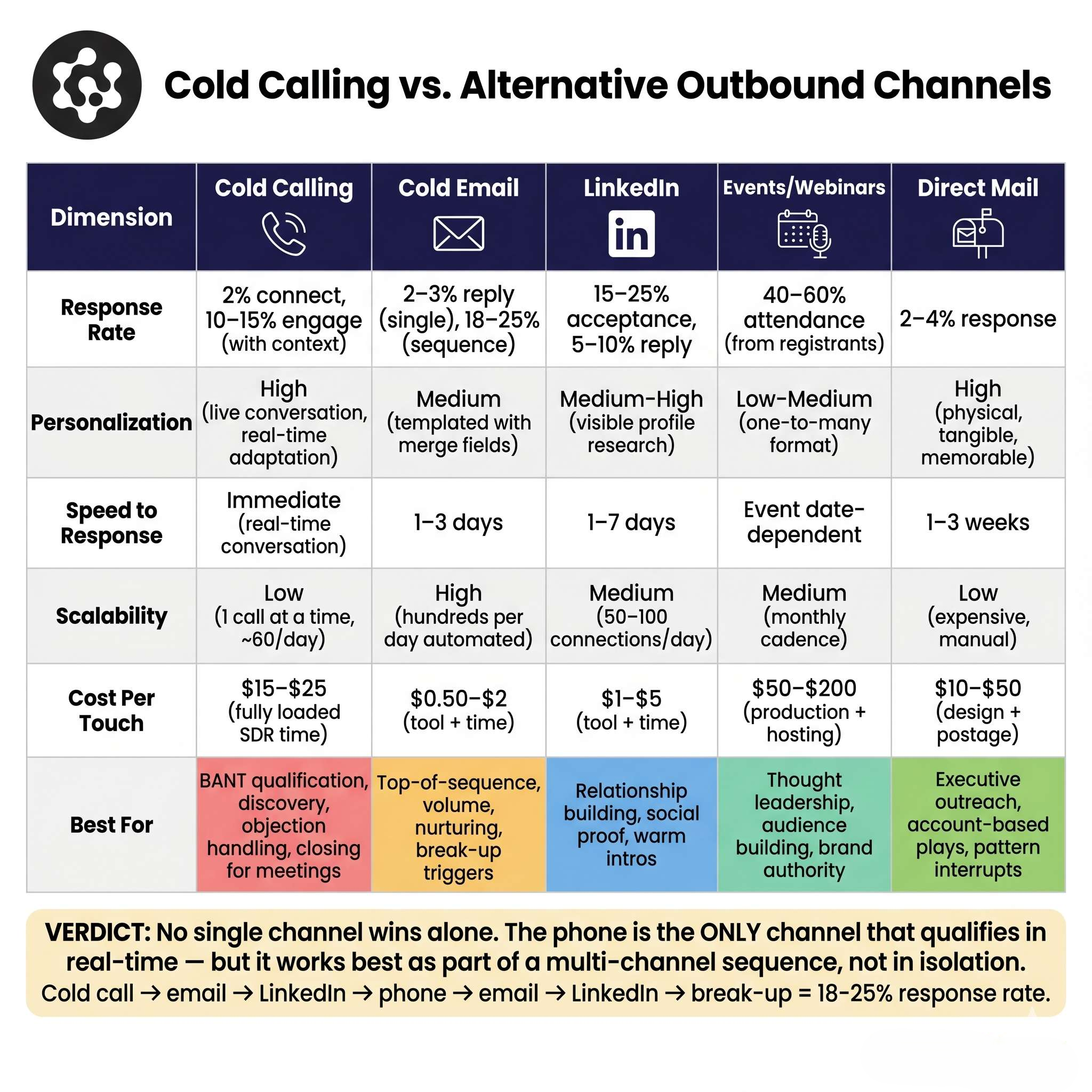
Live educational events that convert attendees into sales conversations. Time to first leads: weeks. Best for: topics where buyers want to learn from an expert. Downside: attendance rates are low without paid promotion. Upside: high-intent leads since attendees self-select.
8. Account-Based Marketing (ABM)
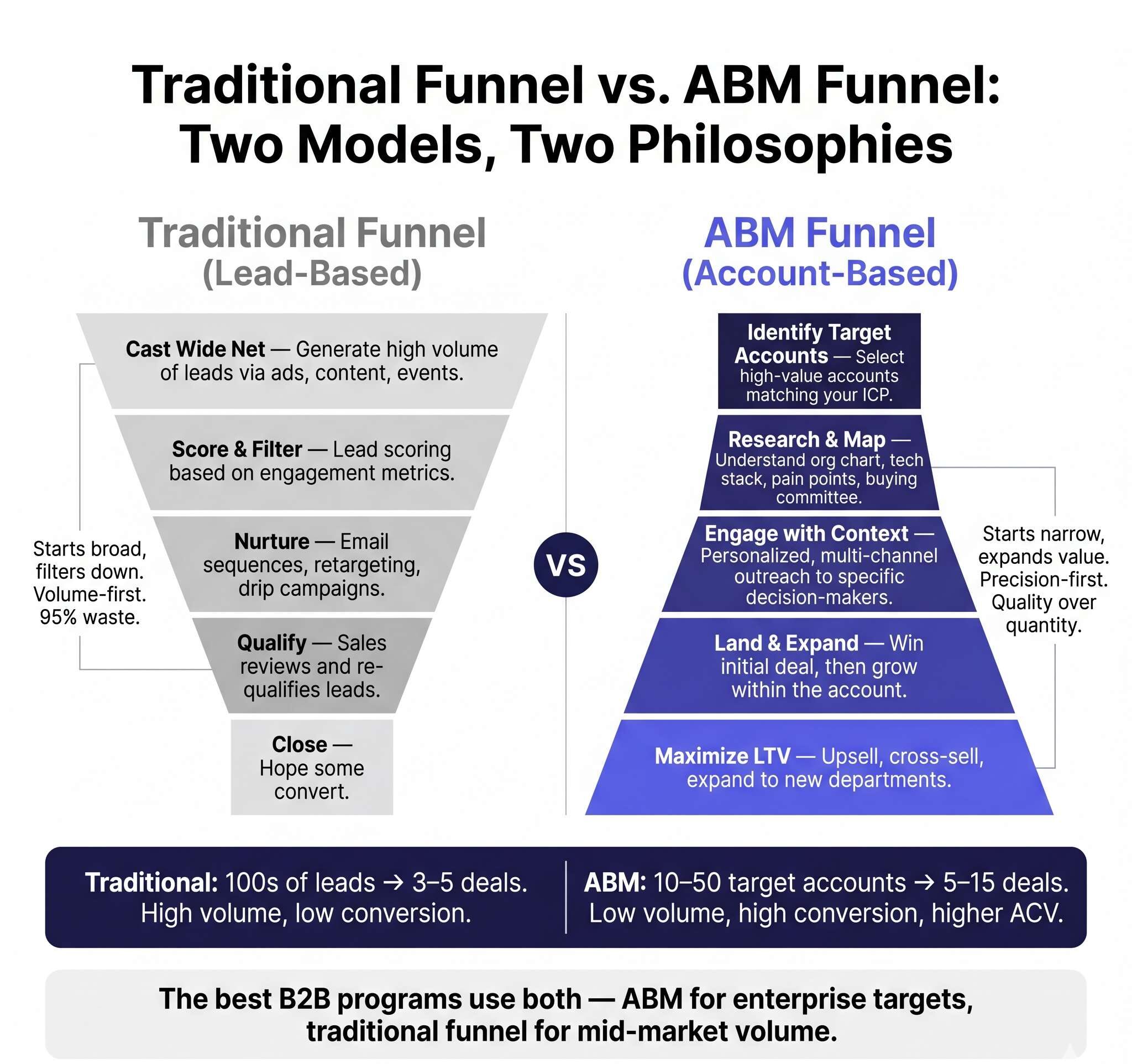
A coordinated marketing campaign aimed at a named list of target accounts. Time to first leads: 2 to 6 months. Best for: enterprise sales with long cycles and multiple stakeholders. Downside: expensive and complex. Upside: can crack accounts that outbound alone cannot.
9. Partner and Channel Sales
Let other companies sell or refer your product. Time to first leads: 3 to 9 months. Best for: businesses whose buyer has an adjacent provider (consultants, agencies, system integrators). Downside: partners need training and support. Upside: partners become a perpetual source of qualified leads.
10. Cold Email
Technically still outbound, but without the phone. Time to first leads: 2 to 6 weeks. Best for: teams with strong writing and tight ICP targeting. Downside: inboxes are saturated and reply rates have dropped to 1 to 3 percent. Upside: scales 10x further than cold calling for the same effort.
11. Community Building
Build or participate in a community (Slack group, Discord, LinkedIn group) where your buyers gather. Time to first leads: 6 to 18 months. Best for: companies with a founder or team member who genuinely enjoys the space. Downside: cannot be faked and takes real time. Upside: communities produce the highest-quality leads in the business.
12. PR and Thought Leadership
Get featured in the publications your buyers read. Time to first leads: 3 to 9 months. Best for: companies with a compelling data set, story, or point of view. Downside: PR firms are expensive and results are unpredictable. Upside: one placement in the right publication can change your whole trajectory.
When Cold Calling Still Wins
Be honest about these scenarios. If any apply, cold calling is still your fastest path:
- You need revenue in the next 60 days.
- Your buyer is a senior executive who does not actively consume content.
- Your total addressable market is under 5,000 companies globally (inbound cannot reach enough volume).
- Your product is early and has no search demand yet.
- Your deal size is large enough that one booked meeting is worth the effort.
The Hybrid Approach (What Most Growing B2B Companies Actually Do)
In practice, the smart play is combining outbound (including cold calling) with two or three inbound channels. Outbound fills pipeline this quarter while inbound builds for next year. Neither alone will carry you.
At DemandNexus we see this most often: clients run cold calling and cold email through us while simultaneously investing in SEO and LinkedIn organic. By month 12 inbound contributes 30 to 50 percent of pipeline. By month 24 outbound becomes a supplement rather than the primary source.
FAQs
How do I get SEO clients without cold calling?
Rank for "SEO services in [city]" and adjacent keywords, publish case studies that show real traffic gains, and build referral loops with web agencies who do not offer SEO. Most SEO agencies we know book 80+ percent of pipeline from inbound and referrals by year three.
Can a B2B SaaS company grow without any cold outbound?
Yes, but only if it has a product-led growth motion, a free tier that drives sign-ups, and the patience to grow slower than outbound-driven peers. Most successful PLG companies still add outbound once they cross $5M in ARR to accelerate expansion.
What is the cheapest way to generate B2B leads without cold calling?
Long-form LinkedIn content from a credible executive is the lowest-cost credible channel. It requires zero budget, just time and a consistent voice.