


The real challenge in B2B international expansion is not awareness — it is qualified pipeline. New markets do not know you. Buyers have no existing context for your brand. Procurement processes, buying committee structures, and decision-making timelines differ by region. And the same MQL-driven demand generation model that struggles in saturated domestic markets performs even worse when applied cold to markets where you have zero brand recognition.

Most B2B teams lose 40–60% of qualified prospects to broken handoffs and weak qualification. Take our 2-minute diagnostic to find out where your pipeline is bleeding — and how to fix it.
Start the Quiz → Takes 2 minutes. No email required to start.This playbook covers the strategies, market research framework, and international B2B marketing approaches that actually produce qualified pipeline in new markets — and the metrics you need to measure whether your expansion is working.
Why B2B International Expansion? The Commercial Case
The global B2B ecommerce market is projected to exceed $36 trillion through 2026. Cross-border B2B software and services demand is accelerating, driven by digital-first procurement, remote buying committees, and the globalization of enterprise technology spend. For B2B companies with demonstrated product-market fit in their home market, international expansion typically offers:
- Higher TAM: access to markets where your solution category is less mature and competition is less entrenched — meaning you enter with competitive differentiation that would cost far more to establish domestically
- Portfolio diversification: reduced dependence on a single market’s economic cycle, currency exposure, or regulatory environment
- Brand credibility: a global footprint signals enterprise-grade capability to domestic buyers, often improving close rates in your original market
- Talent and cost advantages: proximity to specific talent pools, lower-cost operational bases, or customer proximity for high-touch industries
The strategic question is not whether to expand internationally but how to do it without wasting 18 months on market entry activities that do not produce verifiable pipeline. The answer starts with market research — real, data-driven B2B international market research that goes beyond macro analysis into account-level buying intent.

Market Research for International Expansion: What Actually Matters
Most international market research frameworks focus on macro indicators: GDP growth rates, industry size estimates, regulatory landscapes, and competitive density. These are necessary but insufficient. A market can look attractive by every macro measure and still produce almost no qualified pipeline if the ICP definition used to enter it is wrong.
Effective market research for international expansion in B2B operates at the account level, not the market level. The goal is to answer: which specific companies in this market match our ICP, are actively researching solutions in our category, have budget allocated in a relevant window, and have a decision-maker we can reach?

Step 1: Define a Market-Specific ICP Before Entering
Your domestic ideal customer profile will not translate directly to a new market. Company size thresholds, industry structures, buying authority levels, and technology adoption patterns differ significantly by geography. A company with 200 employees that is an ideal customer in the UK may be significantly larger or smaller than its equivalent in Southeast Asia or Central Europe.
Rebuild your ICP for each target market from the ground up, using firmographic data from local sources (Companies House in the UK, Handelsregister in Germany, MCA in India) combined with intent signal data from market-relevant content platforms. Define ICP criteria across:
- Company size range by revenue or employee count, calibrated to local market norms
- Industry verticals with demonstrated technology adoption and budget cycles
- Technology stack indicators showing platform maturity compatible with your solution
- Growth signals: recent funding, hiring patterns, geographic expansion activity
- Buying authority mapping: who holds budget and decision-making power in that market’s organizational structures
Step 2: Size the Market at the Account Level, Not the Category Level
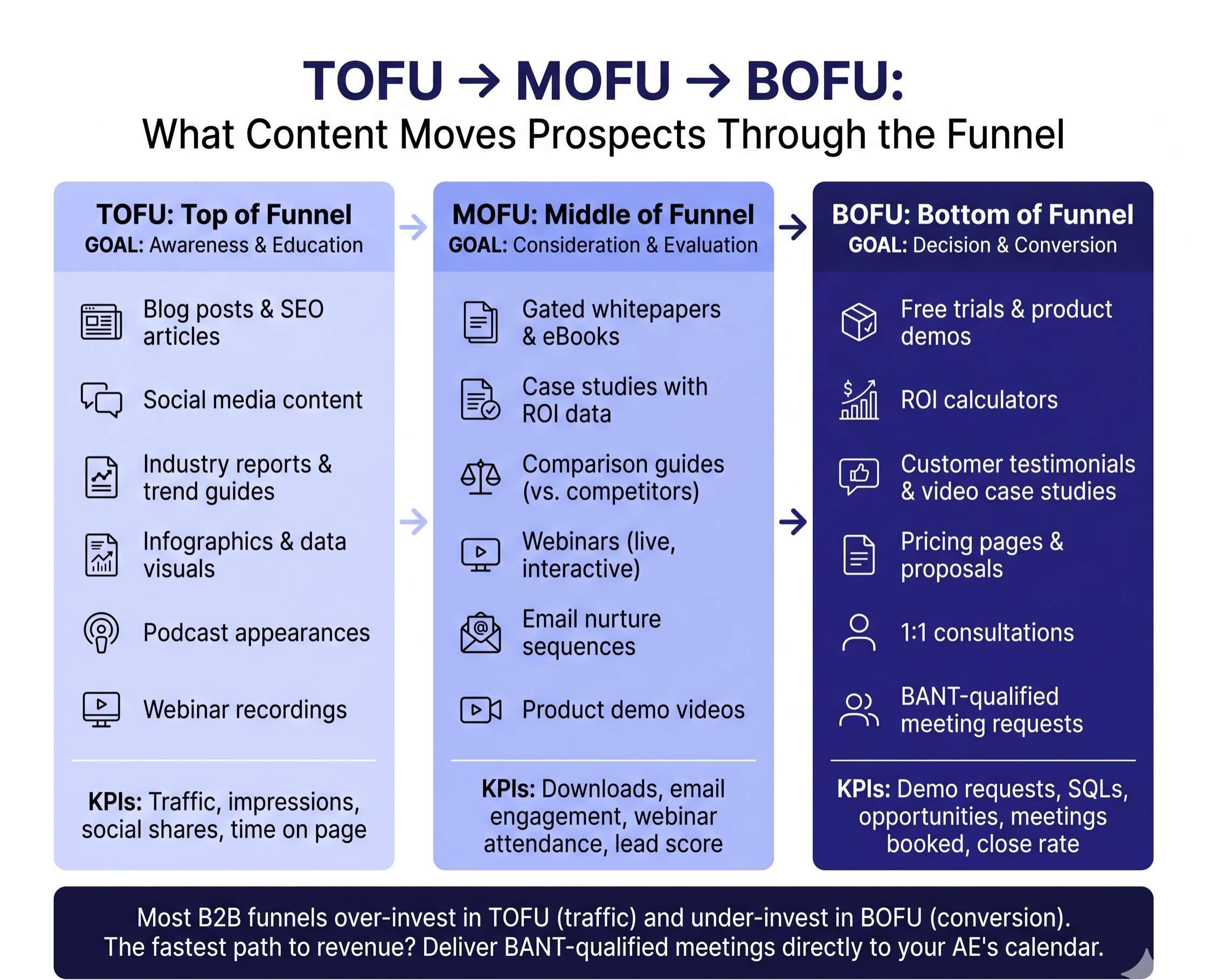
TAM estimates built on analyst reports tell you the theoretical opportunity. Account-level TAM tells you how many qualified companies you can actually reach and convert. Build a bottom-up account list for each target market by filtering your ICP criteria against available firmographic databases, then overlay intent signals to identify which of those accounts are in an active research or buying cycle now.
This is where a global business expansion platform with owned media audiences becomes decisive: if you can identify which named decision-makers in your target market are actively consuming content about your solution category — by name, title, company, and topic — you enter the market with a prioritized list of accounts that are already in-market, not a cold list requiring months of awareness-building before outreach can begin.
Step 3: Validate Product-Market Fit with Qualification Conversations Before Full Launch
Before committing significant resources to a new market, run a qualification-first pilot: reach out to 30-50 ICP-matched accounts, conduct structured discovery conversations, and measure BANT qualification rates. If Budget, Authority, Need, and Timeline can be confirmed in 40-60% of engaged conversations, the market is viable. If qualification rates fall below 20%, you have either an ICP problem, a messaging problem, or a market readiness problem — all of which are cheaper to diagnose before launch than after.
International B2B Marketing Strategies That Actually Generate Pipeline
International B2B marketing strategy is not a single playbook — it is a set of market-entry decisions about which channels to prioritize, how to sequence awareness and demand capture, and how to qualify pipeline without the brand recognition you have at home. Here are the strategies that produce measurable results:
Strategy 1: Intent-Led Outbound as Your Market Entry Motion
In a new market, broad-based B2B demand generation (paid search, display, general content syndication) takes 6-12 months to generate meaningful organic traction. Meanwhile, your sales team needs pipeline now. Intent-led outbound — reaching out specifically to accounts that have demonstrated active research behavior in your solution category — compresses the time-to-first-qualified-conversation from months to weeks.
The mechanism: intent-based marketing identifies first-party signals from named individuals — someone reading three articles about enterprise resource planning on a vertical tech media brand is a fundamentally different prospect than a company that appeared in a third-party intent data report. First-party signals carry the identity of the researcher, the specific topic they engaged with, and the recency of the engagement — all three of which make outreach relevance and response rates dramatically higher than cold list approaches.
Strategy 2: Build Authority Through Vertical Content Before Scaling Outbound
In markets where you have no brand recognition, B2B content marketing strategy built around local industry verticals creates the authority signals that make outbound conversations land better. Decision-makers in any market are more receptive to outreach that references content they recognise — either because they have encountered it themselves or because it is distributed through a publication they trust.
Prioritize content that positions you as a category expert in the specific industry verticals you are targeting in that market. A whitepaper co-authored with a local industry association, a benchmark study drawing on market-specific data, or a webinar series featuring regional practitioners all create credibility assets that reduce the cold-start disadvantage of market entry. This content also generates the first-party intent signals that fuel your outbound qualification motion — creating a compounding loop between demand generation content and pipeline generation.
Strategy 3: Localize Messaging at the Pain-Point Level, Not Just the Language Level
True localization in international B2B marketing is not translation — it is reframing your value proposition around the specific business problems that register as urgent in each market. A CFO in Singapore has different regulatory concerns, different competitive pressures, and different organizational priorities than a CFO in the Netherlands, even if both match your ICP on every firmographic dimension.
Map the B2B marketing challenges that are specific to each target market: What regulations are changing? Which competitor products dominate? What are the dominant tech stacks? What are the most common objections to solutions like yours? Build messaging frameworks that open with these market-specific problems before introducing your solution — the pain-first approach that performs significantly better than product-led or offer-led outreach in any cold-start environment.
Strategy 4: Run Multi-Channel Sequences Calibrated to Each Market’s Communication Norms
Channel effectiveness varies significantly by market. LinkedIn dominates in North America, UK, and Northern Europe. Email performs strongly in DACH and the Nordics. WhatsApp and direct messaging are effective in Southeast Asia, Middle East, and Latin America. Phone-first approaches work better in Southern Europe and parts of Asia than in markets where email-first sequencing is the norm.
Build market-specific channel sequences rather than applying your domestic outreach model globally. A sequence that generates 15% response rates in the US may produce 5% in Japan if it relies on channels or communication styles that do not match local norms. Your B2B prospecting sequence should be calibrated not just to ICP but to the specific outreach conventions of each target market.
Strategy 5: Use BANT Qualification to Gate Every AE Meeting from Day One
In new markets, the qualification discipline that matters most is preventing your AEs from entering meetings without verified Budget, Authority, Need, and Timeline. Market-entry pressure — the urgency to show early wins — creates a temptation to pass every conversation to sales regardless of qualification depth. This is how new market launches generate 90-day activity reports with no pipeline to show.
Enforce the same BANT gate that applies in your domestic market, and deliver an Appointment Handover Sheet (AHO) to every AE before their first meeting with a new-market account. The AHO gives the AE the prospect’s specific pain points, decision-making structure, budget allocation, purchase timeline, and competitive context — so the meeting is a solution presentation, not a discovery call in disguise.
Growing International Sales: The Pipeline Architecture
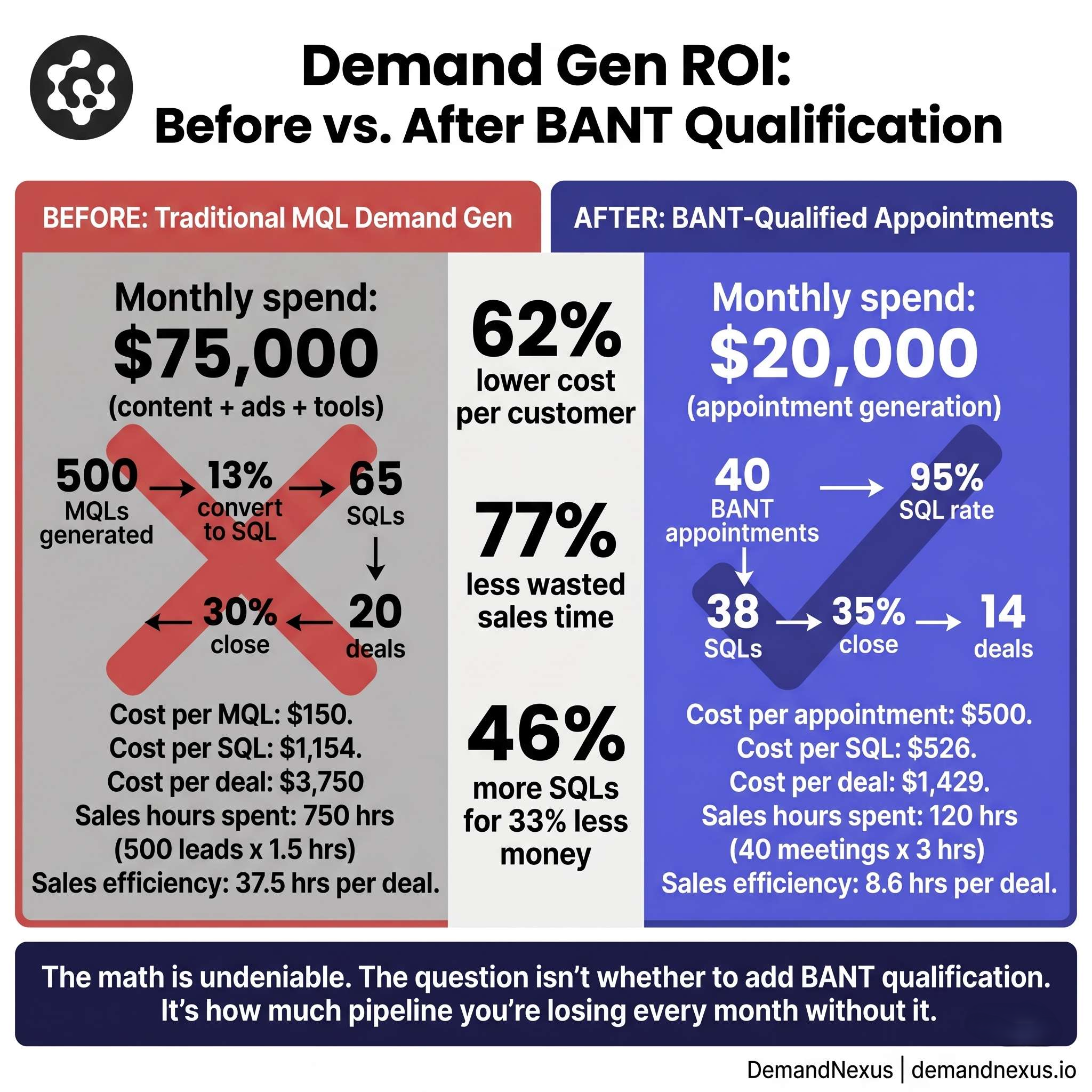
Growing international sales is fundamentally a pipeline quality problem, not a pipeline volume problem. Most international expansion failures are not caused by insufficient reach — they are caused by filling the pipeline with unqualified contacts who consume sales time without producing revenue.
The pipeline architecture for international sales lead generation that produces reliable revenue has three layers:
Layer 1: Intent Signal Capture at Scale
Before any outreach, you need a mechanism for identifying which accounts in your target market are actively researching your solution category. This means owning or partnering with content channels that your target buyers actually read — vertical media brands, industry communities, specialist newsletters — and tracking first-party engagement signals from those channels.
DemandNexus’s network of six owned B2B media brands (AITechTrend, MarTechTrend, HRTechTrend, FinTechFilter, LegalTechTrend, DevTechTrend) reaches 15M+ decision-makers globally, providing first-party intent signals at a scale and specificity that generic third-party intent tools cannot match. When a named VP at a Munich-based SaaS company reads three articles about AI in HR tech, that is a qualified signal — not an anonymous IP with a cluster tag.
Layer 2: Multi-Stage BANT Qualification
Intent signals prioritize accounts for outreach. BANT qualification confirms which of those accounts are genuinely viable. A dedicated 8-person Instant Pod — comprising list builders, a copywriter, a team lead, and five SDRs — executes personalized multi-channel outreach sequences for each prioritized account and conducts live 15-20 minute discovery calls to verify budget allocation, authority level, active need, and purchase timeline before any meeting is booked.
This qualification layer is what converts intent signal data into verifiable B2B marketing pipeline. Without it, even high-quality intent signals produce only a list of companies to cold-call — the qualification work still falls on AEs. With it, AEs receive scheduled meetings where BANT has already been confirmed, and their only job is to close.
Layer 3: AHO-Supported Appointment Delivery
Every BANT-qualified meeting arrives with a completed Appointment Handover Sheet covering the prospect’s confirmed budget status, decision-making authority, active business need, purchase timeline, competitive evaluation status, and stated objectives for the meeting. AEs walk into international market meetings with the same contextual intelligence they would have with a domestic account they have been working for months — compressing the trust-building timeline that normally disadvantages new-market entry.
How to Expand B2B Internationally: A Step-by-Step Framework
- Define a market-specific ICP. Do not transplant your domestic ICP. Research local company size distributions, industry structures, buying authority patterns, and technology maturity levels. Build a fresh ICP definition for each target market.
- Build an account-level target list using intent data. Identify named companies matching your market ICP that are showing active research signals. Prioritize accounts with multiple intent signals across a 30-day window.
- Develop market-specific messaging. Map the regulatory changes, competitive dynamics, and business pressures that are specific to each market. Open every message with the market’s specific pain, not your product’s features.
- Choose channels calibrated to local communication norms. Research preferred outreach channels by market. Build sequences that respect local norms around email frequency, direct messaging, and phone contact.
- Run a qualification pilot before full investment. Test 30-50 accounts, measure BANT qualification rates, and use the data to refine your ICP, messaging, and channel mix before scaling.
- Enforce BANT qualification as the gate to AE engagement. Never allow an unqualified international prospect to consume AE time. All qualification work must be completed before any meeting is booked.
- Deliver AHO-supported appointments. Every AE meeting in a new market should arrive with full account intelligence — pain points, budget status, decision-making structure, and purchase timeline — so the meeting begins at the solution stage, not the discovery stage.
- Measure the right expansion metrics. Track BANT-qualified appointments per market, cost per qualified meeting by channel, appointment-to-close conversion rate, and market penetration rate by vertical — not MQL volume or lead counts.
Demand Generation Strategy for New International Markets
Demand generation in a new market requires a sequenced approach: you cannot run full-funnel campaigns when you have no brand recognition, no existing audience, and no intent data from that market yet. The sequence that works:
Phase 1: Intelligence and Intent (Months 1-2)
Before any outbound begins, invest in market intelligence. Identify your top 200 ICP-matched accounts in the target market. Map buying committees for your 50 highest-priority accounts. Establish intent signal tracking through vertical media partnerships or owned content channels in that market. This phase produces the account intelligence that makes Phase 2 outreach contextually relevant rather than cold.
Phase 2: Targeted Outbound Qualification (Months 2-4)
Launch intent-triggered outbound to your prioritized account list. Run 8-12 touch sequences across the market’s preferred channels. Conduct BANT qualification calls for every engaged account. The goal of this phase is not meetings — it is qualified meetings. Track your BANT qualification rate per 100 outreached accounts. This rate tells you whether your ICP, messaging, and channel mix are calibrated correctly for the market.
A well-executed demand generation framework for new market entry typically produces 15-40 BANT-qualified appointments per month by the end of the first 90-day cycle, depending on market size and ICP fit. These appointments become your earliest validated data points for whether the market is genuinely viable at the unit economics your business requires.
Phase 3: Content and Authority Building (Months 3-6, Running in Parallel)
While outbound qualification runs, begin building content authority in the target market. Publish market-specific content addressing the local industry problems you identified in Phase 1. Contribute to local industry publications and communities. Run a webinar series featuring regional practitioners or local industry data.
The content you create in Phase 3 fuels Phase 4 by generating first-party intent signals from inbound researchers — creating a self-reinforcing loop between demand generation content and outbound qualification. By month 6, a portion of your most engaged content consumers will self-identify as active prospects, reducing the cost per qualified meeting as the content asset base compounds.
Phase 4: Scaled Pipeline at Lower Cost (Months 6+)
As brand recognition and content authority build, your demand generation metrics should show improving unit economics: lower cost per qualified meeting, higher contact-to-meeting conversion rates, and rising inbound-initiated qualification conversations. This is the point at which the market-entry investment begins to compound, and where budget reallocation from outbound-heavy to a balanced inbound-outbound mix typically makes sense.
International B2B Marketing Metrics: Measuring Expansion Performance
International expansion performance should be measured at the market level with the same rigor you apply domestically — and the same emphasis on pipeline quality over activity volume. The B2B marketing metrics that matter most for international market entry:
| Metric | What It Measures | Target Benchmark |
|---|---|---|
| BANT-qualified appointments per market | Verified pipeline meetings per month, per geography | 15+ per month by end of Month 3 |
| BANT qualification rate | % of outreached accounts that confirm all four BANT criteria | Target: 40-60% of engaged conversations |
| Cost per BANT-qualified meeting | Total spend per market divided by qualified meetings delivered | Target: $400-$500 per meeting |
| Market penetration rate by vertical | % of ICP-matched accounts in the target market that have been engaged | Track quarterly; rising rate confirms ICP and channel accuracy |
| AE close rate on international meetings | % of BANT-verified meetings converting to closed-won | Target: 30-35%; below 20% indicates ICP or AHO quality issues |
| Cost per closed deal by market | Total market investment divided by new customers acquired | Should converge toward domestic benchmark within 12-18 months |
| Pipeline growth rate per market | Month-over-month growth in BANT-verified pipeline value | Leading indicator of whether expansion investment is compounding |
For SaaS demand generation specifically, international expansion metrics should also include net revenue retention by market (to confirm that newly acquired international customers are expanding, not churning) and CAC payback period by geography (to confirm that international unit economics are sustainable, not just showing top-line growth).
B2B Sales Lead Generation in International Markets
The most common mistake in international B2B sales lead generation is treating new-market lead generation as a volume problem. Teams launch international campaigns with the same cost-per-lead targets they use domestically, collect hundreds of contacts from content syndication or paid social, and then discover that 80%+ of those contacts have no buying intent, no budget, and no authority.
The economics of international sales lead generation KPIs should be anchored to cost per BANT-qualified meeting, not cost per lead. In a new market, the cost per unqualified lead may look low, but the true cost per qualified opportunity — once AE time spent re-qualifying is factored in — is frequently 5-10x the nominal cost per lead.
The effective international B2B sales lead generation model starts with intent signal identification, moves through BANT qualification via a dedicated outbound pod, and delivers verified appointments with full account intelligence to AEs. The DemandNexus Waterfall Model applies this sequence to any geographic market through the six owned media brands and the Instant Pod structure — without requiring you to hire, train, and manage local SDR teams in each new market.
What Is Demand Generation in the Context of International Expansion?
Demand generation in international markets serves a different purpose than in established home markets. At home, demand generation nurtures awareness that already exists into active buying cycles. Internationally, demand generation must create awareness, build category authority, and generate buying intent — simultaneously and from a cold start.
The complete B2B demand generation guide applies to international contexts, but the sequencing matters more than in established markets. Leading with outbound qualification rather than broad awareness campaigns means you are generating qualified pipeline from week one while content authority compounds over months — rather than waiting 6 months for awareness campaigns to produce pipeline you can actually measure.
The demand generation vs. growth marketing vs. ABM framework is particularly relevant for international expansion decisions: account-based approaches (targeting 50-100 named accounts in a new market with deep personalization) typically outperform broad demand generation in the first 6-12 months of market entry, because ABM’s account-level specificity compensates for the lack of brand recognition that normally supports broad-based demand gen performance.
Expand Into New Markets With Qualified Pipeline from Week One.
DemandNexus delivers BANT-qualified appointments in international markets through the Waterfall Model — using first-party intent signals from six owned B2B media brands reaching 15M+ decision-makers globally, an 8-person Instant Pod per market, and pay-for-performance billing where you pay only for meetings that happen and meet your qualification criteria.
No in-country SDR hiring. No 12-month awareness campaign before pipeline appears. No MQLs that waste your AE’s time in markets where their time is even more expensive. Book a Waterfall Strategy Call at demandnexus.io to see how the model works for your target markets.
FAQs
How do you expand B2B internationally without wasting your sales team's time?
The key is to enforce BANT qualification as the gate to AE engagement from day one. In new markets, the temptation is to pass every conversation to sales to show early progress. This wastes AE time and produces activity without revenue. Instead, use a dedicated SDR pod to conduct BANT discovery conversations with every engaged account and deliver only qualified meetings to AEs, each accompanied by an Appointment Handover Sheet covering the prospect's budget, authority, need, and timeline. See how this pipeline model works on the B2B prospecting page.
What is the best international B2B marketing strategy for a SaaS company entering a new market?
For B2B SaaS, the most effective international market entry strategy combines intent-led outbound with vertical content authority building. In months 1-3, use first-party intent signals to identify accounts in active research mode and run BANT-qualification outbound sequences against them. Simultaneously, begin building content authority through market-specific vertical publications and webinar series. By month 6, the content engine produces inbound intent signals that reduce your cost per qualified meeting while the outbound qualification motion continues delivering near-term pipeline. Track performance with the demand generation metrics that matter: BANT-qualified appointments, cost per meeting, and AE close rate — not MQL volume.
How do you conduct market research for international B2B expansion?
Effective market research for international B2B expansion operates at the account level, not the category level. Build a bottom-up ICP for the target market using local firmographic data. Overlay first-party intent signals to identify which ICP-matched accounts are in active research mode. Run a qualification pilot with 30-50 accounts to validate whether BANT confirmation rates justify full market investment. The ideal customer profile definition for each market should be rebuilt from local data, not translated from your domestic ICP.
What are the biggest B2B marketing challenges in international expansion?
The primary B2B marketing challenges in international expansion are: (1) lead quality collapse when domestic MQL models are applied to new markets where brand recognition is zero; (2) ICP mismatch caused by transposing domestic customer profiles to markets with different company sizes, buying structures, or technology maturity; (3) channel mismatch from applying domestic outreach sequences to markets with different communication norms; and (4) premature scaling of ad spend before the ICP, messaging, and qualification process have been validated in the new market.
How should I measure international B2B marketing performance?
Measure international expansion performance with B2B marketing metrics anchored to pipeline quality: BANT-qualified appointments per market per month, cost per BANT-qualified meeting, AE close rate on international meetings, cost per closed deal by geography, and market penetration rate by vertical. These metrics reveal whether your market entry investment is producing viable pipeline. MQL volume and cost-per-lead tell you about activity, not outcomes — and in international markets where misqualified leads cost even more AE time, the gap between activity metrics and outcome metrics is wider than domestically.
What does a B2B pipeline look like in a new international market?
A healthy B2B marketing pipeline in a new international market in the first 90 days should include: 15-40 BANT-qualified appointments with named decision-makers who have confirmed budget, authority, need, and timeline; a qualification rate of 40-60% from engaged accounts; an AE close rate of 30-35% on those meetings; and a cost per closed deal trending toward your domestic benchmark by month 6. If the pipeline shows meetings but no closes, the AHO delivery or AE preparation process has a gap. If the pipeline shows engagement but no qualified meetings, the BANT qualification process or ICP definition needs refinement.
How does demand generation for international markets differ from domestic demand gen?
International B2B demand generation must create awareness and generate buying intent simultaneously from a cold start — without the brand recognition that makes domestic demand gen perform. The sequencing matters: lead with intent-triggered outbound qualification to build near-term pipeline, and run vertical content authority building in parallel to compound into inbound intent signals over 6-12 months. See the full demand generation framework for how the phases interlock.